
Photo: Roberto Luigi Pagani / Un Italiano in Islanda
Arriving in a foreign country at first seems like a practical matter: finding your way, reading signs, figuring out how to ask for directions. The real challenge often feels linguistic, finding the words to say what you would naturally say at home. It’s a reassuring idea, suggesting the world is more or less the same everywhere, and that language just labels it differently. But gradually, that certainty starts to fade.
You begin to notice that not all sentences transfer from one language to another without losing something. Some become too heavy, others too vague. Certain things you say without thinking in your own language may sound strange or out of place in another. It’s no longer just about vocabulary. It’s as if the invisible context that supports words is missing. Certain ideas simply don’t find the same space to exist. It’s in this gap that personal experience meets a precise theoretical perspective: ethnolinguistics.
Ethnolinguistics, born from the intersection of linguistics and anthropology, starts from a simple premise: language is never neutral. It’s a cultural product. Every word carries habits, values, relationships, and ways of seeing the world. It studies not only how sentences are constructed, but also what they allow people to think and say in a given context. Speaking a language is, in a way, entering a system of meanings built over time by a community. On paper, this might sound theoretical, but living abroad makes it concrete. You see it in everyday details: in how people greet each other, the distance they keep, whether they are direct or soften requests.
In some languages, you must make explicit what remains implicit in your own. In others, you can leave unsaid what you would normally clarify. Every linguistic choice reflects an idea of relationships, time, and responsibility.

Photo: Terje Rakke / www.nordnorge.com
Ethnolinguistics focuses on these connections between linguistic forms and cultural practices, showing that languages are not just neutral tools but different ways of organizing experience. For example, some languages classify reality with great precision in specific areas, like kinship or spatial orientation, while others use broader categories.
Norwegian offers a striking example. Spatial orientation is expressed with remarkable frequency and precision through adverbs like fram, forward, tilbake, back, bort, away, and opp and ned, up and down. These everyday words reflect careful attention to movement in space, likely shaped by Norway’s complex natural environment. The language trains speakers to perceive and describe directions and movement with precision.
Social relationships show similar patterns. In Norwegian, du, “you”, is used almost exclusively, even formally or with strangers, unlike Italian, which distinguishes between tu and Lei. This linguistic feature both reflects and reinforces a strongly egalitarian culture, with reduced hierarchical distance and more direct, informal interactions.
Language also highlights cultural relationships with nature. The Norwegian phrase ut på tur, literally “going out for a walk,” conveys more than a physical activity. It embodies a daily, accessible outdoor lifestyle. Here again, language doesn’t create experience, but makes it visible and central.

Photo: Kristian Nashoug / www.lofoten.info
Emotional vocabulary reveals similar subtleties. Some words are untranslatable, pointing to culture-specific states of mind. Norwegian koselig, for instance, cannot be captured by a single English word. It describes a shared sense of intimate well-being, often tied to a cozy, relaxed atmosphere. Encountering words like this shows that the differences aren’t just lexical; they reflect different ways of naming and perceiving experience.
No language is richer than another; each simply directs attention differently. Language acts like a lens: it doesn’t create the world, but it brings certain aspects into focus, making some experiences more visible, frequent, and shared. Each language offers preferred paths—ways of constructing sentences, attributing causes, expressing emotion. Living a language means adapting to those paths. You don’t lose your own way of thinking, but you gain another, activated in certain contexts. It’s like having two maps for navigating the same reality.
This transformation affects how you perceive yourself. You don’t become a different person, but you shift slightly: more direct in one language, more cautious in another; more concise here, more explicit there. Even emotions change intensity. What feels strong in one language may be softened in another, or vice versa. Your identity remains, but the shape it takes in words changes. Over time, this effect runs deeper than it first seems, not because language mechanically changes thought, but because it continually forces you to weigh alternatives. Every sentence, for a while, becomes a conscious choice. And this awareness extends beyond language to how you interpret situations, judge behavior, and decide what matters.
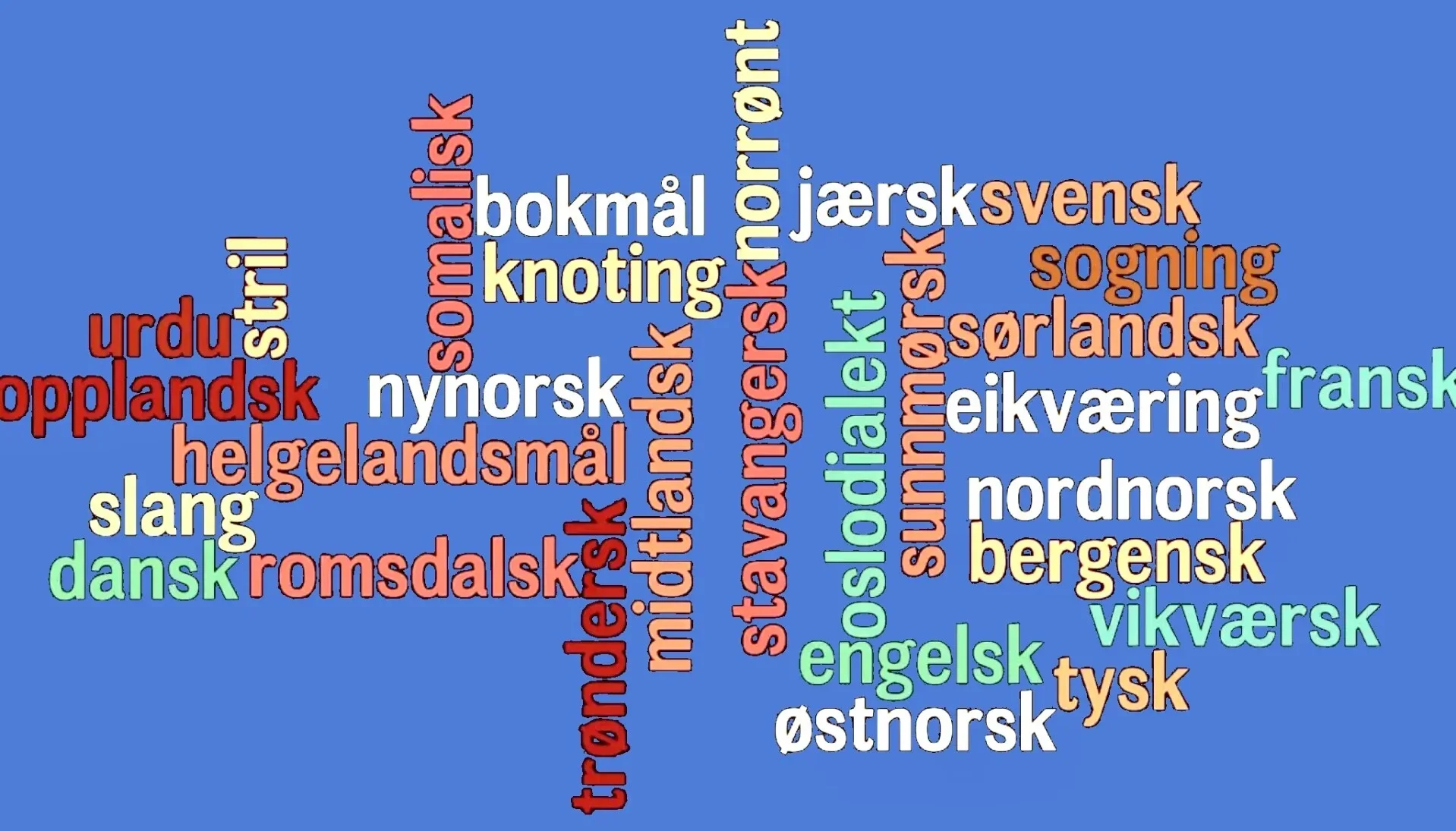
Photo: www.forskning.no
Living in a different linguistic context is not a sudden transformation, but an accumulation of small shifts: in your choice of words, in the nuances you notice, in what stops seeming obvious. What changes is not so much what you can think, but how easily you access certain perspectives. You become aware that every language embodies a worldview, historically and culturally shaped.
This is where ethnolinguistics proves most useful: giving structure and a name to that experience, showing that the initial sense of “something not quite right” is not a personal limitation, but a sign of moving between distinct systems.
And this perspective frames encounters with Roberto Luigi Pagani, founder of the online project Un Italiano in Islanda, linguist, paleographer, and lecturer at the University of Iceland in Reykjavík. He is a reference point in Nordic studies in Italy, known for combining academic rigor with a gift for communicating research in an accessible way.
I met him in Gubbio at the Festival del Medioevo, in a setting surprisingly close to the experiences I was living. We talked about Greenland, Iceland, routes to North America, and Norway. These distant stories, full of mystery and adventure, offered glimpses into the great history of the North, still not fully known today.

Photo: Roberto Luigi Pagani / Un Italiano in Islanda
In those days, my conversations with Roberto went beyond formal talks. With him and with Lara from Iceland, a more direct exchange opened up. We discussed not just places or travel, but how these places take shape through language, how constant use of a language can change the way you see the world.
Roberto combines the rigor of a linguist, paleographer, and scholar with a concrete familiarity with his subjects: Iceland, Old Norse, and university teaching. None of this remains abstract; his explanations never separate language from life. Encounters with him become points of orientation, not because they provide definitive answers, but because they illuminate questions, connecting personal experience to something broader.
For me, Roberto has been a concrete reference in studying Norwegian. On his advice, and with help from my friend Stefano, I attended Norwegian courses at the Instituto Culturale Nordico, a rare and invaluable institution in Italy for anyone interested in the North. A few years ago, he also published Fondamenti di Grammatica Norvegese, one of the first introductory grammars for learners, a concise yet invaluable bridge into a fascinating and demanding language.
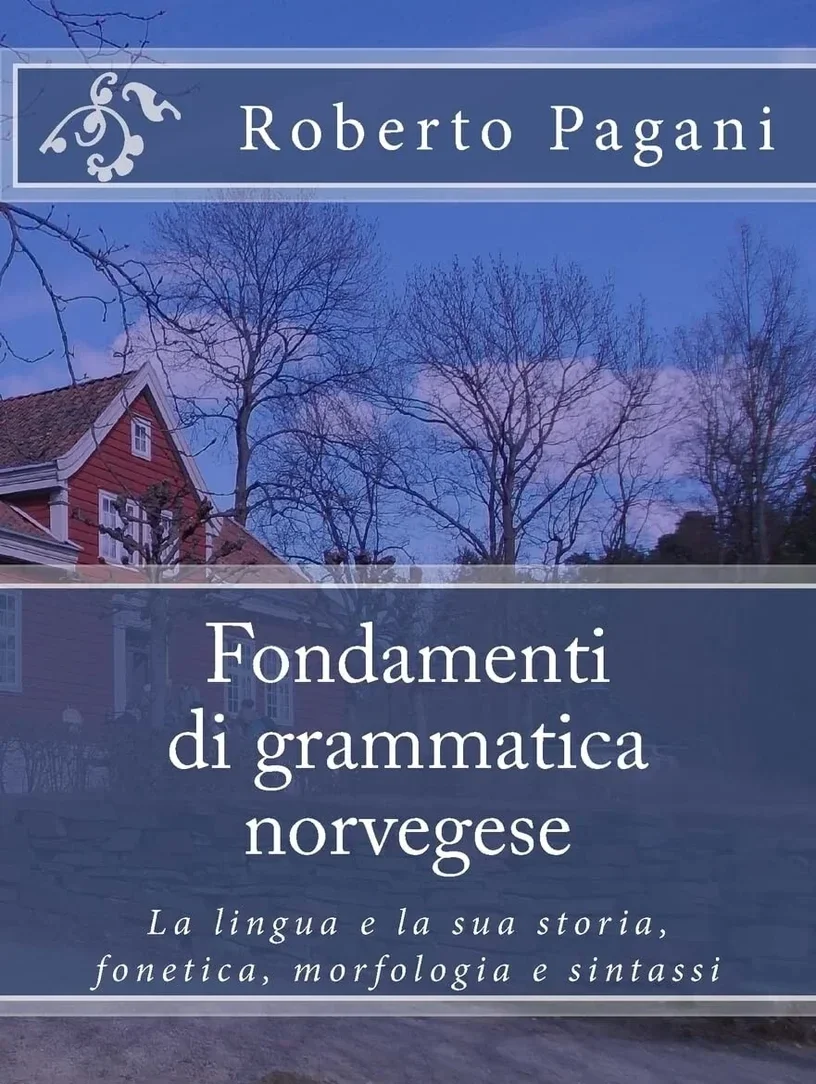
Photo: Istituto Culturale Nordico Photo: Roberto Luigi Pagani / Un Italiano in Islanda
After our pleasant meeting, I decided to reach out to him to better understand how one can build a reflection on language together with someone who, like him, combines the expertise of a linguist, attentive to the sounds and structures of Nordic languages, with a rare ability to preserve and make ancient traditions accessible.
Roberto, you started with the study of Norwegian and also published a short grammar. What was the transition to Icelandic like, and what is the relationship between these two languages?
The transition from Norwegian to Icelandic was both natural and radical. Natural, because both languages belong to the North Germanic branch and share a common origin; radical, because Icelandic has preserved a much more complex morphological structure, which modern Norwegian has largely simplified. Learning Norwegian was a walk in the park compared to Icelandic.
Studying Norwegian gave me an initial gateway into the Scandinavian linguistic world, especially at the lexical and syntactic level. Icelandic, however, requires a leap in complexity: it introduces a case system like Latin, a more articulated verbal inflection, and a very strong continuity with Old Norse, the language of the sagas. In this sense, the relationship between the two languages is that between a standardized modern language and one that maintains a direct link to its medieval tradition.
The idea of language as a “lens” on culture is central to your reflections: as a teacher of Icelandic, what do you think is the value of a language?
A language is not simply a tool for communicating content, but a system that organizes experience. Through grammatical categories, lexical choices, and syntactic structures, a language selects what is relevant and what is not.
In the case of Icelandic, this is particularly evident: the preservation of ancient structures and the strong metalinguistic awareness of its speakers make the language itself a space of cultural identity. Studying a language therefore means entering a different logic, not just learning new words. This is what I try to convey to my students: language as access to a different way of seeing the world.

Photo: Roberto Luigi Pagani / Un Italiano in Islanda
You have always shown a strong commitment to sharing aspects of Icelandic culture. Where does this drive to communicate and popularize come from?
It partly comes from personal experience. When you enter a different culture, you quickly realize how many essential aspects remain invisible. In the case of Iceland, this is even more evident because it is a relatively small reality, often shaped by stereotypes and misconceptions, yet extremely rich from a historical and cultural perspective.
For me, popularization is an attempt to make explicit what usually remains implicit. I feel a real need to push back against oversimplifications and stereotypes: Iceland is often described in a superficial way, while in reality it is a much more complex context. The goal of this work is to restore that complexity without losing accessibility.
In your Il Grande Libro del Folklore Islandese, how much does the deep connection between language, imagination, and the Icelandic worldview emerge? And how much is lost in translation when it comes to these cultural nuances?
The connection is very strong. Icelandic folklore is not simply a collection of stories, but a system of representations that reflects the relationship with the environment, with geographic isolation, and with the medieval narrative tradition.
Language is the vehicle for all of this. Many terms, formulas, and narrative structures carry cultural implications that are difficult to convey in translation. Translating inevitably means interpreting, and therefore also losing something. The issue is not only lexical, but involves entire semantic fields and cultural associations.
In this book, I tried to preserve these nuances as much as possible, explaining them when necessary. In this sense, translation cannot be completely transparent: it must be accompanied by a process of mediation.


Photo: Roberto Luigi Pagani / Un Italiano in Islanda
If you had to summarize the thread that connects your work, grammar, popularization, and folklore, what idea of language and culture ties them together?
The common thread is the idea that language and culture cannot be separated. Grammar is not a set of abstract rules, but the structure through which a culture expresses itself; folklore is not a collection of isolated stories, but a narrative system that takes shape through language; popularization is the attempt to make this interconnection accessible.
In all my work, I try to show that learning a language means entering a complex cultural system. It is not just about linguistic competence, but about deep understanding. And it is precisely this depth, often overlooked, that I consider the true value of linguistic study.

Photo: Roberto Luigi Pagani / Un Italiano in Islanda
Roberto’s answers clearly reveal a consistent underlying thread: language as a system that structures experience, as access to a worldview rather than a simple tool for communication. From his reflections on the relationship between Norwegian and Icelandic, where the shift from a modern language to one that preserves morphological and historical depth becomes evident, to the connection between language, folklore, and translation, a coherent and rigorous idea takes shape: every language not only describes reality, but organizes it, selects it, and makes it thinkable in certain ways rather than others.
In this sense, Roberto’s work in popularization also takes on a more precise meaning. It is not simply about “telling” Iceland, but about making visible those implicit structures that usually remain hidden to an outside observer. Challenging stereotypes, restoring complexity, and revealing the connections between language, history, and imagination: all of this is, ultimately, a natural extension of his idea of language as a cultural system.
It is from this perspective that another, more subtle but equally meaningful element can be understood: the relationship with the Far North. No longer just as a geographical space or a personal experience, but as a place where these dynamics become concrete, observable, and lived.
A North that, in our experiences, has taken shape through different paths, inhabited with different sensibilities, yet lived as something that goes beyond mere geography. For me, it has been a gradual, everyday encounter, tied to direct experience in Vesterålen; for Roberto, a more layered journey, intertwined with study, research, and language.

Photo: Roberto Luigi Pagani / Un Italiano in Islanda Photo: ©WanderNorway
And yet, beyond personal trajectories, a shared key emerges: the relationship with local people. Not an external observation, but a real exposure to everyday life, to gestures, rhythms, and habits. It is there that the North stops being imagined and becomes lived. Within the intimacy of local customs and traditions, a broader relational space opens up, one that does not remain superficial, but gradually becomes integrated.
In different ways, both Roberto and I have entered, each along our own path, into the fabric of the host society. Not as mere observers, but as presences that, while remaining aware of their own origins, take part in a wider system of relationships. It is this ability to cross the boundary between outside and inside that perhaps marks the difference between traveling and truly inhabiting a place.
It is important to clarify that this comparison does not operate on the level of academic or educational paths, where Roberto’s journey stands out for its depth, rigor, and recognition. His presence in Iceland extends well beyond the realm of study, intertwining with research, teaching, and direct contributions to public debate, fully in line with his idea of language as a complex cultural system.

Photo: Roberto Luigi Pagani / Un Italiano in Islanda
In recent months, Roberto has also addressed one of the most sensitive issues in contemporary Icelandic society. On February 28, 2026, an article of his was published in the country’s main newspaper, Morgunblaðið, titled “Who Should Teach Icelandic to Foreigners?” In this piece, he examines the role of universities in teaching Icelandic as a second language, emphasizing that these are not simply practical courses, but full-fledged academic programs. They include grammar, phonetics, and cultural studies, enabling students to understand the language as a system.
His contribution also highlights a crucial point: many foreign students are already active members of Icelandic society and consciously choose to invest in learning Icelandic in order to live fully within that language. Limiting access to such programs would mean losing a valuable cultural and social resource.
And in this passage, language reveals its decisive role. Not only as a tool, but as a true key of access. Entering a language means entering a people. In this sense, Roberto represents a particularly meaningful example: his experience in Iceland has not stopped at academic study, but has translated into concrete participation in the country’s cultural and social life. From television interviews on immigration and language learning to the reading of the Passíusálmar by Hallgrímur Pétursson at Hallgrímskirkja, becoming the first non-native speaker to do so during the traditional Good Friday celebration, his path shows how linguistic competence can turn into recognized belonging.

Photo: Rafn Ágúst Ragnarsson / www.visir.is
Being invited to take part in that reading is not an isolated episode, but the sign of a successful crossing. The Passíusálmar are not simply religious texts: they represent a deep layer of Iceland’s collective memory, a tradition that continues across time while preserving its cultural and identity value. Reading them in Icelandic, in a place like Hallgrímskirkja, means entering, if only for a moment, an intimate dimension of the community, where language becomes a vehicle of belonging.
Perhaps it is precisely here that everything comes together: in the awareness that language is not only a tool for understanding a place, but a subtle bridge that allows, at least in part, to be understood by it.