Photo: Sverre Hjoernevik / Arctic Train
I have always loved traveling by train. There is a particular kind of pleasure in it. You sit down, the world begins to move, and for a while you are free from decisions. No traffic, no rushing, no need to focus on anything except what unfolds beyond the window. The rhythm of the tracks becomes a kind of quiet companion, and time seems to stretch just enough to let you notice things you would otherwise miss.
In Norway, that feeling becomes something else entirely. This is a country shaped by extremes. Mountains that rise abruptly from the sea, valleys carved by glaciers, winters that can feel endless. And yet, through all of this, railways were built. Not easily, and not quickly, but with persistence that still feels remarkable today.
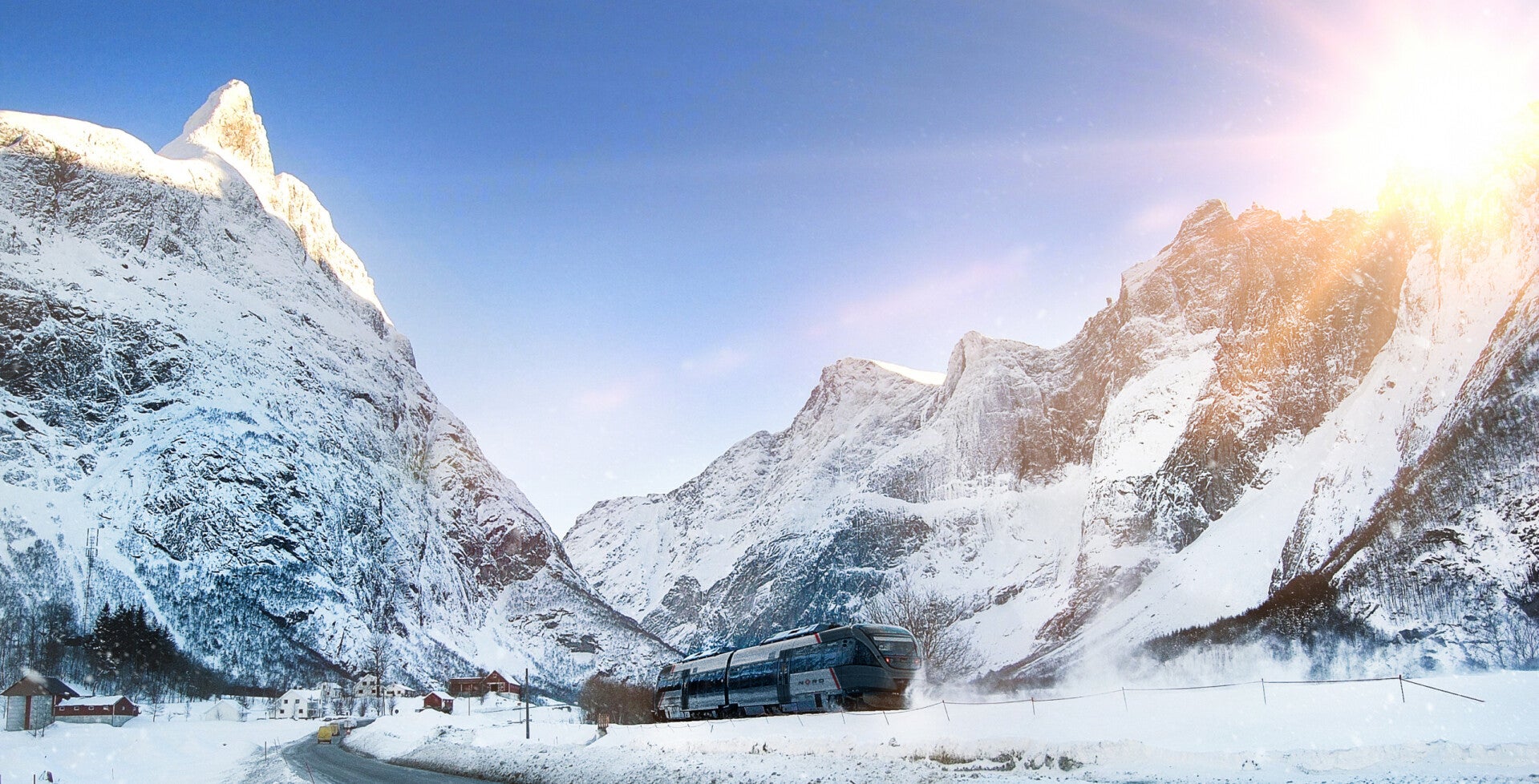
Photo: SJ Norge
In the late 1800s and early 1900s, Norway began developing its rail network as a way to connect isolated regions and support economic growth. But unlike much of Europe, where railways could follow gentler terrain, Norwegian engineers had to confront rock, altitude, and weather. Entire mountains had to be drilled through. Workers spent long periods in remote, harsh conditions, often relying on manual labor and basic tools. Avalanches, freezing temperatures, and unstable ground were constant threats.
The Bergen Line alone required more than 180 tunnels and took decades to complete before opening in 1909. Many sections were built in near isolation, with temporary settlements created just to support the workers. Some of those places still exist today, small and quiet, almost forgotten.
When you travel these routes now, it is easy to focus on the beauty. But beneath that beauty lies effort, ingenuity, and a deep commitment to connecting a difficult landscape. That is part of what makes traveling by train in Norway so powerful. You are not just moving through nature. You are moving through history.
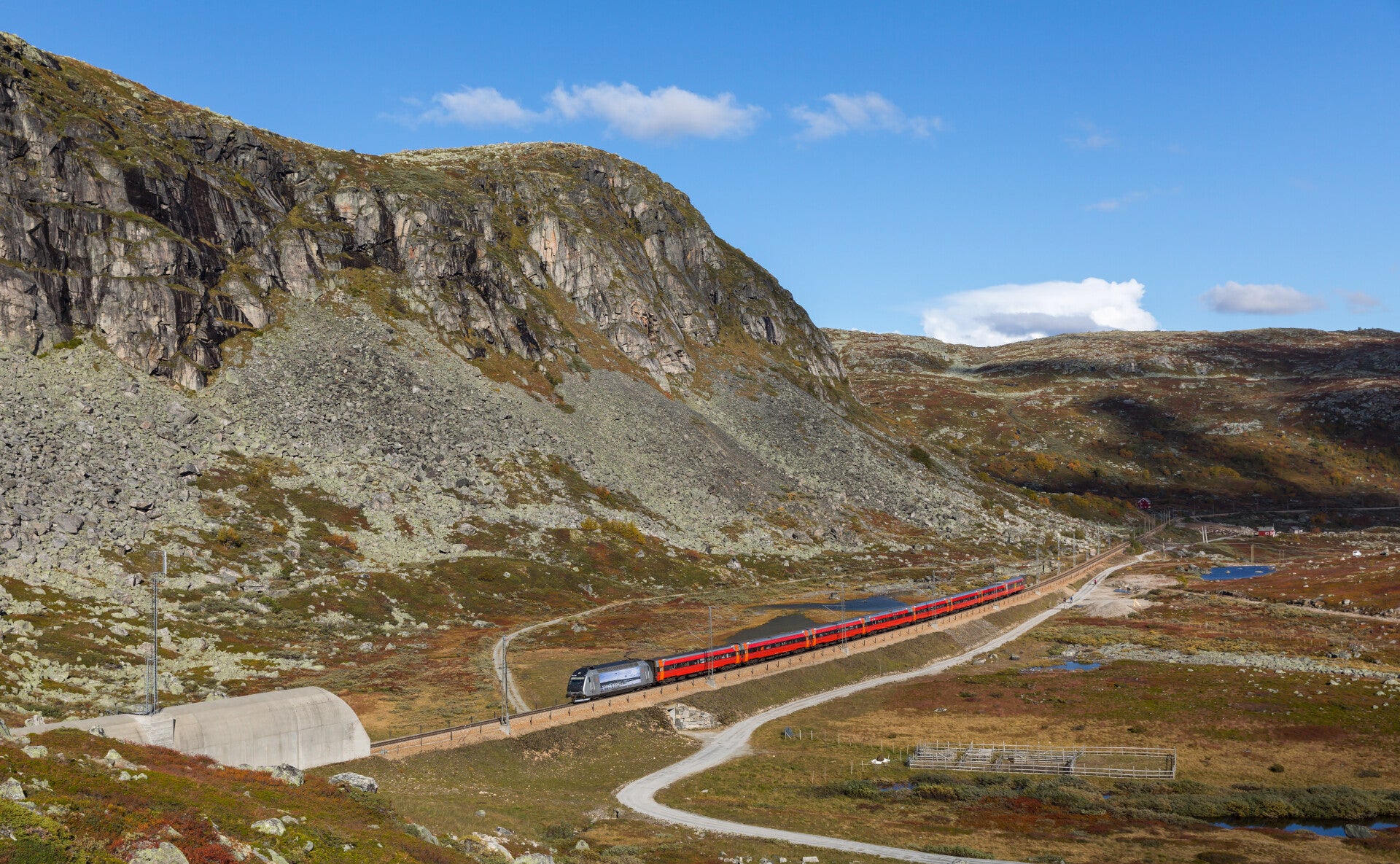
Photo: David Gubler / https://creativecommons.org/licenses/by-sa/4.0/
Across the Roof of Norway: The Bergen Line
The Bergen Line is often described as Norway’s most iconic railway, and it is easy to understand why. Running roughly 500 kilometers between Oslo and Bergen, it is one of the highest mainline railways in Europe. The journey takes around seven hours, but it feels like traveling across several different worlds.
The line begins in the Oslo region, where the landscape is relatively gentle. Gradually, forests give way to more rugged terrain as the train climbs toward the Hardangervidda plateau, the largest mountain plateau in Northern Europe. This is where the journey becomes something extraordinary.
At Finse, the highest station on the line at 1,222 meters above sea level, the environment feels almost polar. There are no roads leading here, only the railway and a handful of buildings.
From an engineering perspective, the Bergen Line is a triumph. Harsh winters still pose challenges, and snow protection structures and tunnels are essential to keep the line operational. It is also fully electrified, which was a major achievement when completed in the early 20th century.
One of the most curious cultural moments tied to this railway came in 2009, when Norwegian television broadcast the entire journey live, minute by minute. Millions watched. It was slow, uneventful, and completely mesmerizing.
A Descent Into The Fjords: The Flåm Railway
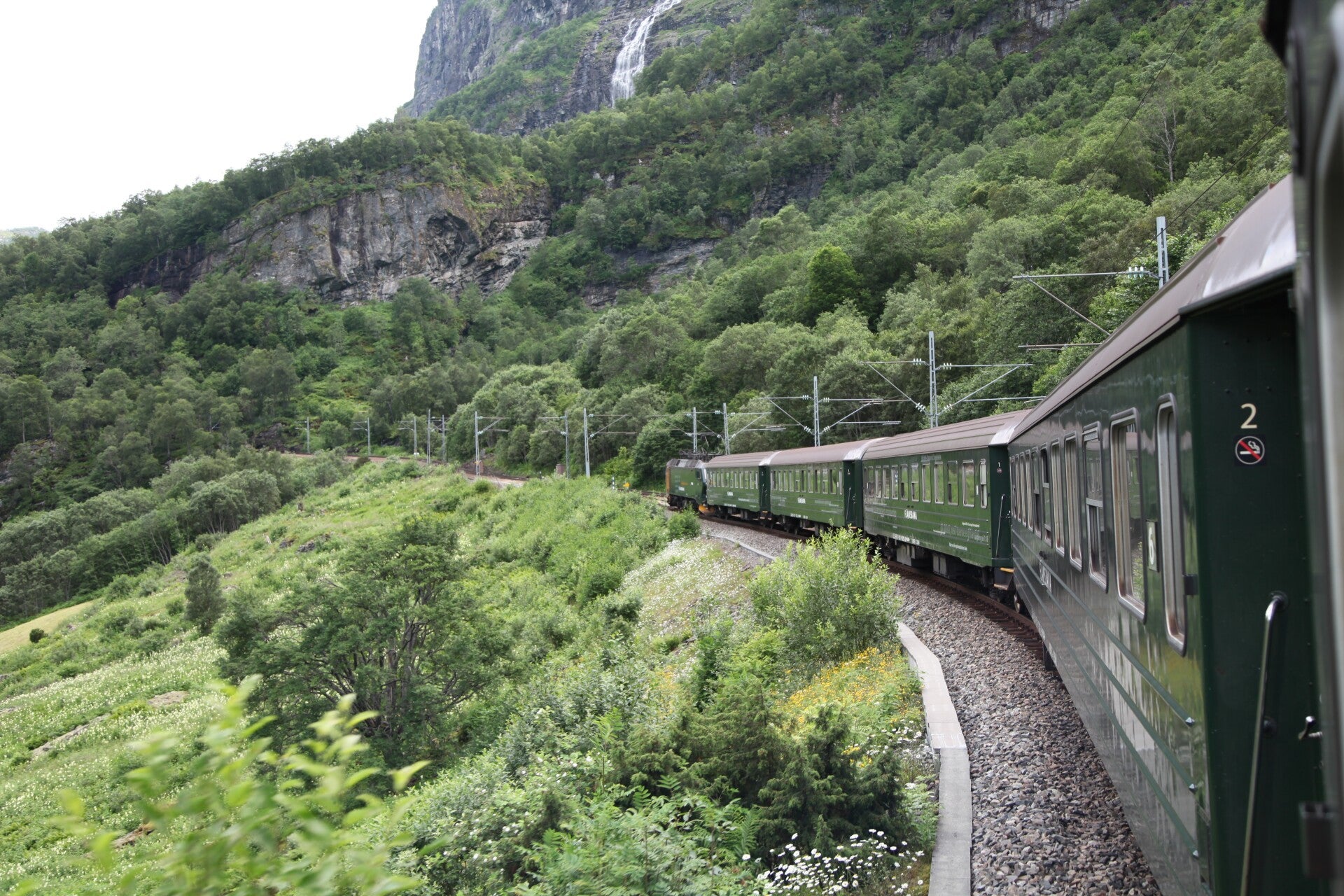
Branching off from the Bergen Line at Myrdal, the Flåm Railway is short, just about 20 kilometers, but it is one of the most dramatic train journeys anywhere. What makes it so unique is its gradient. The line descends around 860 meters from Myrdal to Flåm, making it one of the steepest standard-gauge railways in the world. Around 80 percent of the route has a gradient of 5.5 percent, which is exceptionally steep for a conventional railway.
To manage this, engineers designed a route with sharp curves, tunnels that spiral through the mountains, and careful braking systems. In fact, most of the tunnels were built manually, a detail that becomes even more impressive when you consider the terrain.
The journey passes through 20 tunnels, offering constant shifts in perspective. Waterfalls, especially the famous Kjosfossen, appear suddenly and powerfully. During peak season, the train even stops briefly so passengers can step out and take in the view.
The Flåm Railway was originally built to connect the Sognefjord region with the main railway network, supporting both freight and local communities. Today, it is primarily a tourist route, but it has retained its sense of authenticity.

Photo: SJ Norge
A Quiet Encounter: The Dovre Line
The Dovre Line, connecting Oslo and Trondheim, is often overlooked in favor of more dramatic routes, but it offers something equally valuable. Completed in 1921, it was designed as a more direct inland connection between Norway’s two major cities. The line crosses the Dovrefjell mountain range, an area known for its open landscapes and unique wildlife.
The scenery here is less about vertical drama and more about space. Wide plateaus, gentle slopes, and long horizons create a sense of calm that contrasts with the intensity of the fjords and cliffs found elsewhere.
One of the most fascinating aspects of this region is the presence of musk ox. These animals were reintroduced to the area in the 20th century and have adapted well to the harsh conditions. They are rarely seen from the train, but knowing they are there adds a quiet sense of wonder to the journey.
The Dovre Line also passes through Dovrefjell-Sunndalsfjella National Park, a protected area that reflects Norway’s strong commitment to preserving its natural environment.
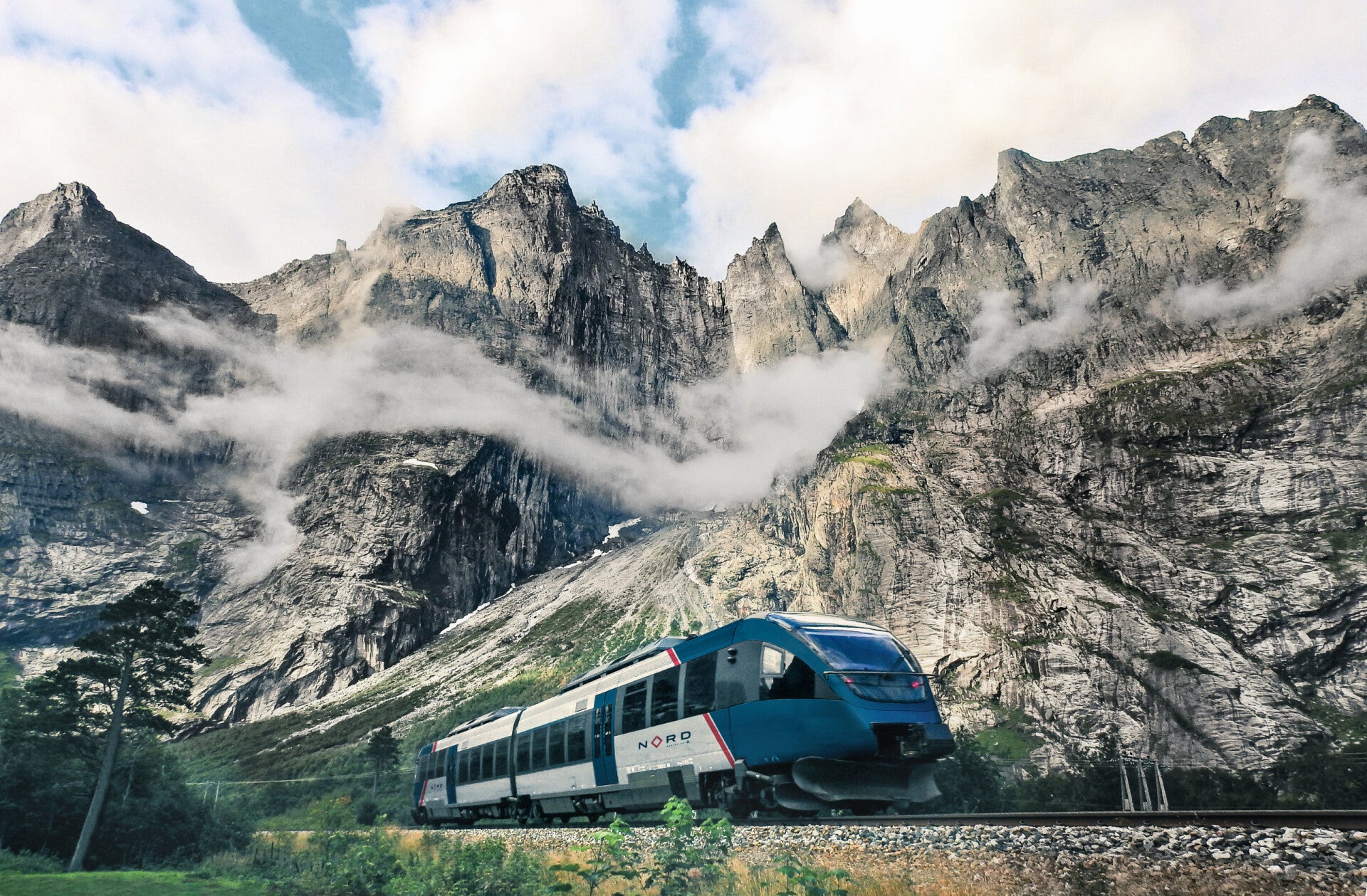
Photo: SJ Norge
Into Norway's Heartland: The Rauma Line
The Rauma Line offers a different kind of drama. Stretching about 115 kilometers between Dombås and Åndalsnes, it runs through the Romsdalen Valley, an area known for some of Norway’s most striking mountain formations.
Construction of the line began in the early 20th century and was completed in 1924. Like many Norwegian railways, it required extensive tunneling and careful planning to navigate steep terrain. The line includes multiple bridges, but none is more famous than the Kylling Bridge, which curves gracefully across a deep gorge and has become one of the most photographed railway structures in the country.
The landscape here feels closer, more immediate. Peaks rise sharply on both sides, and among them is Trollveggen, or the Troll Wall, which stands over 1,000 meters tall. It is the tallest vertical rock face in Europe and gives the journey a sense of scale that is hard to ignore.
Unlike some of the more famous lines, the Rauma Line feels slightly less polished, which adds to its appeal. It retains a sense of rawness, both in the landscape and in the experience itself.
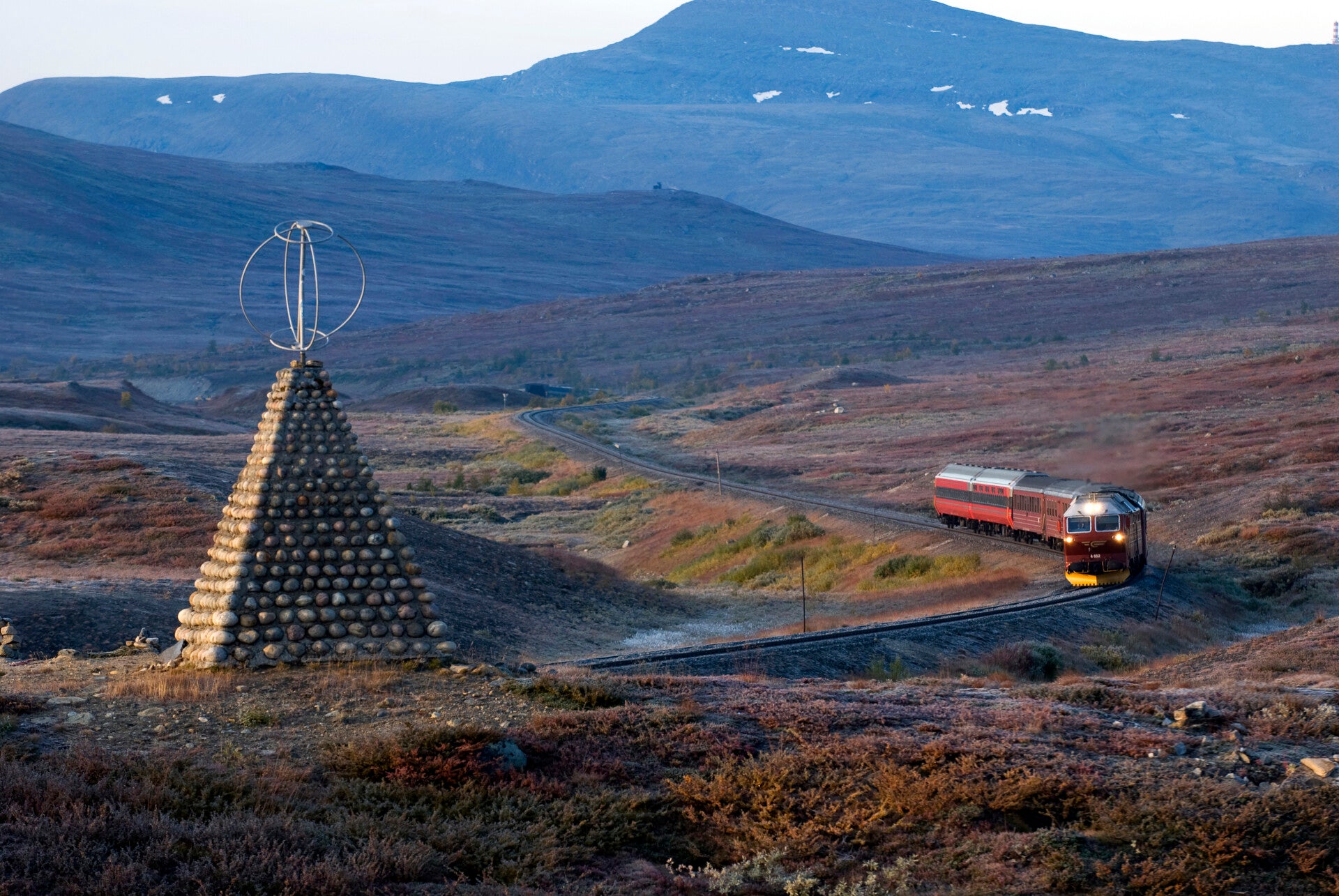
Photo: Rune Fossum / www.visithelgeland.com
A Slow Journey North: The Nordland Line
Running approximately 729 kilometers between Trondheim and Bodø, the Nordland Line is Norway’s longest continuous railway journey. The full trip takes around 10 hours, and it rewards patience. The line was built in stages, beginning in the late 19th century, but it was not fully completed until 1962. Extending the railway this far north was a major national project, driven by the desire to connect remote communities and strengthen regional development.
One of the defining moments of the journey is crossing the Arctic Circle, marked at 66°33′ north. There is a small monument near the tracks, and while the moment itself is subtle, it carries symbolic weight. You are entering a part of the world where light and seasons behave differently.
The landscapes along the Nordland Line are varied but understated. Forests, rivers, farmland, and mountains appear in sequence, without the dramatic shifts seen on other routes. This creates a more meditative experience. And then there is “Hell” station, located near Trondheim. The name comes from an old Norwegian word meaning “overhang,” but today it is a source of amusement. In winter, when the station sign reads “Hell” surrounded by snow and ice, it draws curious visitors from around the world.
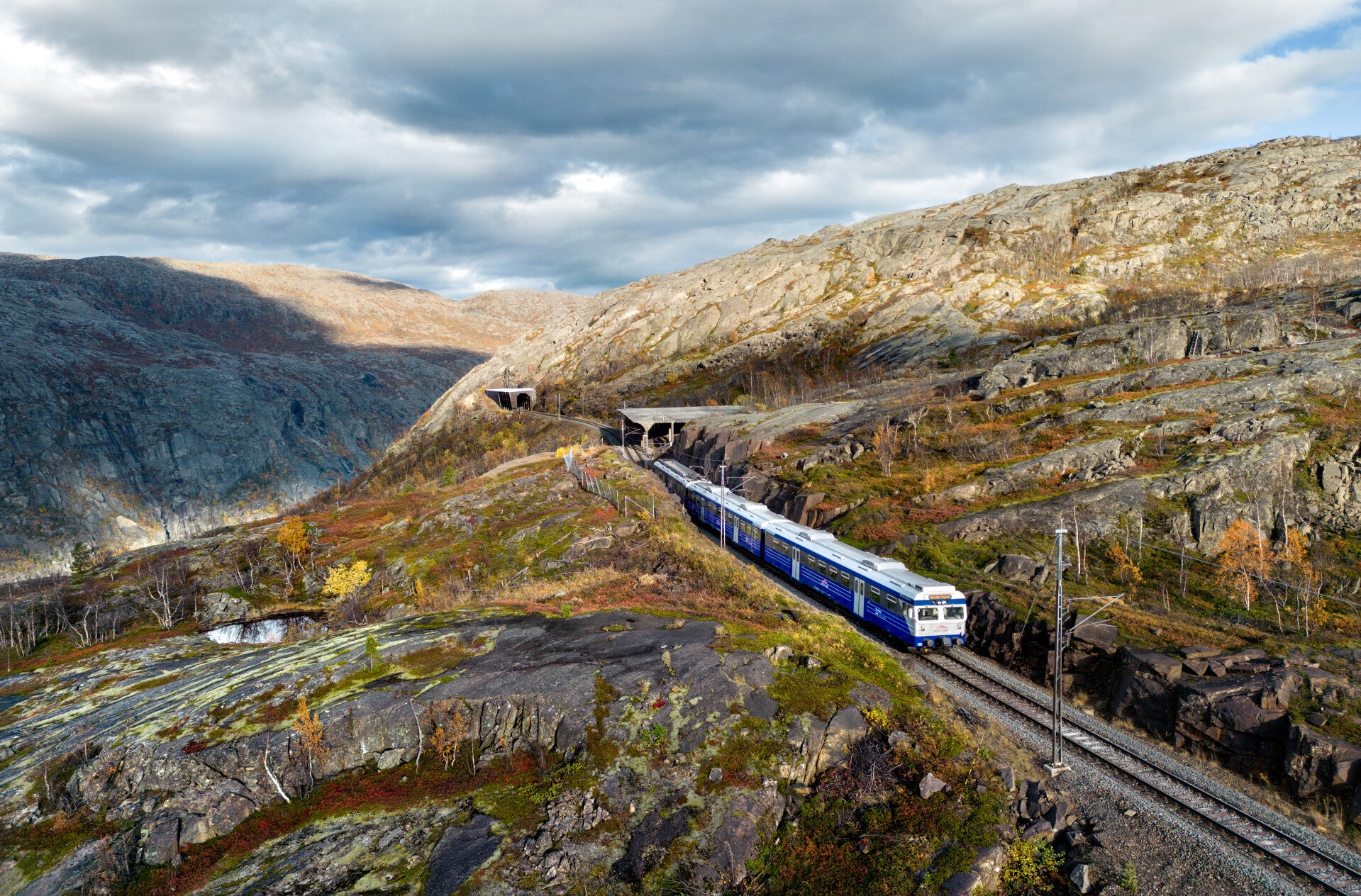
Photo: Michael Ulriksen / Visit Narvik
Into the Polar World: The Arctic Train
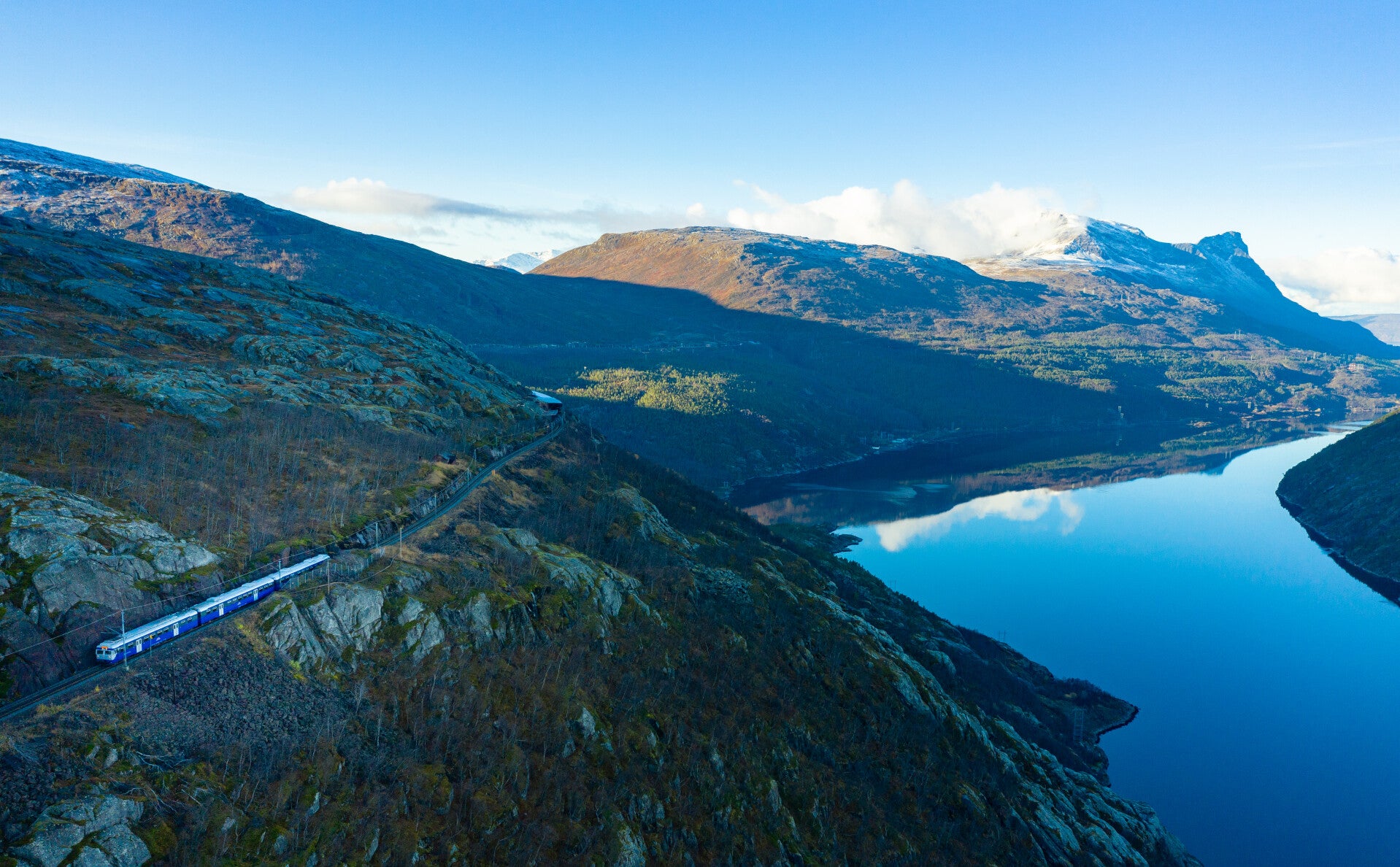
The Arctic Train, operating along the Ofoten Line between Narvik and the Swedish border, offers one of the most unusual rail experiences in Europe. This railway was not built for passengers, at least not originally. Completed in 1902, its primary purpose was to transport iron ore from the mines in Kiruna, Sweden, to the ice-free port of Narvik. This made it strategically important, especially during World War II, when control of the route became a key objective.
Today, freight trains still use the line heavily, often carrying enormous loads of ore. Passenger services, including the Arctic Train, share the same tracks, giving the journey a unique industrial backdrop.
Geographically, this is one of the northernmost railways in the world. The environment feels remote and exposed, with wide open spaces and a sense of stillness that is hard to find elsewhere.
Seasonality transforms the experience completely. In winter, the polar night wraps the landscape in deep blue light that lingers for hours. It is during this time that the journey can become something truly unforgettable. On clear nights, far from city lights, there is a real possibility of seeing the Northern Lights. Watching them from a train window, in near silence, adds a layer of stillness that makes the moment feel almost unreal.
In summer, the experience shifts in the opposite direction. The midnight sun keeps the landscape illuminated late into the night, casting a soft, golden light over fjords and peaks. Time feels less structured, and the journey takes on a dreamlike quality.
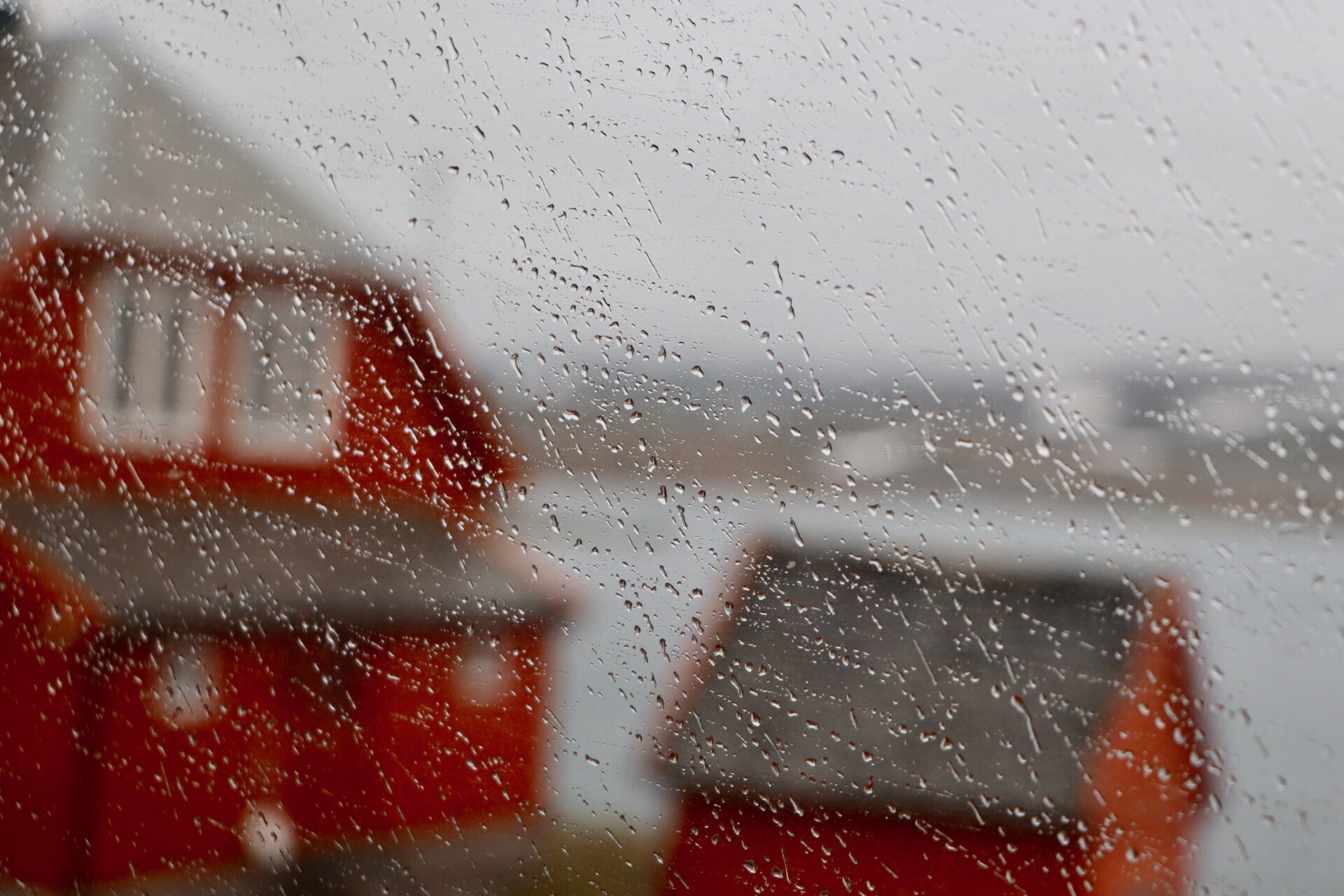
In much of the world, trains are about efficiency. They are built to shorten distances and save time. In Norway, they seem to do the opposite. They stretch the experience. They ask you to slow down, to look, to sit with what you see instead of rushing past it. They remind you that travel does not always have to be about arrival. For me, that is where the real beauty lies.
Because somewhere between the tunnels, the mountains, and the quiet moments by the window, you begin to feel that the journey itself is enough.