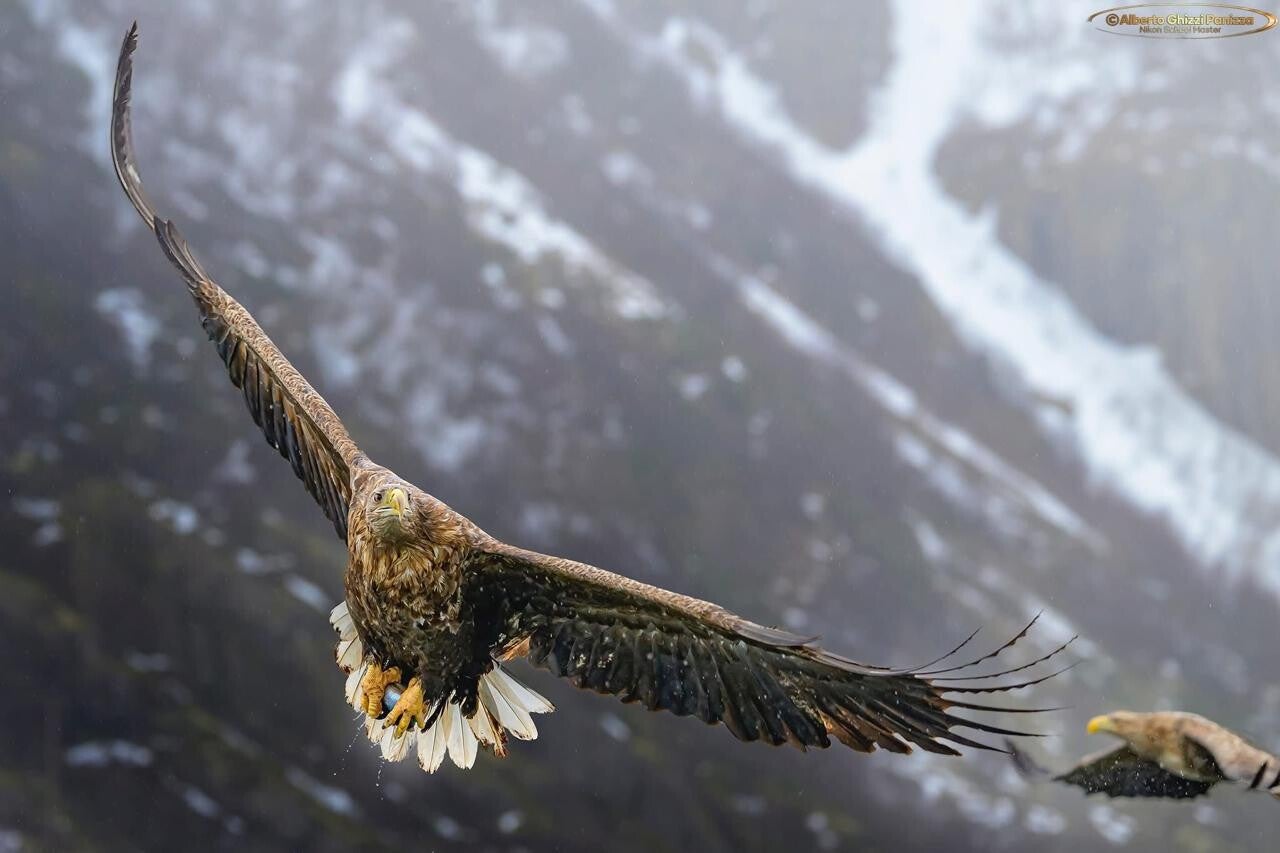
Photo: Photography Needs Heroes
From Siena and Parma to the the Lofoten and Vesterålen Archipelagos
The photographic friendship between Luca Vescera and Alberto Ghizzi Panizza tells the story of a journey made of extreme landscapes, teaching, and chasing for light. Through the project Photography Needs Heroes, the two photographers and Nikon School instructors have for years been guiding Italian photographers to discover landscape photography in the islands of the Arctic.
There are journeys that seem to follow an invisible line between distant landscapes. In the case of Luca Vescera and Alberto Ghizzi Panizza, that line begins in the heart of Italy and stretches all the way to the sharp mountains of the Lofoten and Vesterålen islands in northern Norway.
Professional photographers and Nikon School instructors for many years, Ghizzi Panizza and Vescera are now among the most recognized figures in Italian landscape photography. Throughout their careers they have trained hundreds of photographers through workshops, courses, and educational activities, helping to spread a photographic culture based not only on technique, but above all on the ability to observe and interpret the landscape.
Their work combines aesthetic research, field experience, and a deep attention to natural light, which is a central element in the construction of an image. Lofoten and Vesterålen represent one of the places where this research finds some of its most powerful expressions.
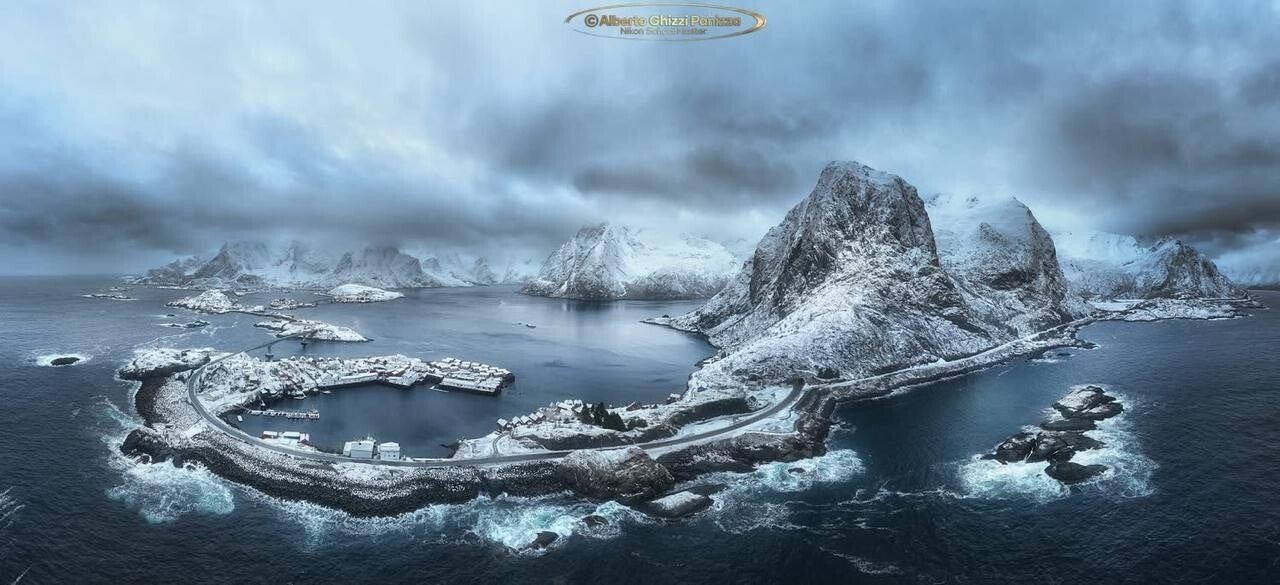
Photo: Photography Needs Heroes
Over the years their collaboration has taken shape in the project Photography Needs Heroes, an initiative dedicated to photographic education and the organization of travel experiences and workshops in some of the most spectacular landscapes in the world.
Every year the two photographers return to the Lofoten Islands, guiding groups of photographers, both enthusiasts and professionals, to explore these Arctic territories, especially during the winter season. The groups are intentionally small so participants can have a more intense experience and work directly alongside the two authors.
The goal is not only to teach photographic technique. The real objective is to share a method for observing the landscape.
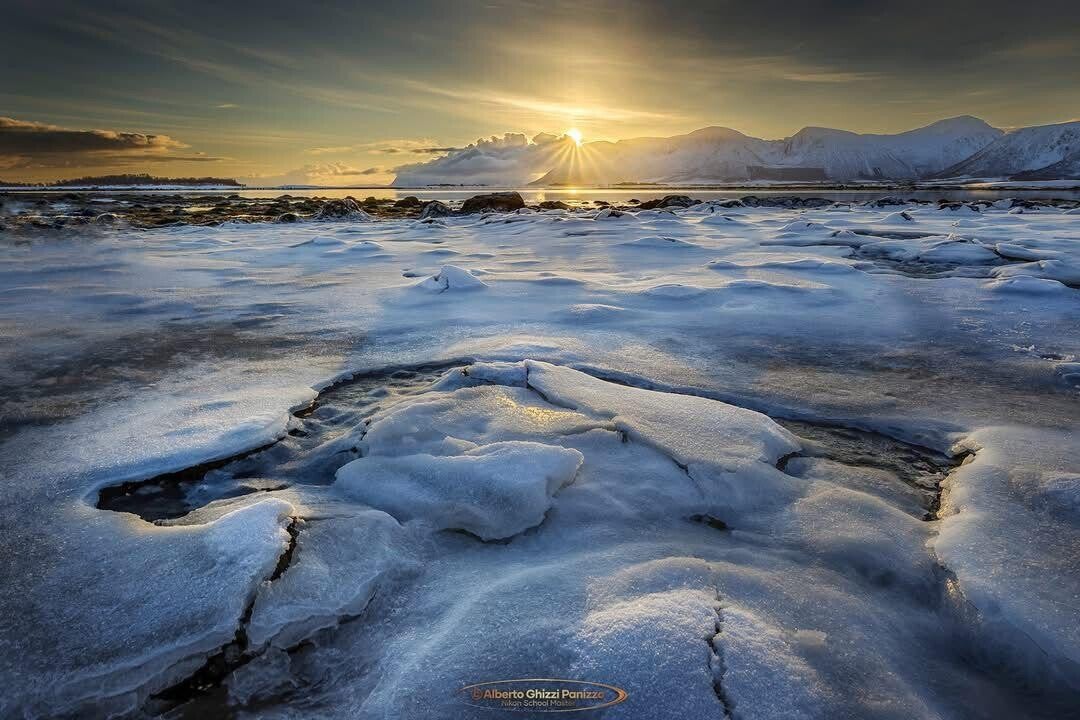
Photo: Photography Needs Heroes
Anyone who truly knows the archipelagos at these latitudes understands that they are not easy places to photograph. The light changes quickly, wind from the Norwegian Sea can appear suddenly, and the weather is often unpredictable.
Within just a few minutes a scene can transform completely: a cloud opens, a blade of light illuminates a mountain, or a snowstorm sweeps through the fjord.
This unpredictability is precisely what makes the Lofoten Islands a true training ground for landscape photographers.
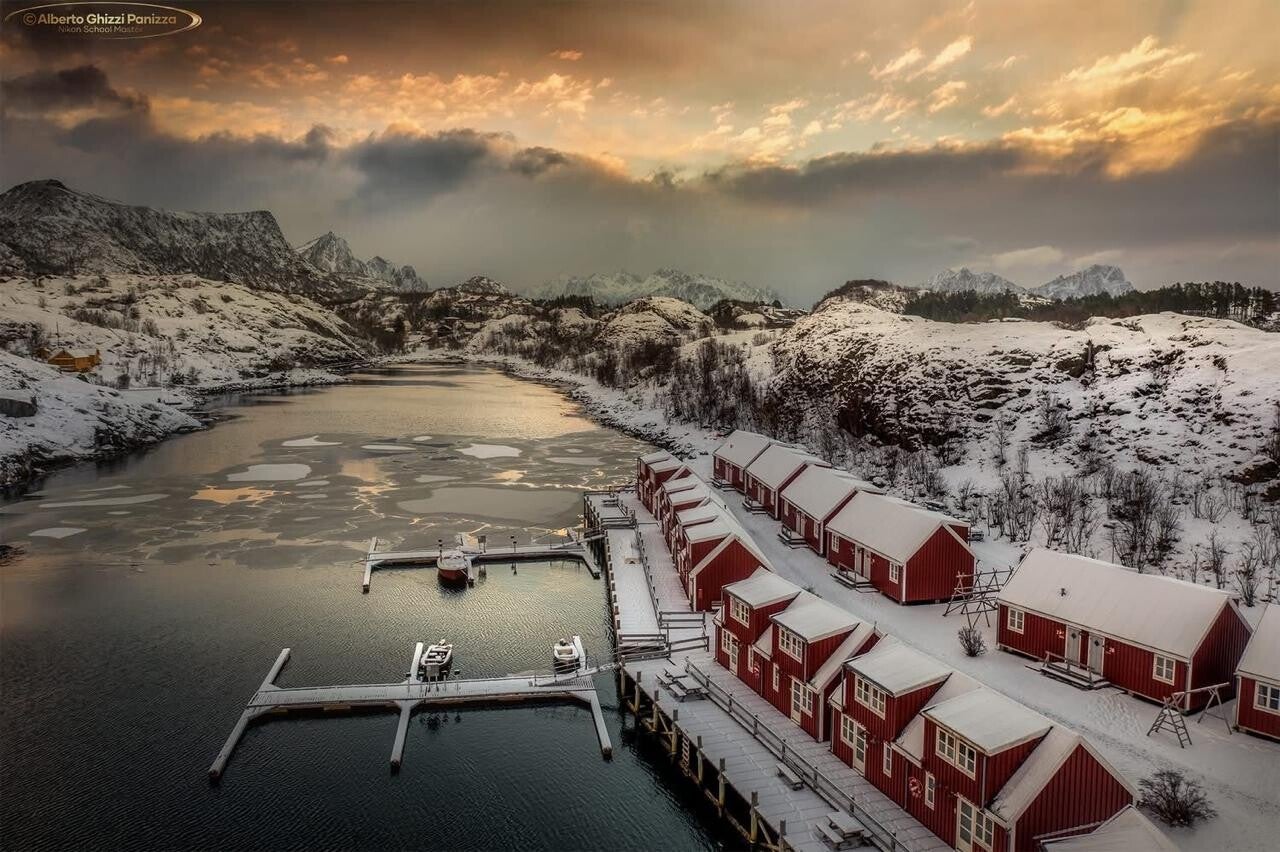
Photo: Photography Needs Heroes
During the workshops, Alberto and Luca guide participants in learning how to read the territory: from choosing the shooting point to building the composition, all the way to managing light in the most challenging conditions.
One of the lessons they repeat most often in their workshops is simple but essential: first observe, then photograph.
At high latitudes the light has a unique quality. In winter it remains low on the horizon for many hours and creates soft, grazing light that shapes the landscape.
The vertical mountains rising from the sea, the small fishing villages with their red rorbuer, and the white beaches facing the Atlantic become elements of a visual narrative that tells the strength and character of the archipelago.
In the end, this is one of the most fascinating aspects of these islands: a place that continues to surprise even those who visit it many times.
Perhaps it is no coincidence that two photographers who grew up among the landscapes of Italy find such fertile ground for their visual research here. Even when separated by thousands of kilometers, great landscapes share something in common: they require time, attention, and respect in order to be truly told.
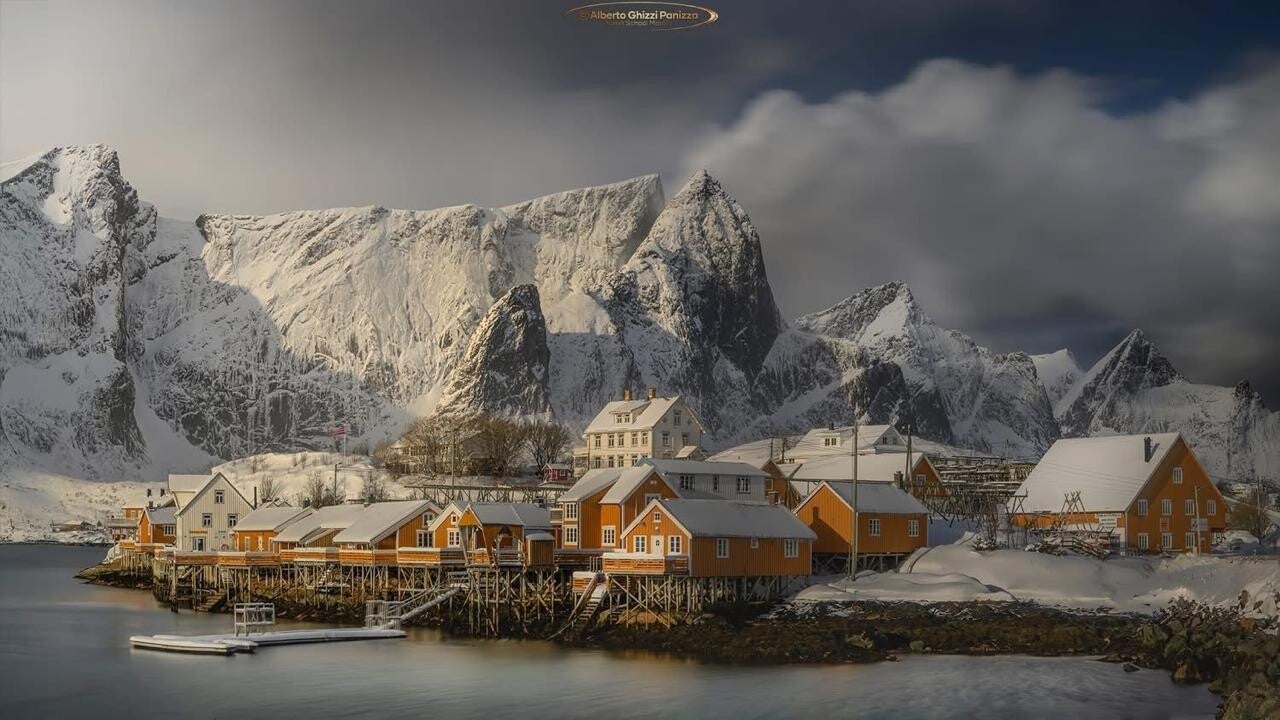
Photo: Photography Needs Heroes
Photographing between Lofoten and Vesterålen does not simply mean standing in front of extraordinary landscapes. It also means working in conditions that can be far from easy. Wind from the Norwegian Sea, salty humidity, sudden snowfall, and temperatures often below freezing test not only photographers but also their equipment.
To better understand what it means to work in these environments, I asked Luca Vescera and Alberto Ghizzi Panizza how they approach photography in remote places such as Norway’s Arctic islands.
Does photographing in Arctic conditions change the way you work?
“Yes, quite a lot. The cold mainly affects batteries and the electronics of cameras. You have to organize yourself well, carry spare batteries, and protect them from the cold by keeping them in your inner pockets. Movements also become slower: when working in wind and low temperatures you need to prepare the shot calmly and think about the composition in advance.”
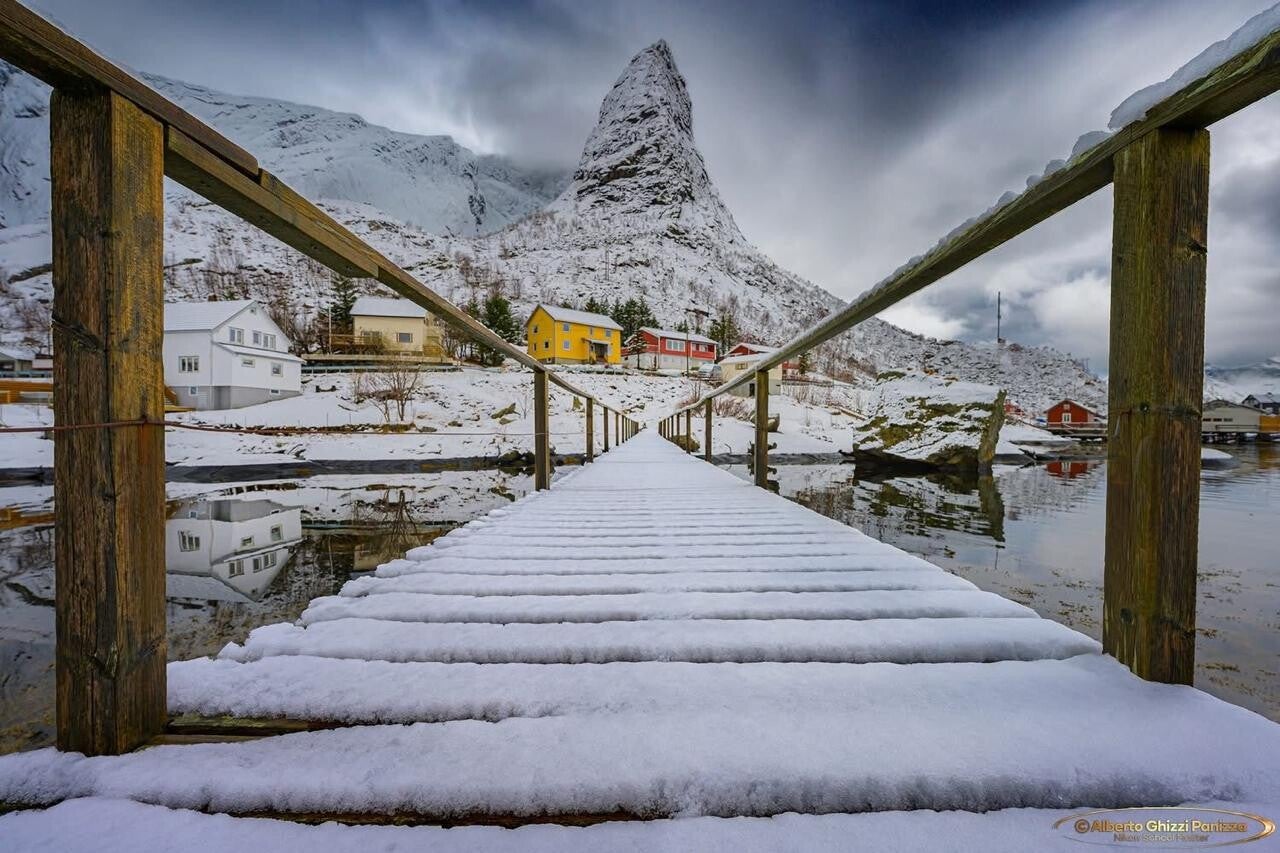
Photo: Photography Needs Heroes
What is the main difficulty when photographing these islands?
“The light is wonderful but very fast. In winter the daylight hours are few and the changes are extremely quick. Within minutes the landscape can completely transform: a cloud opens, grazing light illuminates a mountain, or a snowstorm arrives. You have to be ready.”
Do you need special preparation to work in such remote places?
“Yes, because it’s not just about photography. You need to know the territory, move safely, and know how to manage the weather conditions. The climate can change very quickly and often you find yourself far from inhabited areas.”
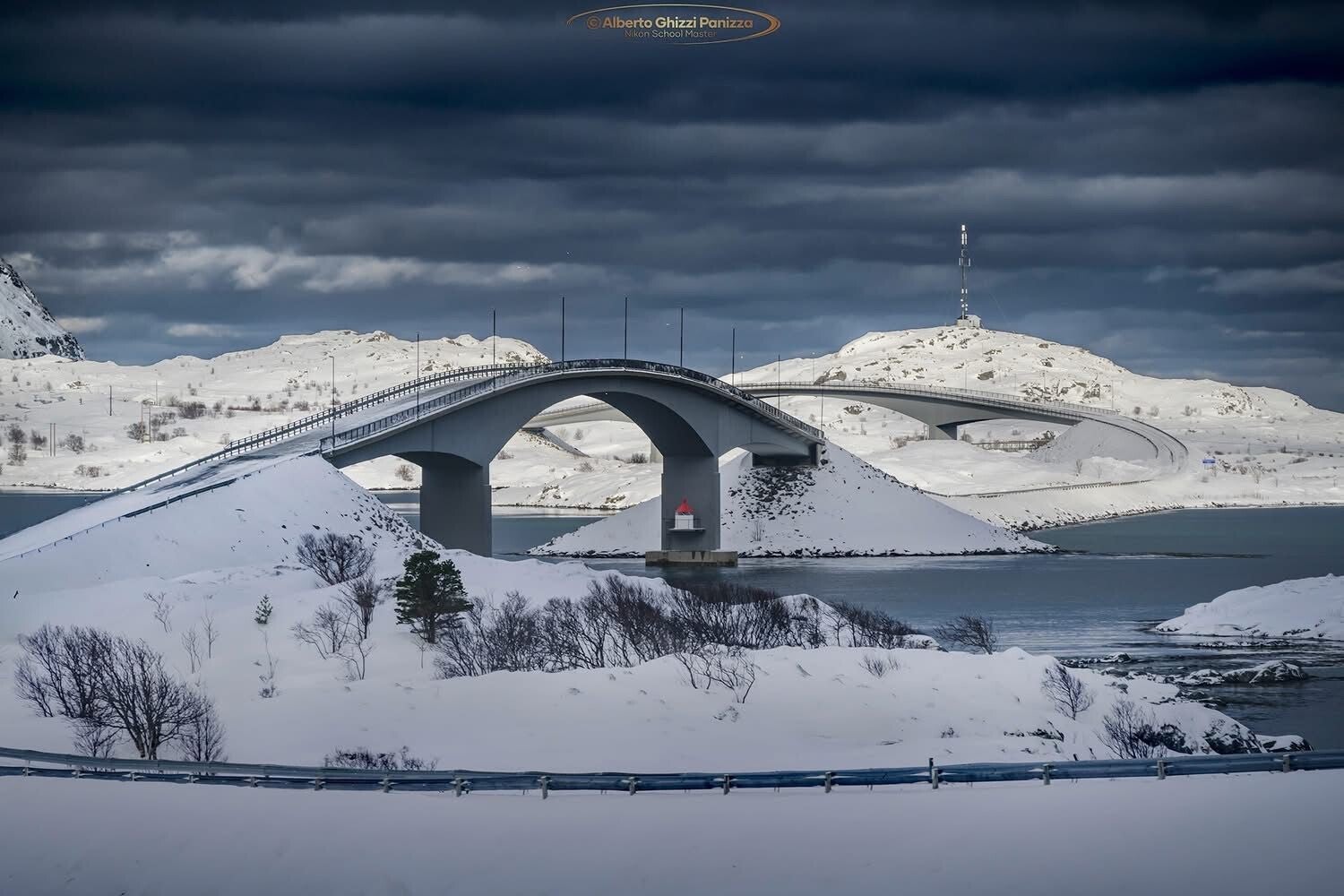
Photo: Photography Needs Heroes
After several years visiting these places, have you had contact with the locals?
“Yes, over time we’ve had the chance to connect with the local communities. During our explorations we always try to move with great respect for the environment: we leave places clean, without trash, and we’ve learned how important it is to be careful even about where we park, especially during snowy periods when roads and small villages can be delicate areas.
Over the years we’ve also discovered small cafés and cozy places where you can warm up after a long day photographing in wind and snow. One stop we particularly enjoy is Cafè Alveland on the island of Andøya, where it’s always nice to have a hot coffee and some traditional pastries.
We like supporting these small family-run places that keep alive a tradition of hospitality and handmade products.”
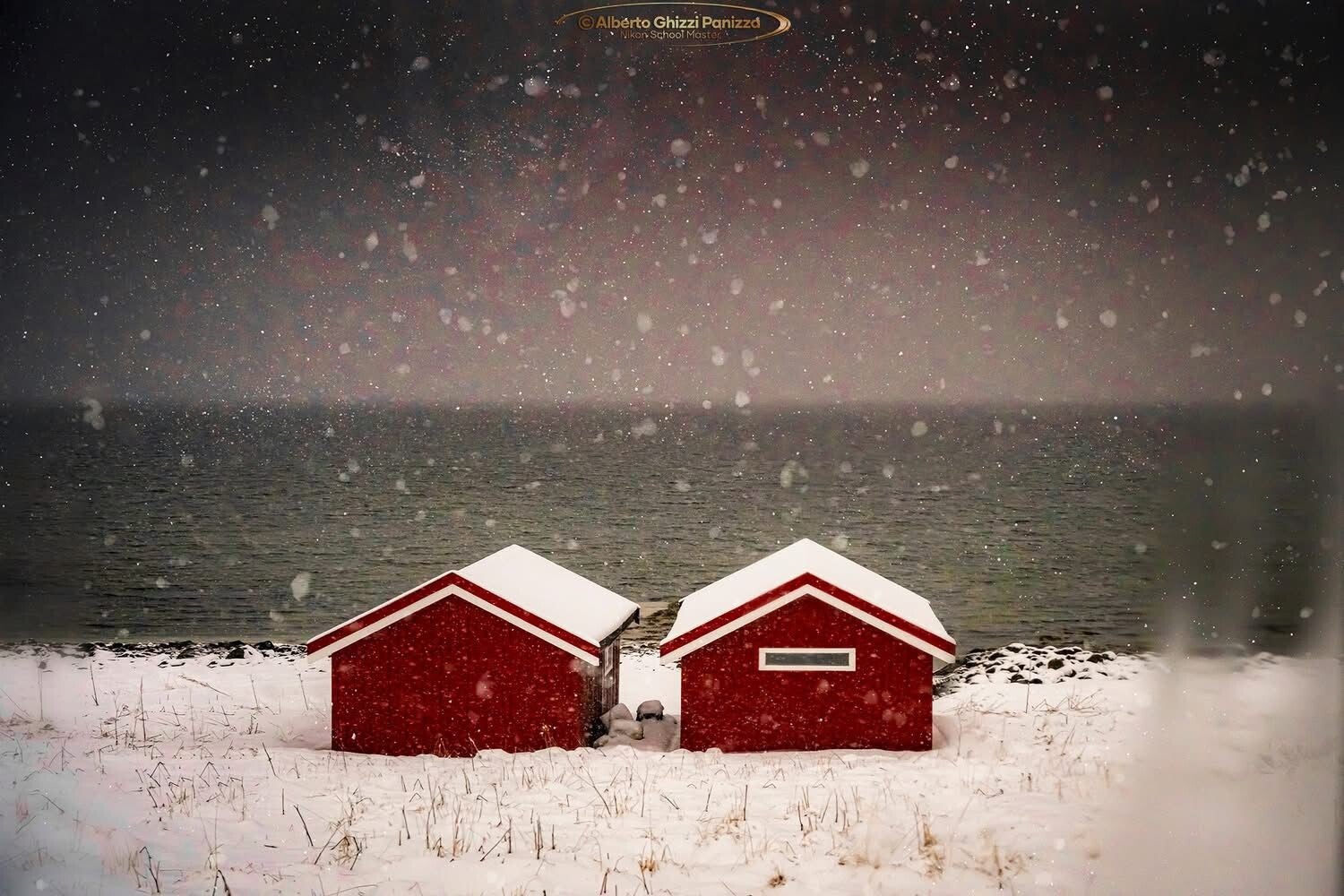
Photo: Photography Needs Heroes
After such adventurous trips, what kind of relationships remain with the people who join your workshops?
“First of all, in the few days we spend together we try to create a friendly and shared atmosphere. We often gather in the rorbuer, the traditional fishermen’s houses where we stay, to cook dinner together and share moments that go beyond photography.
After dinner we often organize night outings, especially when forecasts indicate strong northern lights activity. In those cases we prepare for a real ‘hunt’ for Arctic light: we set alerts to monitor aurora activity and wake up in shifts during the night to check the sky and decide whether it’s time to go out and photograph.
It’s this mix of photographic commitment, adventure, and conviviality that makes the experience so intense. Very often, once the trip ends, the relationships don’t stop. We stay in contact with many participants, and some of them join us again for other photographic adventures around the world.”
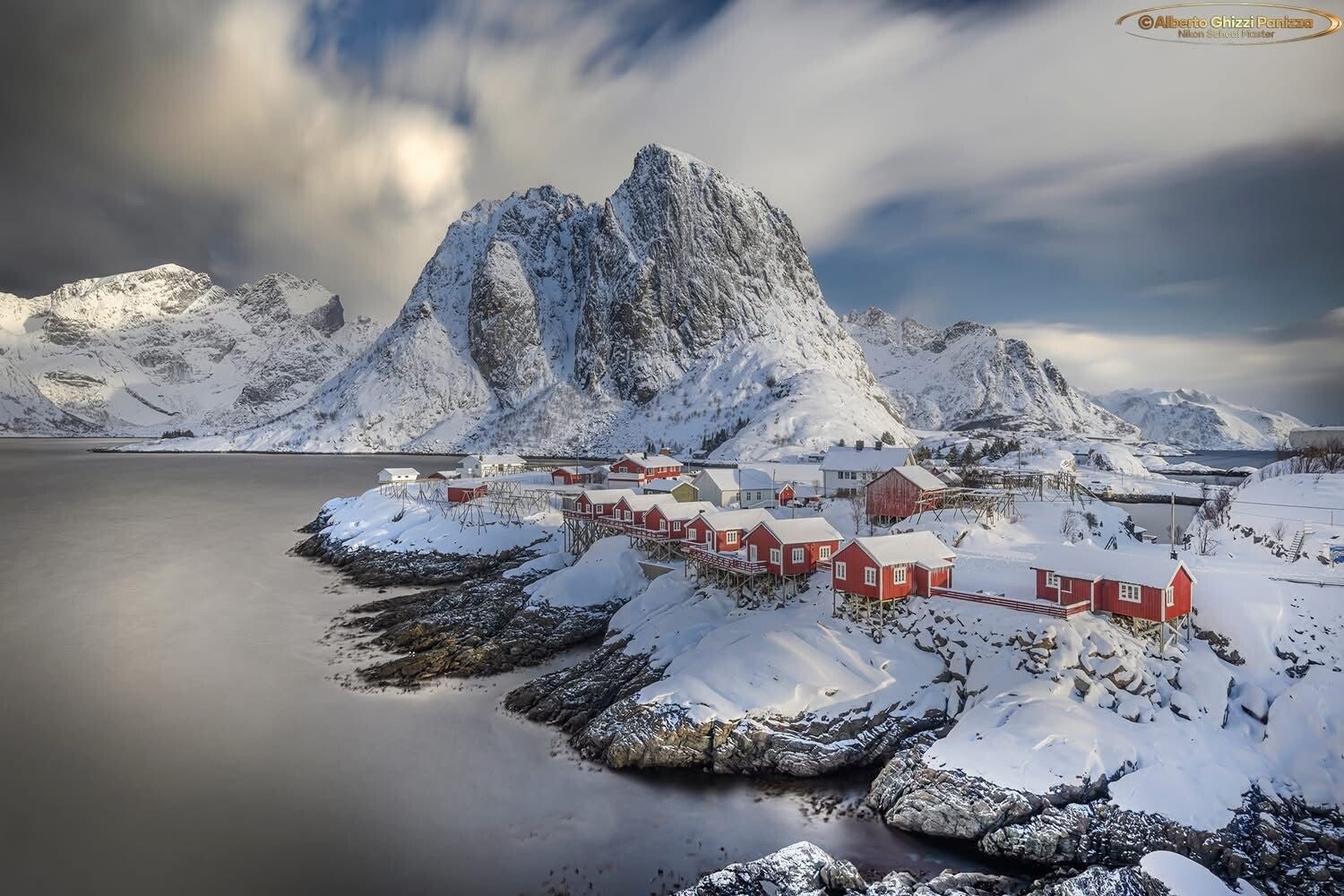
Photo: Photography Needs Heroes
Equipment for Photographing in the Arctic Islands
When leading photography workshops in the Arctic islands, Alberto and Luca bring equipment designed to handle wide landscapes, constantly changing light, and often demanding weather conditions.
Their camera gear is based on high-resolution and highly reliable camera bodies, essential tools for capturing every detail of the vast northern landscapes and working precisely even in delicate lighting conditions.
As for lenses, the selection covers a wide range of situations. An ultra-wide lens is ideal for capturing the scale of fjords, mountains, and Arctic beaches. A versatile standard zoom helps build balanced and dynamic compositions, while a fast telephoto lens allows photographers to isolate details of mountains, fishing villages, or landscape elements. In some situations even longer telephoto lenses come into play, especially when attention shifts to Arctic wildlife.
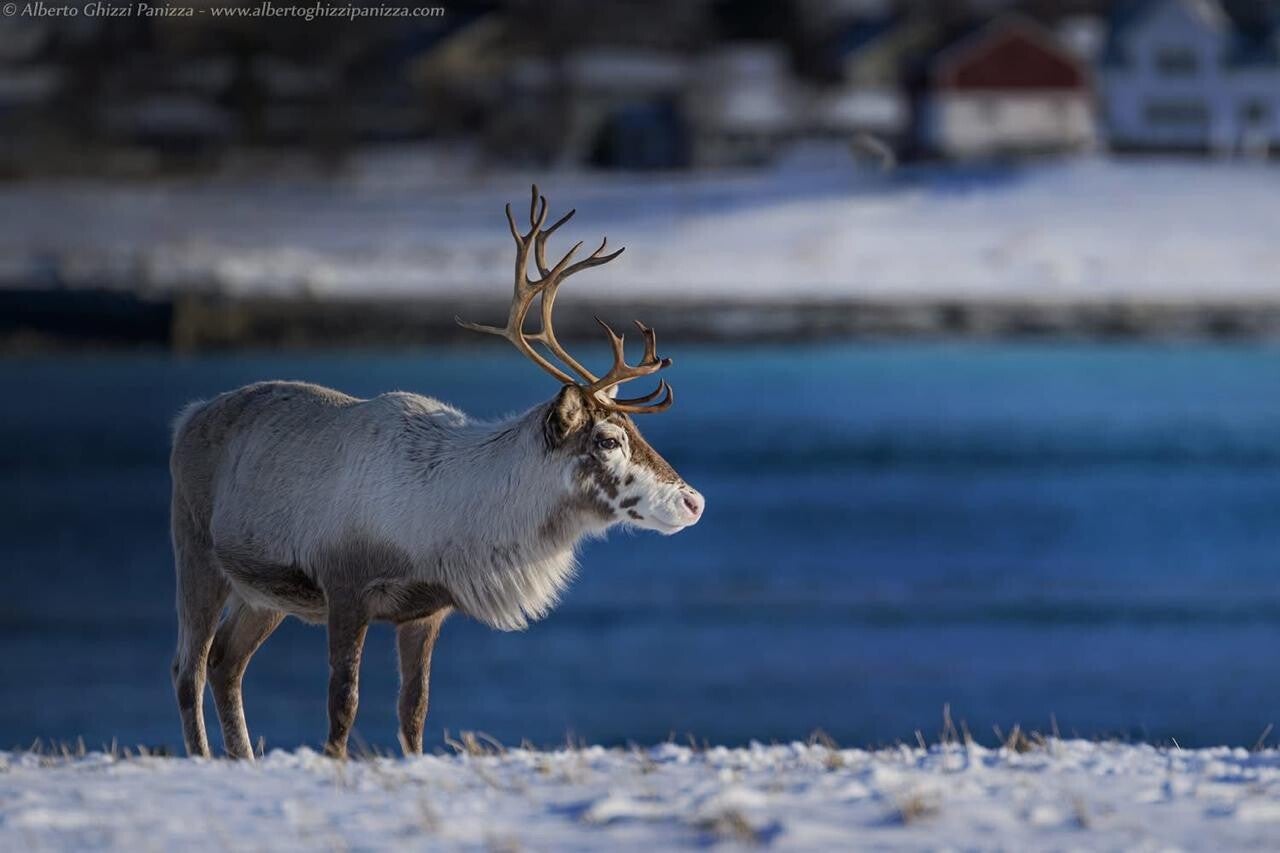
Photo: Photography Needs Heroes
In environments like Lofoten and Vesterålen, accessories also become essential. A sturdy tripod is indispensable for resisting the wind and creating long exposures, while ND filters and graduated filters help manage light in high-contrast scenes.
Other important items include remote shutter releases, spare batteries kept warm, and waterproof backpacks with rain and snow protection, essential tools for working safely in changing weather conditions.
In Arctic environments even small details can make a difference: avoiding condensation when returning indoors, protecting lenses from ice, and keeping equipment ready for sudden changes in light can determine the success of a photograph.
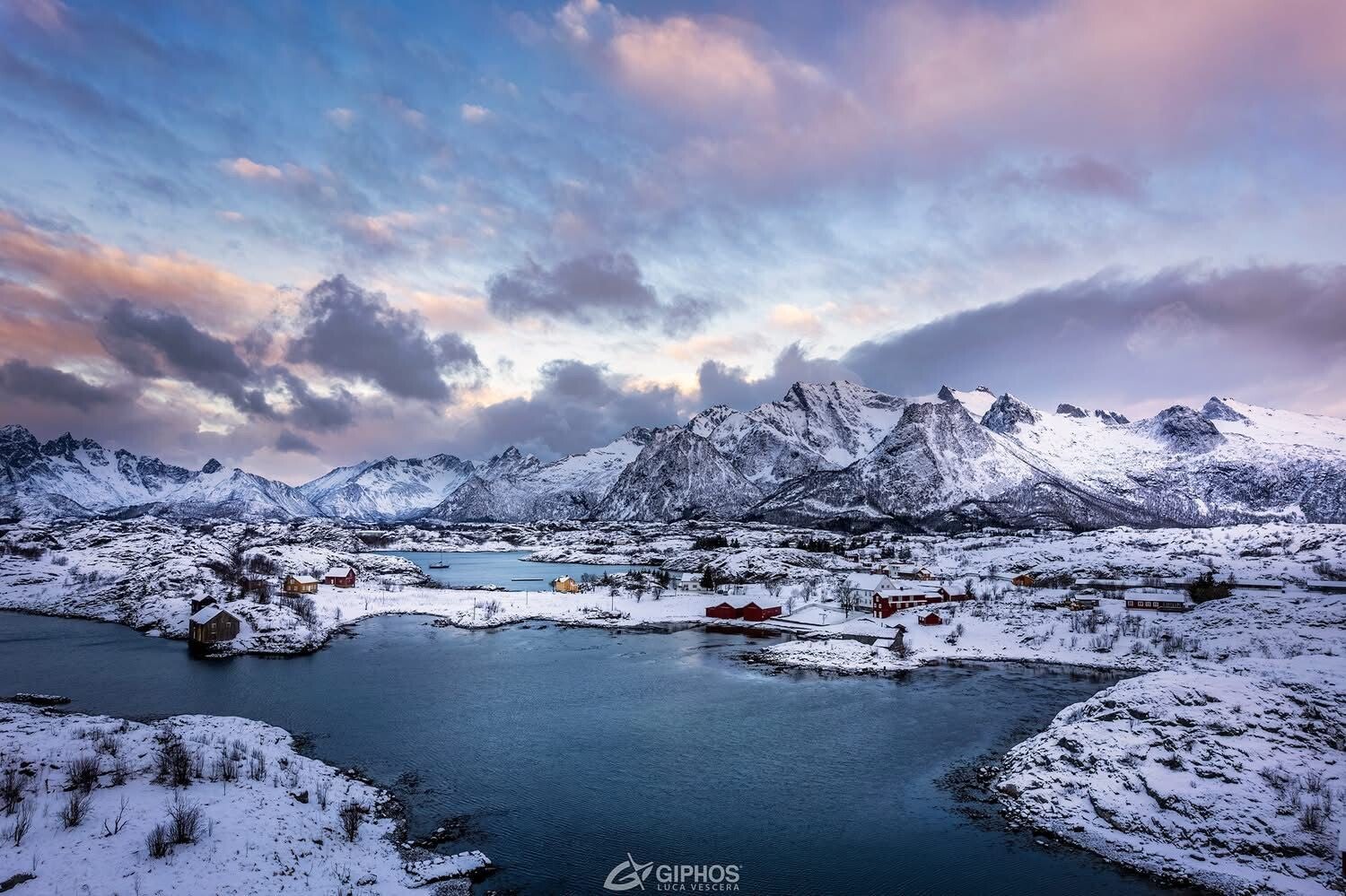
Photo: Photography Needs Heroes
Participants in the workshops often return home with surprising images: silent sunrises among snow-covered mountains, long exposures on Arctic beaches, sudden storms illuminated by grazing light, or fishing villages immersed in the deep blue tones of winter.
These photographs tell not only the beauty of the places, but also the experience of those who move through these landscapes with a camera in hand, waiting for the moment when light, landscape, and vision finally come together.
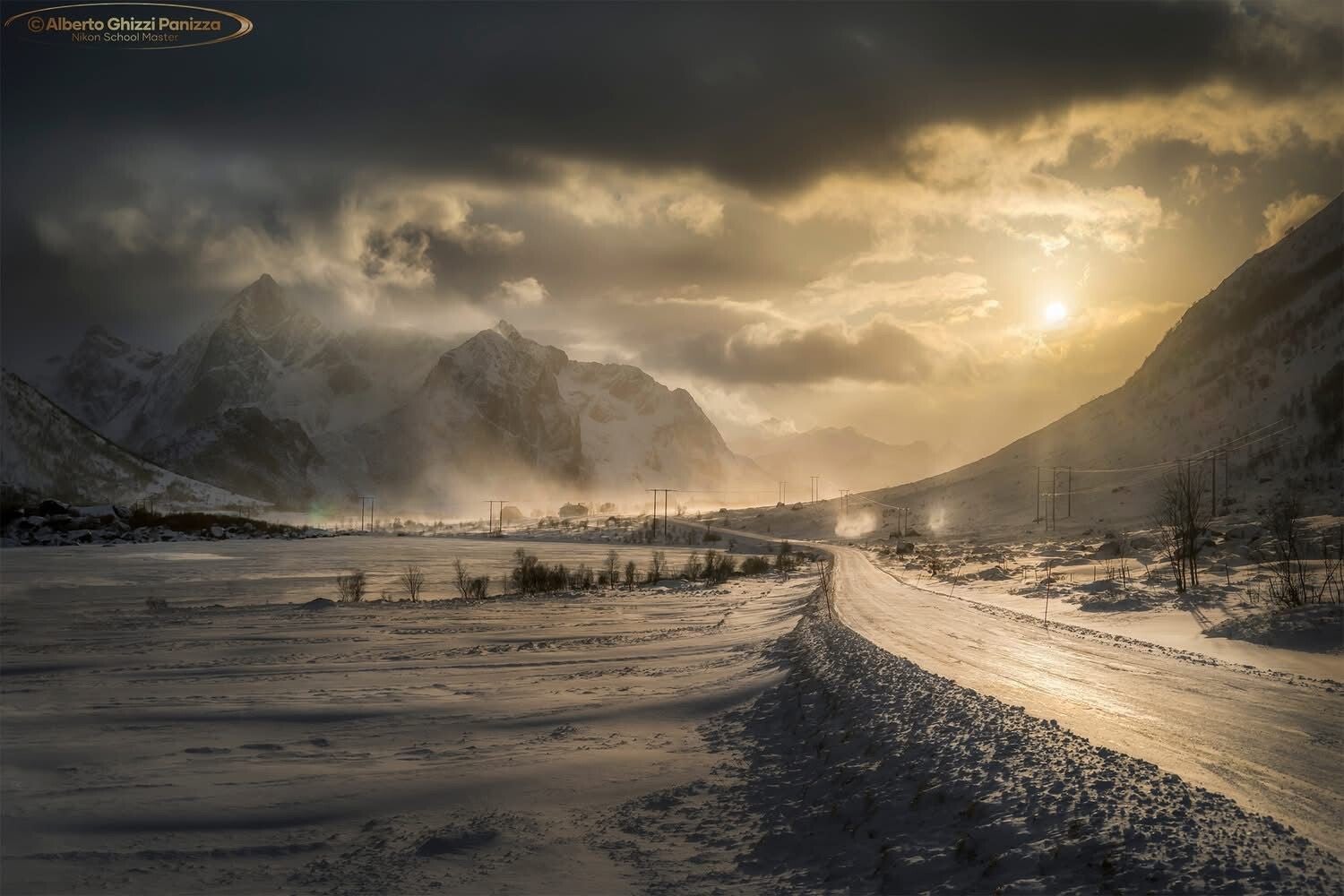
Photo: Photography Needs Heroes
Learning more about the travel experiences organized by Alberto and Luca also made me reflect on a different way of thinking about travel. I have always believed that moving through the world gains deeper meaning when it follows a specific purpose, whether linguistic, professional, cultural, or tied to a passion, as in the case of photography.
It is precisely this intention that transforms travel into something more meaningful. It is not simply about going far away, but about traveling kilometers in pursuit of an idea, an intuition, an image that does not yet exist but that you feel is possible.
In the end, this is the true spirit of the photographic journeys proposed by Photography Needs Heroes: the path of two friends who, through photography, continue together in their search for the light of the Arctic.


Photos: Photography Needs Heroes
For all photography enthusiasts and for those who feel the call of adventure, the starting point is the project’s website. It’s worth a visit. In addition to photography trips to the Arctic, it also features many other workshops organized in different parts of the world by Alberto Ghizzi Panizza and Luca Vescera.

Website:
https://www.photographyneedsheroes.it
Workshops around the world:
https://www.photographyneedsheroes.it/projects