Photo: Emil Sollie / Helgeland Reiseliv
"No man is an island, entire of itself; every man is a piece of the continent, a part of the main." John Donne – Meditation XVII (1624)
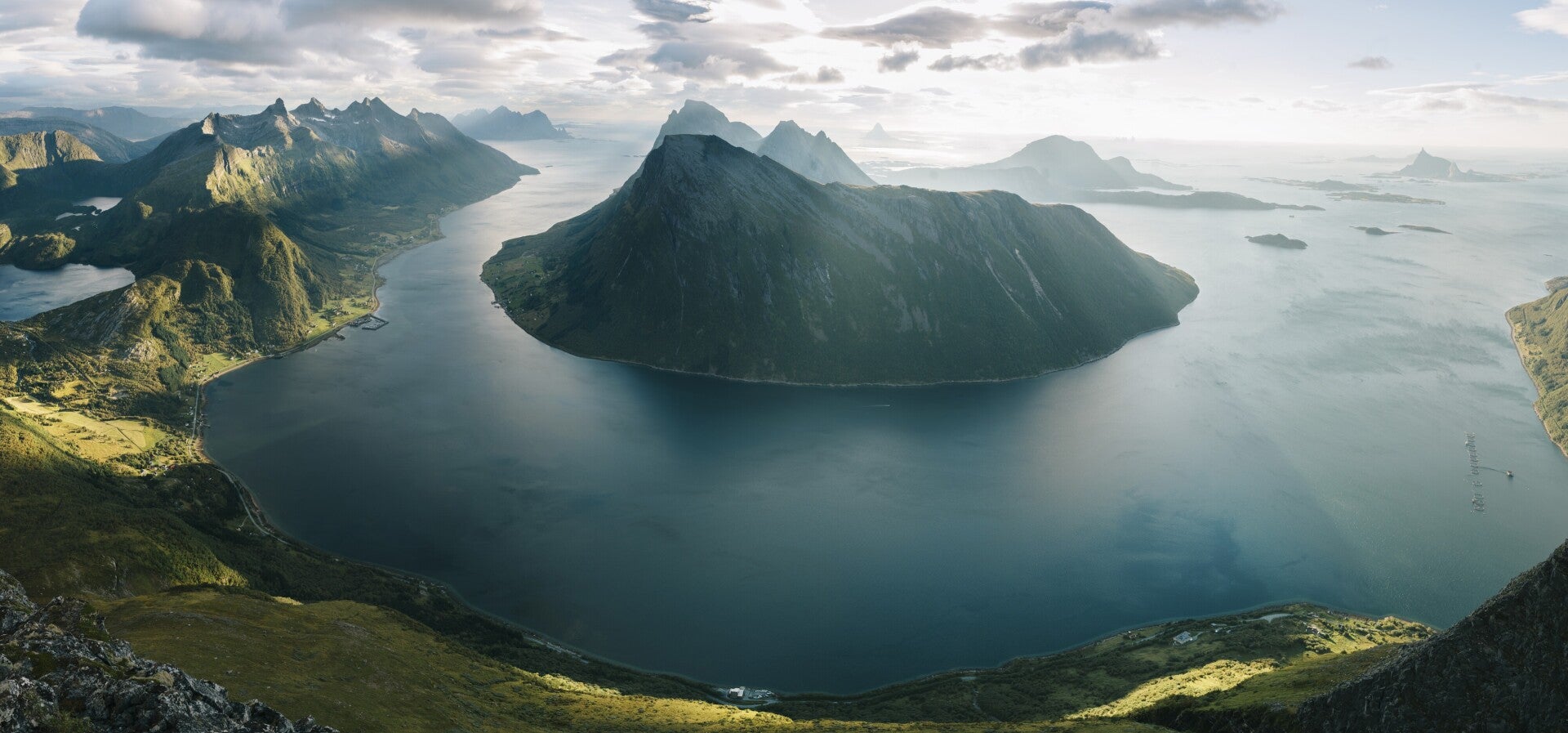
When John Donne wrote these words in the seventeenth century, he could hardly have imagined that centuries later they would resonate so deeply in a remote corner of Northern Europe, on a small island surrounded by sea and mountains. And yet it is precisely here, on Hadseløya, in the heart of the Vesterålen archipelago, where I have chosen to live, that I have truly understood the profound meaning behind his reflection.
An island, at first glance, appears to be a symbol of separation. A piece of land surrounded by water, distant from the mainland, far away from large cities and from the restless rhythm of modern life. But perhaps an island tells exactly the opposite story: it reminds us that no place and no person truly exist alone. Arriving here from Italy meant crossing an invisible bridge much longer than any road ever built by humans. A bridge made of choices, emotions, sacrifices, encounters and hopes. Sometimes I imagine that such a bridge could truly exist: a connection capable of carrying me in an instant towards the people I left behind, towards the places where I grew up, and towards that part of myself that still belongs there.
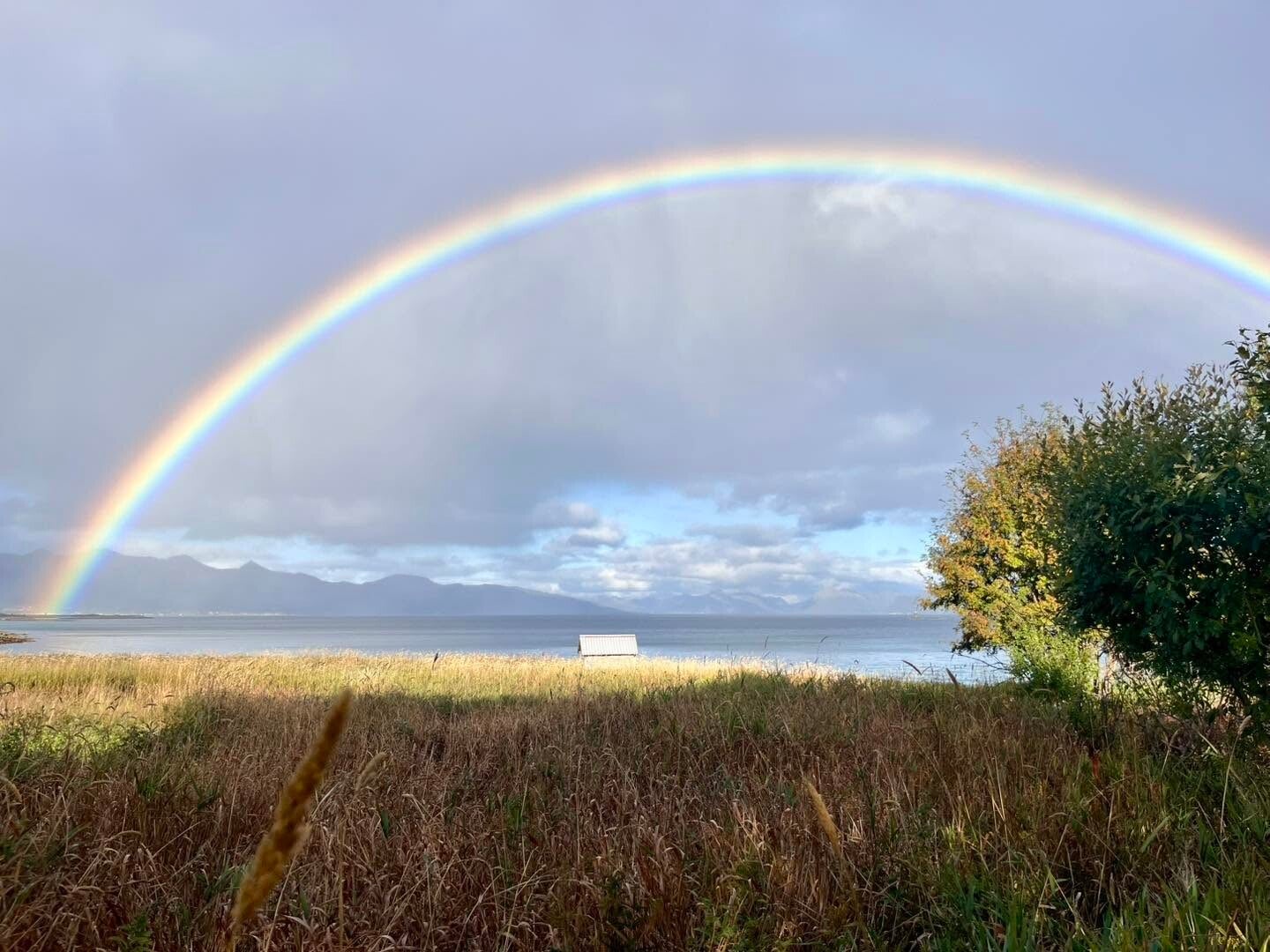
Photo: Mathia Pacenti / © WanderNorway
At other times, that bridge appears in the sky after endless days of Nordic rain, in the form of a rainbow stretching across the landscape, reminding me that even the greatest distances can be crossed.
Norway is perhaps one of the few places in the world where this idea of connection between islands becomes an everyday reality. Here the sea is not a barrier: it is a road. Bridges, underwater tunnels and ferries allow people to travel through landscapes that for centuries remained isolated, connecting communities built between mountains and ocean.
Living on an island perhaps allows us to understand John Donne’s words more clearly: no man is an island. Even when we choose a distant life, even when we find ourselves at the geographical edges of the world, we remain connected to others through memories, encounters, experiences and emotions.
But living far away from one’s roots also means facing a reality that only those who have experienced it can truly understand. It means learning to live with distance. It means accepting a different kind of time: slower, deeper, a time measured by seasons, light, wind and tides.
It means carrying a suitcase of memories that never truly becomes empty.
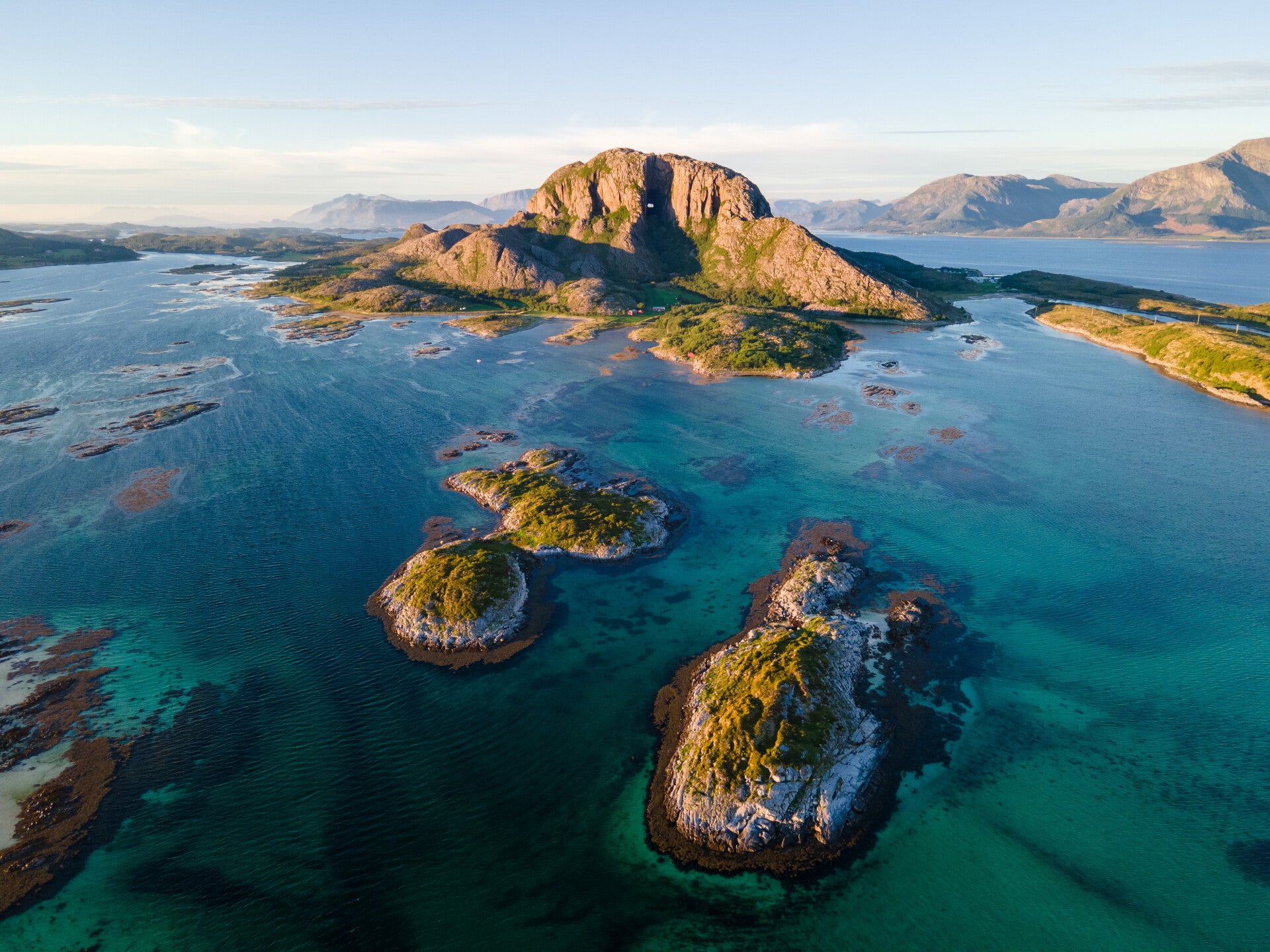
Photo: Kristoffer Moellevik / www.visithelgeland.com
The Geography of Norway’s Islands: A Country Sculpted by Ice and Ocean
Norway is one of the countries with the most complex coastlines in the world. Its identity has been shaped by the constant relationship between mountains and ocean, and its islands represent one of the most extraordinary expressions of this connection.
According to official estimates, Norway is home to around 239,000 islands, islets and skerries. The exact number can vary depending on how the smallest rocky formations are classified, but the scale remains astonishing. Only a small percentage of these islands are permanently inhabited. Many are nothing more than tiny fragments of rock rising from the sea, shaped over centuries by wind, waves and ice.
The Norwegian coastline stretches for more than 25,000 kilometres when measured along fjords, bays and inlets. When all islands are included, the total coastal system extends beyond 100,000 kilometres, an extraordinary figure considering that mainland Norway itself stretches approximately 1,700 kilometres from south to north.
This incredible fragmentation is the result of millions of years of geological transformation, especially the great ice ages that shaped Scandinavia. The glaciers slowly carved the land, creating deep fjords that penetrate far inland, mountains that appear to rise directly from the ocean, ancient valleys now flooded by seawater, and thousands of islands with dramatic and irregular shapes.
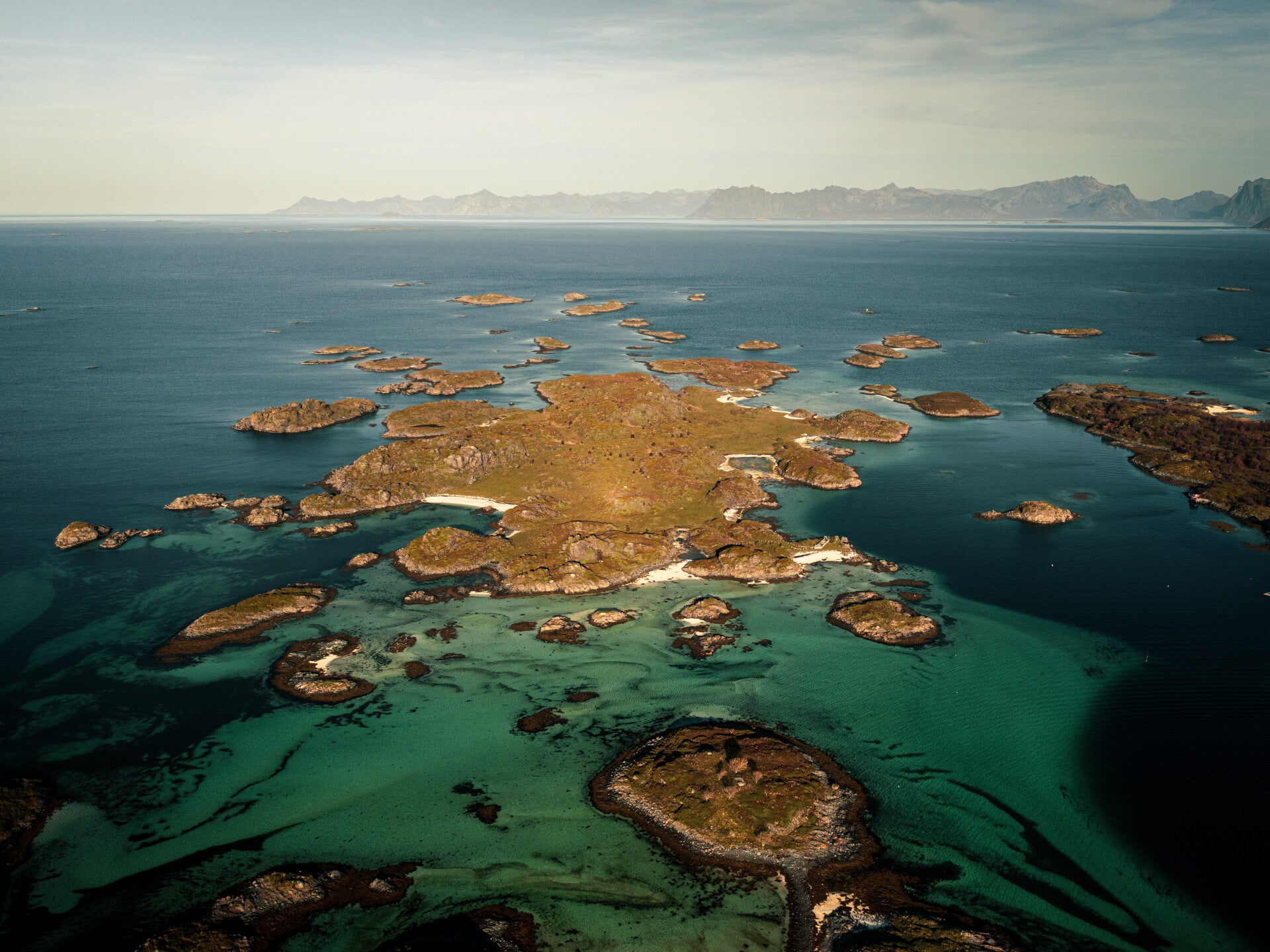
Photo: Jan Schmitt / Visit Harstad
Norway’s islands can be understood through several major geographical regions. In the far north lie the Arctic archipelagos, such as Svalbard, where glaciers and polar landscapes dominate. Along the coast of Nordland, some of the most famous island regions can be found, including Helgeland, Lofoten and Vesterålen, each offering a different interpretation of the relationship between land and sea. Further south, the central coastline becomes a labyrinth of thousands of smaller islands and skerries, while the southern islands experience a milder climate influenced by the North Sea.
A fascinating aspect of Norwegian island life is that many communities were historically created because of the sea rather than despite it. For centuries, the ocean was not considered a barrier but a source of livelihood, communication and identity. Fishing communities developed around the rhythms of the seasons, and many islands still preserve small villages where life continues to follow the movements of the sea.
In this article, I will take you on a journey through some of the most beautiful and extraordinary islands of Northern Norway, following the fragile line where mountains meet the ocean.
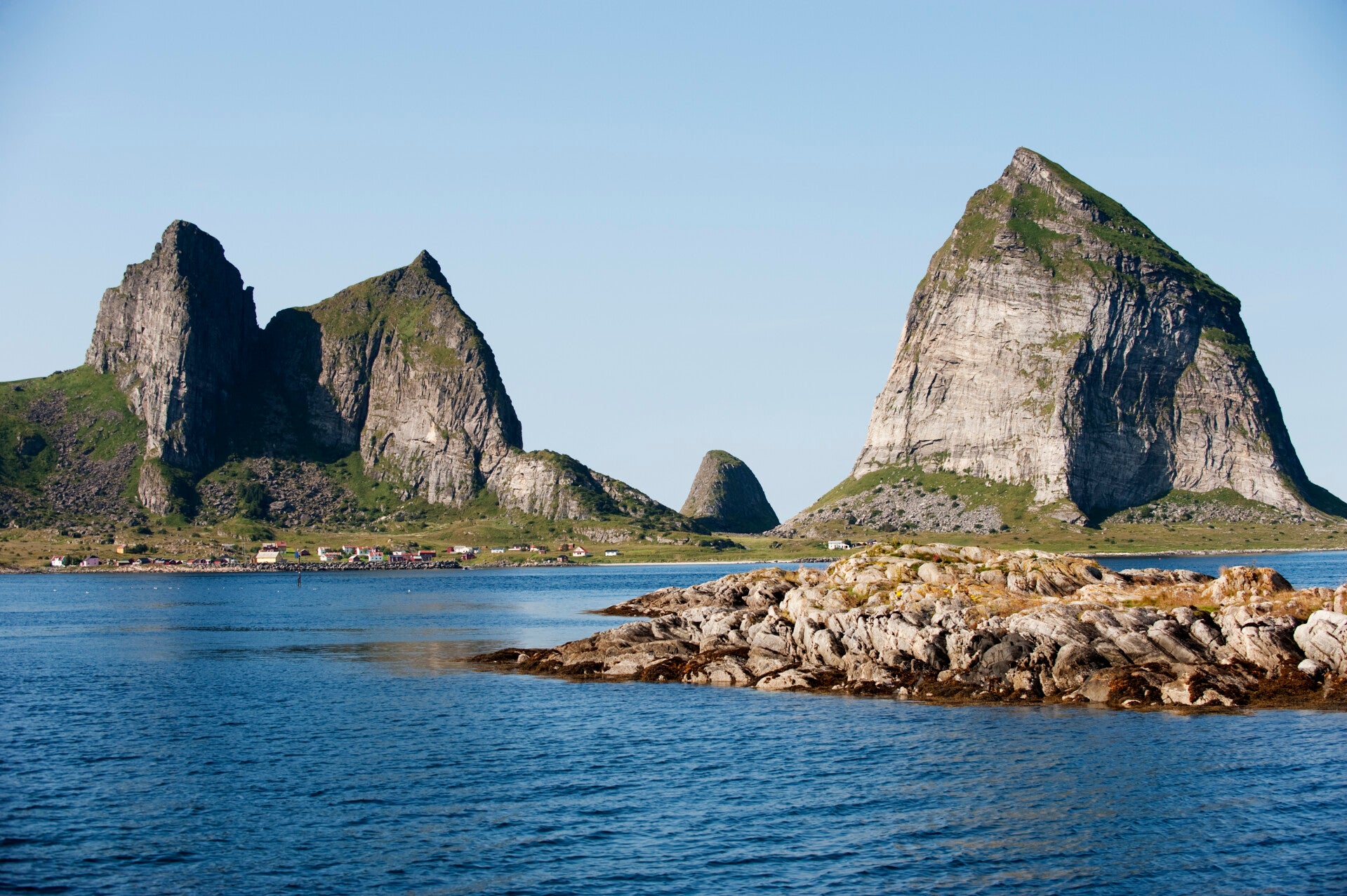
Photo: Terje Rakke / www.visithelgeland.com
Helgeland: The Kingdom of a Thousand Islands
Among Norway’s most spectacular island regions is Helgeland, located in the southern part of Nordland county. Often overlooked compared with the famous Lofoten Islands, Helgeland has preserved a quieter and more authentic atmosphere. Its beauty lies not only in dramatic landscapes, but also in the feeling of discovery that comes from traveling through a place where nature still dominates the rhythm of life.
The Helgeland coast is a remarkable mosaic of more than 14,000 islands, islets and skerries, forming one of Norway’s largest island regions. Unlike the sharp, dramatic peaks of Lofoten, the islands of Helgeland often appear softer and greener. Low coastal landscapes are interrupted by isolated mountains rising from the sea, creating a scenery that feels almost mythical.
One of the most iconic views of the region is the mountain chain known as The Seven Sisters. According to legend, these seven peaks represent seven sisters who were turned into stone, forever watching over the coast.
Among the many islands of Helgeland, some have gained particular recognition for their unique character. Vega is perhaps the most internationally known. Its archipelago was added to the UNESCO World Heritage List because of the extraordinary relationship between humans and nature that has developed there over centuries. For generations, local communities have lived alongside eider ducks, carefully collecting their precious down to create traditional quilts and handmade products. Vega represents a rare example of sustainable interaction between people and the natural world.
Further out in the ocean lies Lovund, a small island famous for its large colony of Atlantic puffins that return every spring to nest along its cliffs. Dominated by a distinctive mountain silhouette, Lovund offers one of the most beautiful places in Norway to experience the fragile and fascinating world of seabirds.
Another remarkable place is Træna, one of Norway’s oldest inhabited areas. Its islands sit completely exposed to the open sea, creating one of the country’s most isolated communities. Archaeological discoveries show that people have lived here for thousands of years, and the landscape still carries the memory of the first coastal inhabitants who depended entirely on the ocean.
Farther offshore lies Myken, a tiny island community where isolation becomes almost poetic. With only a small number of residents, endless ocean surrounding it, and a pace of life completely different from modern cities, Myken represents the essence of remote island living. It is also famous for being home to one of the world’s northernmost whisky distilleries, a remarkable example of human creativity thriving in an extreme environment.
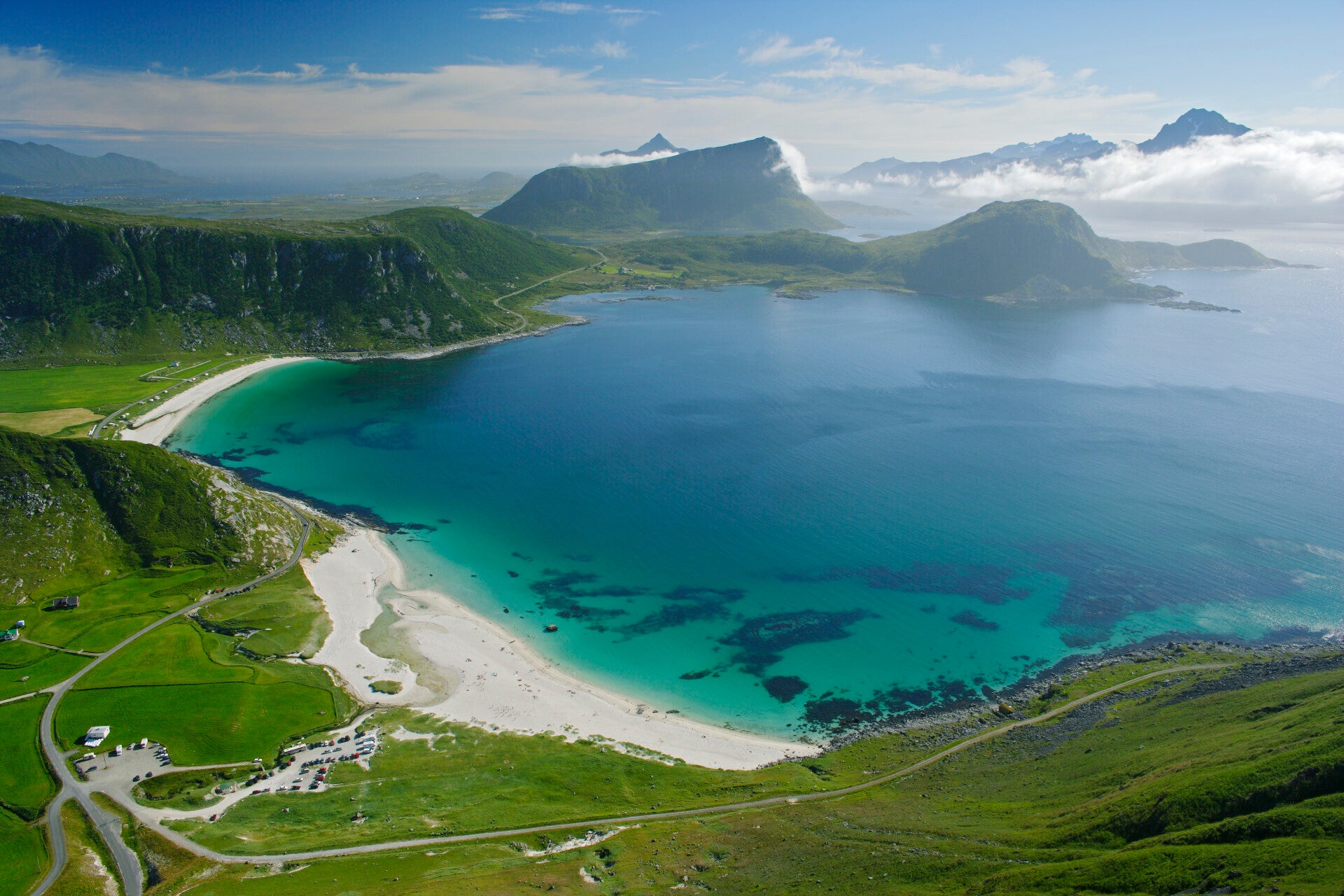
Photo: Baard Loeken / www.nordnorge.com
Lofoten: The Mountains Rising from the Sea
Among all the islands of Norway, few names have become as internationally recognised as Lofoten. Located north of the Arctic Circle, this extraordinary archipelago has become one of the symbols of Norway itself: a place where steep mountains rise dramatically from the ocean, where small fishing villages are protected by natural harbors, and where the changing Arctic light transforms the landscape throughout the seasons.
The main islands of the archipelago, Austvågøya, Gimsøya, Vestvågøya, Flakstadøya and Moskenesøya, form a chain of mountains and islands that appears almost unreal, as if nature had deliberately designed a landscape to challenge the imagination.
The mountains of Lofoten are among the oldest geological formations on Earth, shaped over millions of years and carved by glaciers that created the sharp peaks, deep valleys and dramatic coastlines visible today. Their reflections in the calm waters of the fjords have made places such as Reine, Henningsvær and Nusfjord among the most photographed destinations in Norway.
Yet beyond its visual beauty, Lofoten is a place defined by a deep relationship with the sea. For centuries, fishing has been the foundation of life here. The arrival of the Arctic cod, known as skrei, during the winter months transformed these islands into one of the most important fishing regions in Northern Europe. Traditional fishermen’s cabins, known as rorbuer, once simple seasonal homes for fishermen, have now become some of the most unique accommodations for travelers seeking an authentic Arctic experience.
The identity of Lofoten is also shaped by contrasts. In summer, the islands experience the endless light of the Midnight Sun, when the sun remains above the horizon and the landscape seems to exist outside ordinary time. In winter, darkness becomes the stage for another natural wonder: the Northern Lights, dancing above mountains and villages.
But perhaps the true magic of Lofoten is not only found in its famous viewpoints. It lies in the silence of a fishing village in the early morning, in the sound of waves against the harbor, in the smell of the sea carried by the wind, and in the feeling of standing at the edge of the world while still being connected to something much greater.
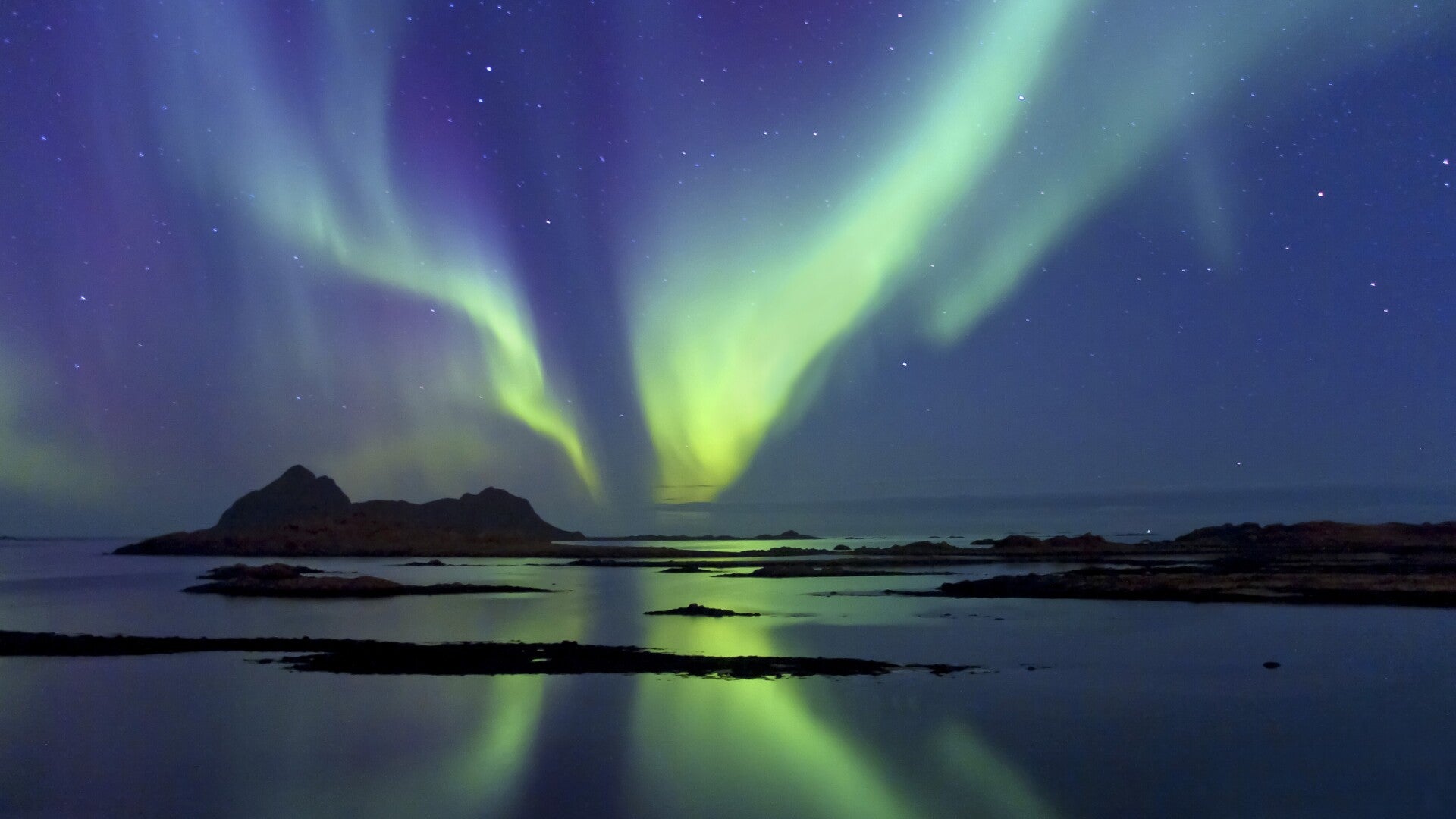
Photo: Øystein Lunde Ingvaldsen / www.nordnorge.com
Vesterålen: My Islands and the Meaning of Distance
Just north of Lofoten lies the archipelago of Vesterålen, a region that shares many of the same dramatic landscapes but preserves a quieter, more intimate character. While Lofoten has become a global destination, Vesterålen remains a place where everyday life and nature continue to exist side by side. It is a land of open horizons, deep fjords, white beaches, agricultural landscapes and mountains that meet the ocean in a softer and more welcoming way.
The main islands of Vesterålen include Langøya, Andøya, Hadseløya and the western part of Hinnøya. Together they form a fascinating world where bridges and ferries connect communities that have depended on the sea for generations.
This is where my own story continues, on Hadseløya. Here, nature is not a background. It is a constant presence. On Hadseløya, a simple walk can become a lesson in awareness. The weather can change within minutes, transforming the same landscape from peaceful to dramatic. A quiet morning can reveal mountains reflected perfectly in the sea, while a storm arriving from the Atlantic can remind us immediately of the power of nature.
Vesterålen is also one of the best places in Norway for whale watching. The deep waters just offshore create ideal conditions for observing marine life throughout the year, including sperm whales, humpback whales, orcas and other species of cetaceans.
But beyond wildlife and landscapes, what makes Vesterålen special is its authenticity. It is a place where people still live according to the rhythm of nature, where small communities maintain strong connections, and where the relationship between humans and the environment remains visible every day.
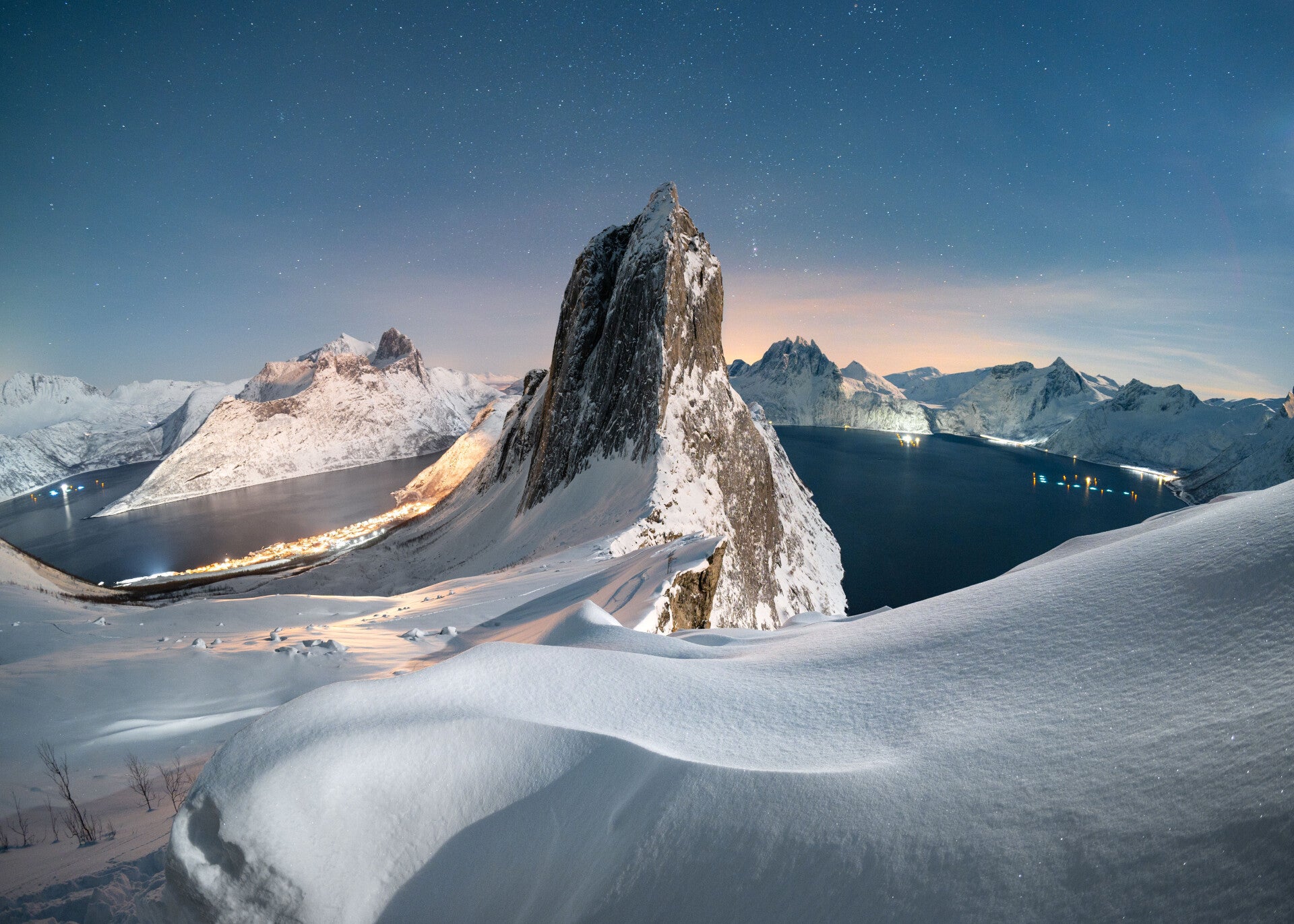
Photo: Kristoffer Vangen / www.nordnorge.com
Senja: Norway in Miniature
Further north, between Tromsø and the open Arctic coast, lies Senja, an island often described as “Norway in miniature”. The expression is not an exaggeration. Within a relatively small area, Senja gathers many of the landscapes that define Norway: dramatic mountains, deep fjords, forests, fishing villages and untouched beaches.
Compared with Lofoten, Senja remains less known internationally, and this gives it a special atmosphere. The island feels wilder and more personal, a place where travelers can experience Arctic nature without the same level of crowds found elsewhere.
The most iconic symbol of Senja is Segla, a distinctive mountain rising above the village of Fjordgård. Its dramatic shape has become one of the most recognisable images of northern Norway. But Senja’s beauty is not limited to famous viewpoints. It is found along quiet roads following the coastline, in small villages where fishing traditions continue, and in moments when the changing Arctic weather creates completely different landscapes within the same day.
The island represents another important aspect of Norway’s geography: the possibility of experiencing enormous natural diversity within a very small distance.
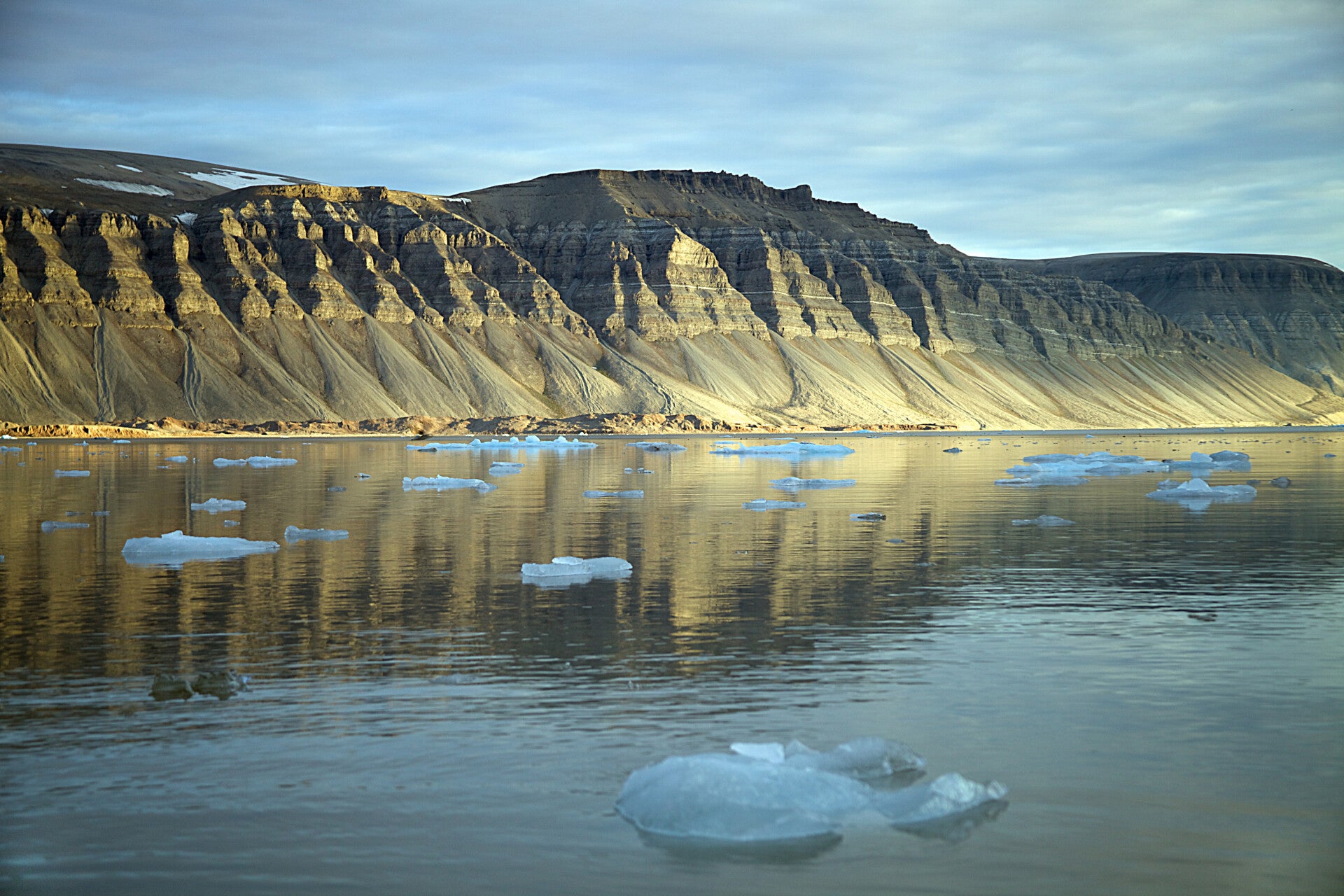
Photo: Marcela Cardenas / www.nordnorge.com
Svalbard: The Islands at the Edge of the World
Far beyond mainland Norway, deep inside the Arctic Ocean, lies the archipelago of Svalbard, one of the northernmost inhabited places on Earth. Located between mainland Norway and the North Pole, Svalbard belongs to a completely different world. Here, the landscape is shaped by ice, extreme seasons and the presence of wildlife adapted to one of the planet’s harshest environments.
The main settlement, Longyearbyen, is a unique community where people from many different countries live surrounded by Arctic wilderness. It is a place where the limits between human presence and nature become immediately visible.
The landscape of Svalbard is dominated by enormous glaciers, snow-covered mountains, frozen valleys and endless Arctic horizons. During winter, the Polar Night creates weeks of darkness, while in summer the Midnight Sun brings continuous daylight.
This is also the realm of the polar bear, one of the most powerful symbols of the Arctic. Encounters with wildlife here remind visitors that humans are guests in an environment governed by ancient natural forces.
Svalbard represents perhaps the ultimate expression of island life: a place where geography creates not only distance, but also a profound sense of wonder and humility.
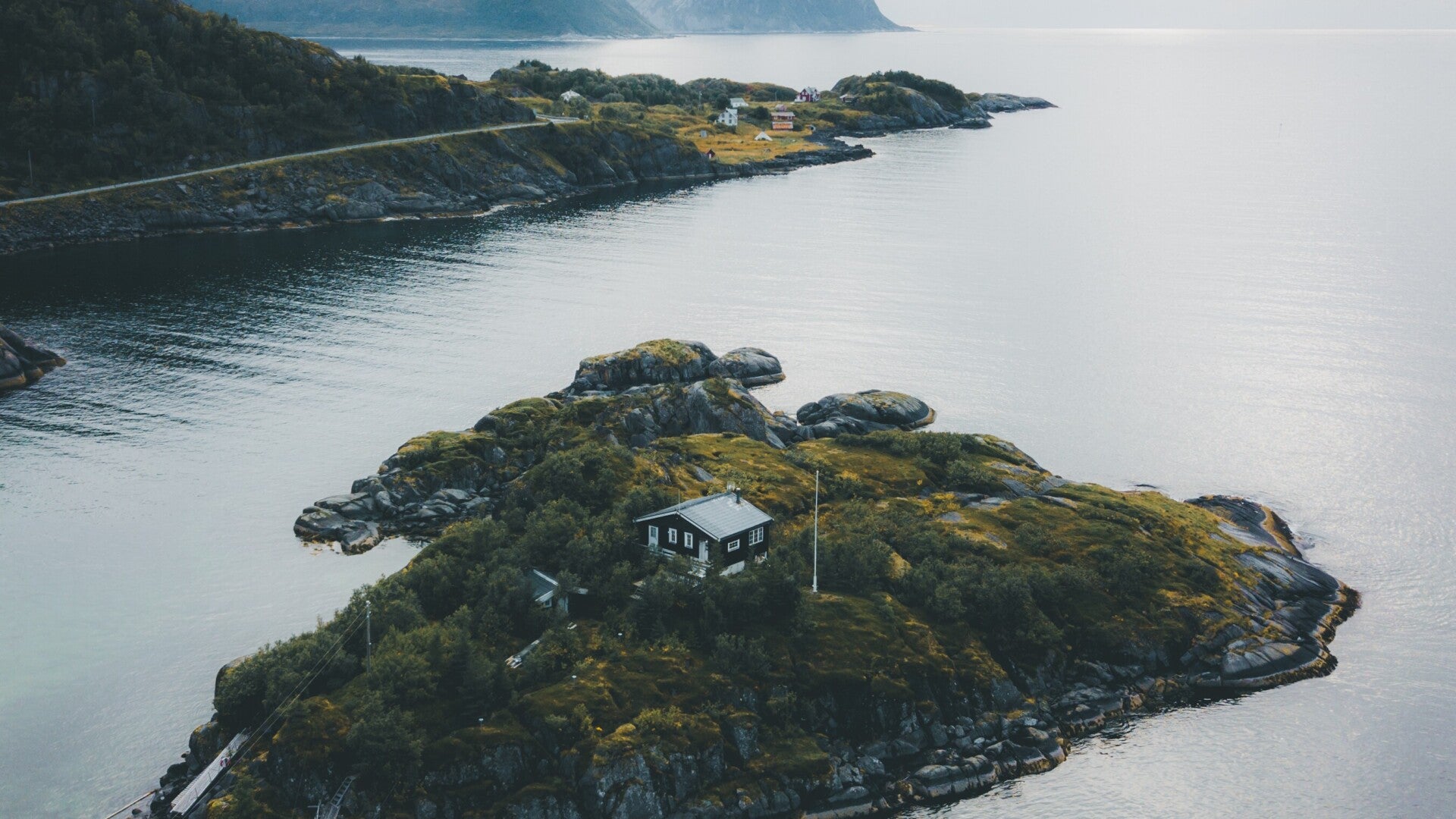
Photo: Steffen Fossback / www.nordnorge.com
The Island as a Metaphor for Life
After years spent living on Hadseløya, I have learned that an island is not a place of separation, but a place of awareness. Distance from one’s origins forces us to look inward. It teaches us that we can be far away without forgetting where we come from.
Living far from my birthplace has changed the way I understand belonging. Home is no longer only a geographical location. It becomes a collection of memories, relationships and experiences that continue to grow wherever life takes us.
Nature has taught me that everything follows a rhythm. We cannot control the wind. We cannot stop the changing of the seasons. We cannot force the return of the light after the long darkness of winter.
We can only learn to observe and listen.
Perhaps this is the greatest lesson of Norway’s islands. They teach us that distance does not always separate us. Sometimes it brings us closer. Closer to nature. Closer to ourselves.
Closer to the understanding that every human being, like every island, is connected to something larger.
Because no island truly stands alone. Every island belongs to an archipelago. And every person, even when crossing oceans and immense distances, remains part of a much greater whole.