Photo: Mathia Pacenti / © WanderNorway
Traveling through Northern Norway is, above all, an invitation to slow down. It is not enough to pass through its landscapes, take photographs, collect beautiful views, and move on. The North asks for something different: time. Time to let the landscape reveal itself gradually.The Vesterålen Islands, like much of the Arctic, never reveal themselves all at once. At first glance, their elements seem familiar and repetitive, sea, wind, mountains, grass, changing skies, scattered houses and endless light. Yet every bay, every stretch of coastline and every hillside carries its own distinct character. A shoreline transforms with the tide, a mountain changes personality as the light shifts, and a familiar path reveals an entirely different perspective when walked from another direction.
This is the essence of slow travel. It means walking without rushing towards a destination, pausing to admire a mountain ridge, listening to the cries of seabirds, and allowing the Arctic wind to quiet both body and mind.
That is why the pauses become just as meaningful as the journey itself. Along an Arctic itinerary, stopping is never an interruption. It is often where the experience becomes richer. A small gallery overlooking the sea, a welcoming home, a warm cup of tea, or a slice of homemade cake after a walk along the coast can become just as memorable as the landscapes themselves. It is an invitation to embrace a silence that is not empty, but filled with reflection, attentiveness and, sometimes, a renewed connection with yourself.
It is within this landscape of slowness that Galleri Uver finds its place.
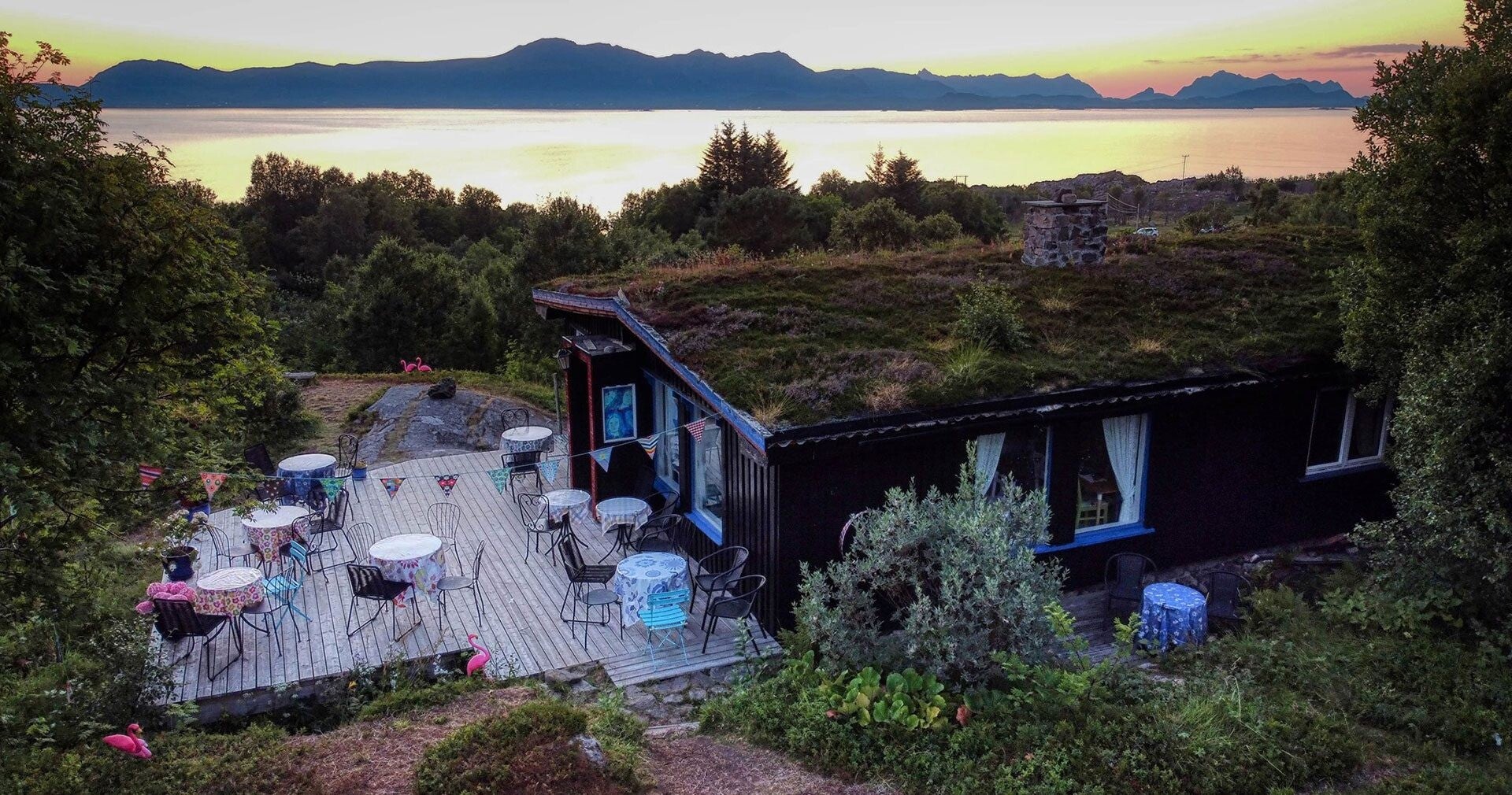
Photo: Bjørn Eide / www.uver.no
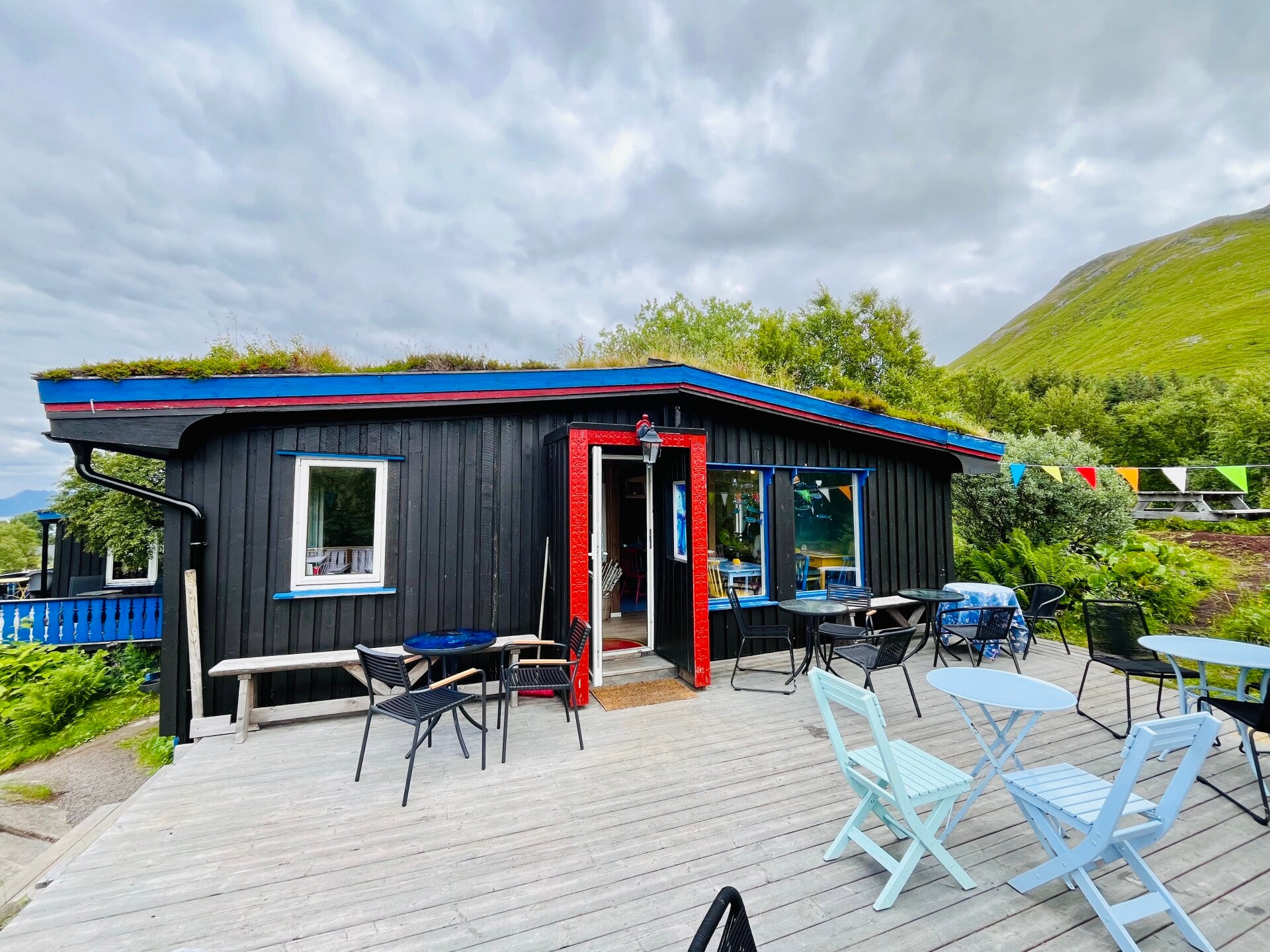
Located on the western coast of Hadseløya, between Stokmarknes and Melbu, where the island opens towards the Norwegian Sea and the wind carries the unmistakable spirit of the Vesterålen, Galleri Uver feels like a house filled with light. It is more than an art gallery, more than a working studio, and more than a place to stop for coffee or tea. It is a welcoming space where glass, candles, paintings and handcrafted objects come together to tell the story of the North. Here, Northern Norway is translated into colour, texture and craftsmanship.
At the heart of Galleri Uver is glass artist and photographer Siv Johansen, whose work is deeply inspired by the landscapes surrounding her. The sea, the changing seasons, seabirds, mountain silhouettes and the ever-shifting Arctic light all find their way into her creations. Her work reflects the character of the Vesterålen itself, a landscape that can be both wild and gentle, dramatic and peaceful within the space of a single day. The beauty she captures is shaped by weather, wind, patience and fire.
Among Galleri Uver's most recognizable creations are its handcrafted glass hearts. At first glance they appear to be delicate keepsakes, beautiful reminders of a journey to the Arctic. Yet they carry a deeper meaning.
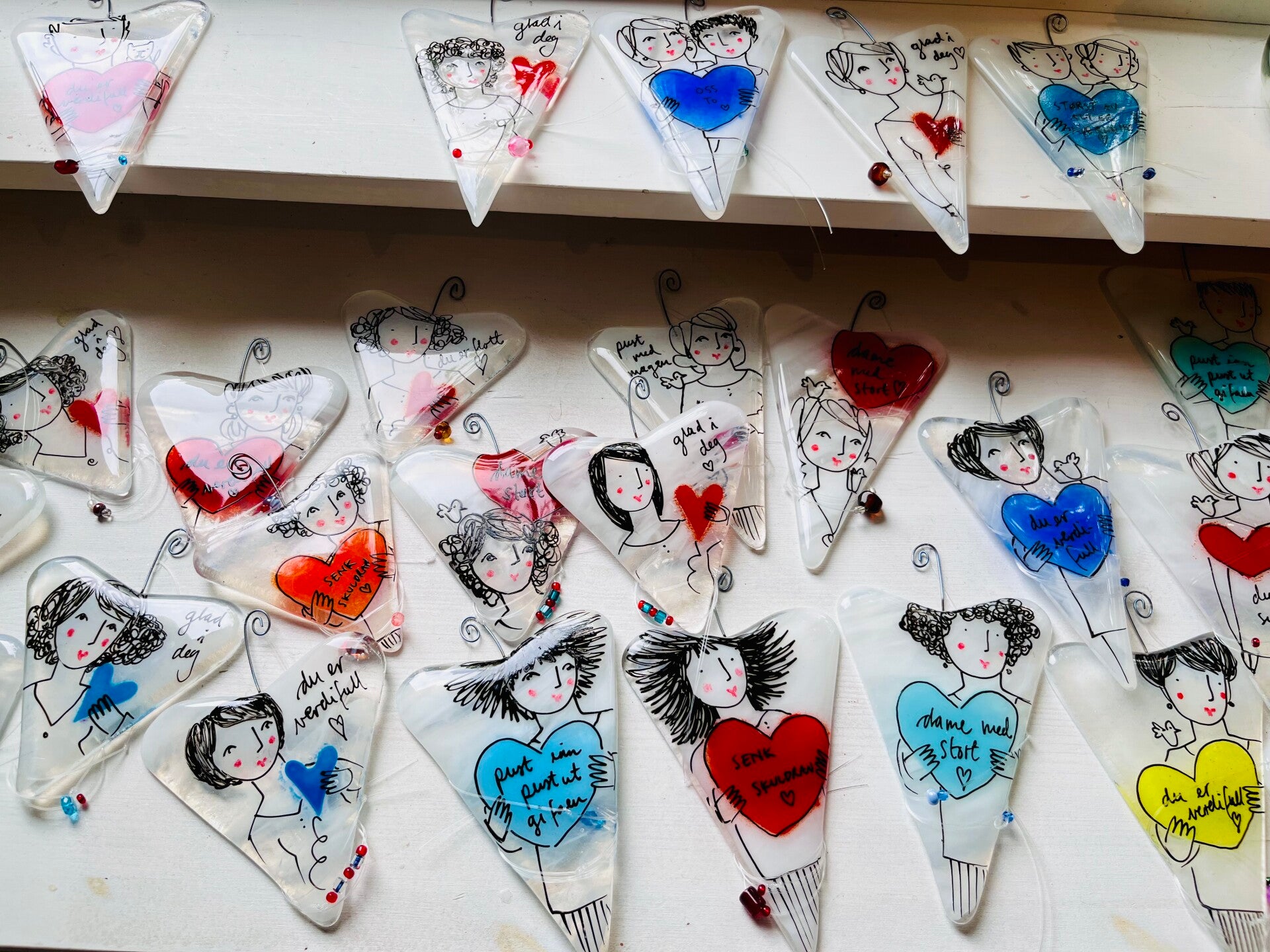
Photo: Mathia Pacenti / © WanderNorway
In Norse tradition, the heart represents far more than affection. It is also a symbol of courage, memory, wisdom and transformation. One of the most enduring stories from Norse mythology tells of the hero Sigurd and the dragon Fáfnir. After defeating the dragon, Sigurd roasts its heart over a fire. When a drop of the dragon's blood touches his tongue, he suddenly gains the ability to understand the language of birds, revealing knowledge that had previously been hidden from him. In this story, the dragon's heart is not simply a trophy, but a symbol of transformation. Fire becomes the bridge between raw power and wisdom.
Seen through this lens, the glass hearts of Galleri Uver take on a richer significance. Glass, too, must pass through fire before it can become something beautiful. It softens, melts and changes completely before emerging as something transparent, luminous and full of colour. It is a material that has survived the flame and, because of it, becomes capable of reflecting and transmitting light.
Glass has long been regarded as a powerful symbol of transformation. Before it becomes transparent, it must first surrender to fire. It softens, melts and changes form, leaving behind its original state to become something entirely new. What was once opaque emerges clear, luminous and capable of capturing the light. It is this remarkable journey that gives glass its enduring symbolic power.
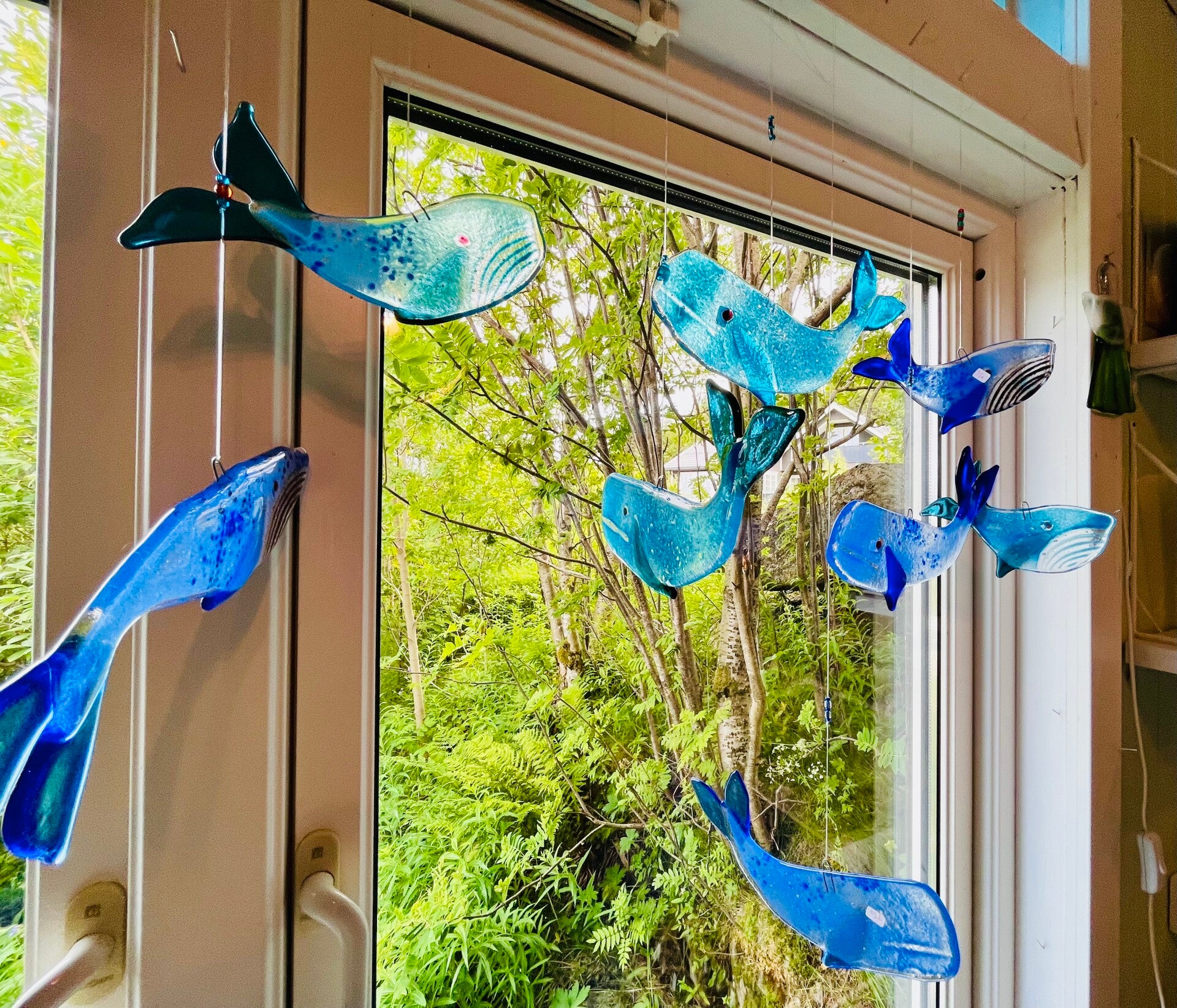
Photo: Mathia Pacenti / © WanderNorway
In many traditions, transformation through fire has represented personal growth. Just as glass cannot become beautiful without passing through intense heat, our own lives are often shaped by moments of challenge and change. Beauty is not created by avoiding hardship but by allowing it to refine us.
This idea echoes the ancient alchemical concept of the athanor, the furnace in which transformation slowly takes place. Unlike an ordinary fire, the athanor burned steadily and patiently, allowing raw materials to be purified and reshaped over time. For medieval alchemists, it was far more than a physical furnace. It also symbolized an inner process of growth and self-discovery. In this sense, the true athanor is the human heart.
Not simply the heart as a symbol of emotion, but as the place where experience is transformed into wisdom. Joy, loss, hope, memory and resilience are all slowly refined within us, just as glass is shaped by fire. The heart becomes the quiet workshop where we learn to see more clearly, not because life becomes easier, but because we become more open to its light.
Siv's glass hearts seem to embody this very idea. Their beauty does not lie only in their delicate appearance, but in what they represent: strength born through transformation. They remind us that transparency is not fragility but clarity, achieved only after passing through the flame.
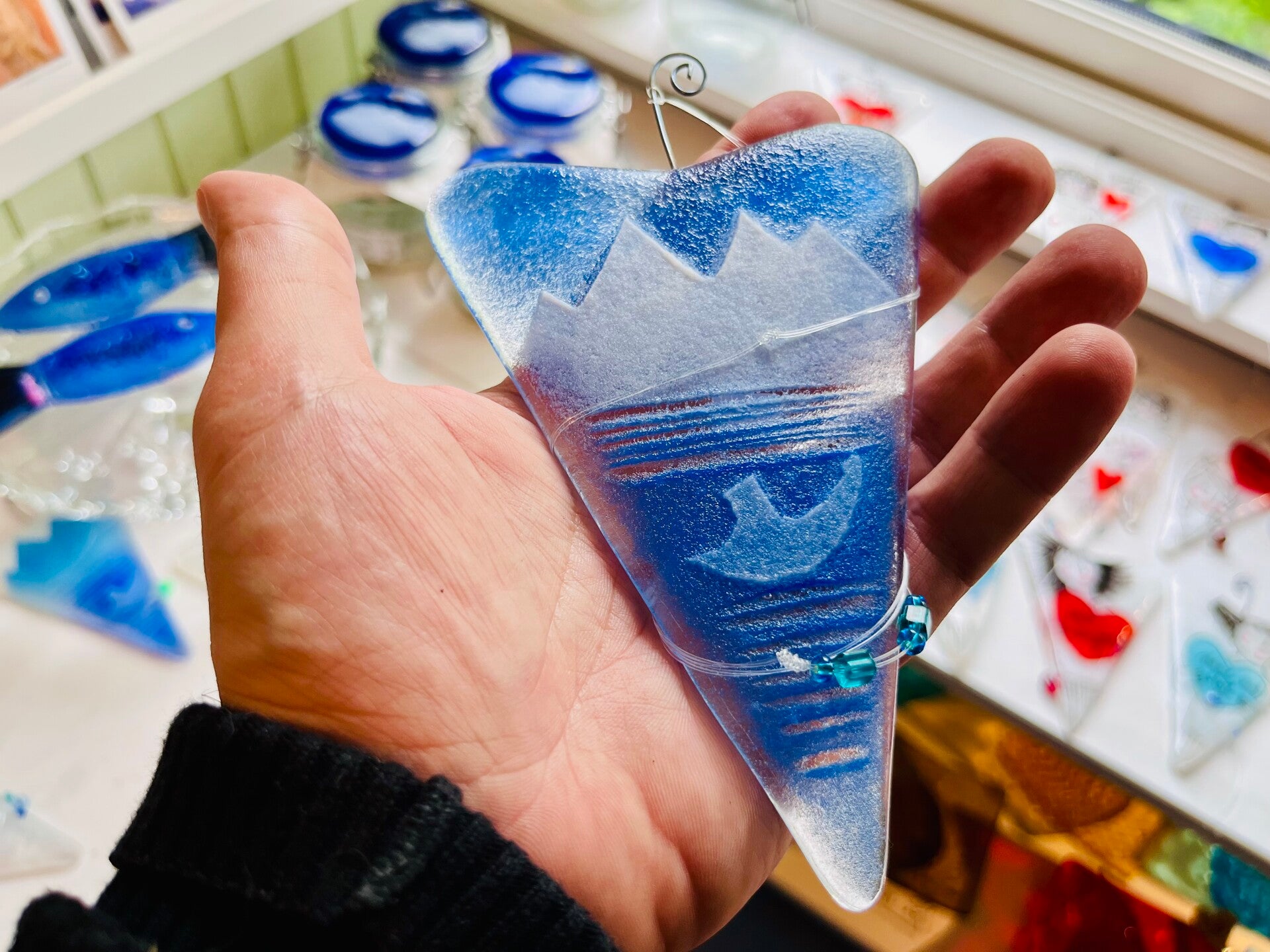
Photo: Mathia Pacenti / © WanderNorway
This symbolism feels especially meaningful in Northern Norway. The Arctic winter is often associated with darkness, yet here darkness is never simply the absence of light. It is a season of preparation, when nature gathers its strength beneath the surface. Seeds remain hidden beneath the frozen ground, life slows its pace, and the landscape quietly prepares for renewal. Much like the creative process itself, every visible work begins in an unseen period of waiting.
When summer finally arrives, bringing with it the Midnight Sun, the transformation feels complete. For weeks, daylight never truly disappears, bathing the mountains, the sea and the scattered homes of Hadseløya in a soft golden glow. The light feels less like illumination and more like revelation, a reminder that beauty often emerges only after periods of darkness.
Glass follows this same rhythm. It becomes transparent only after passing through fire. Likewise, human understanding often deepens after moments of uncertainty, silence or change. We begin to see the world differently, allowing light to pass through us rather than simply reflecting from the surface.
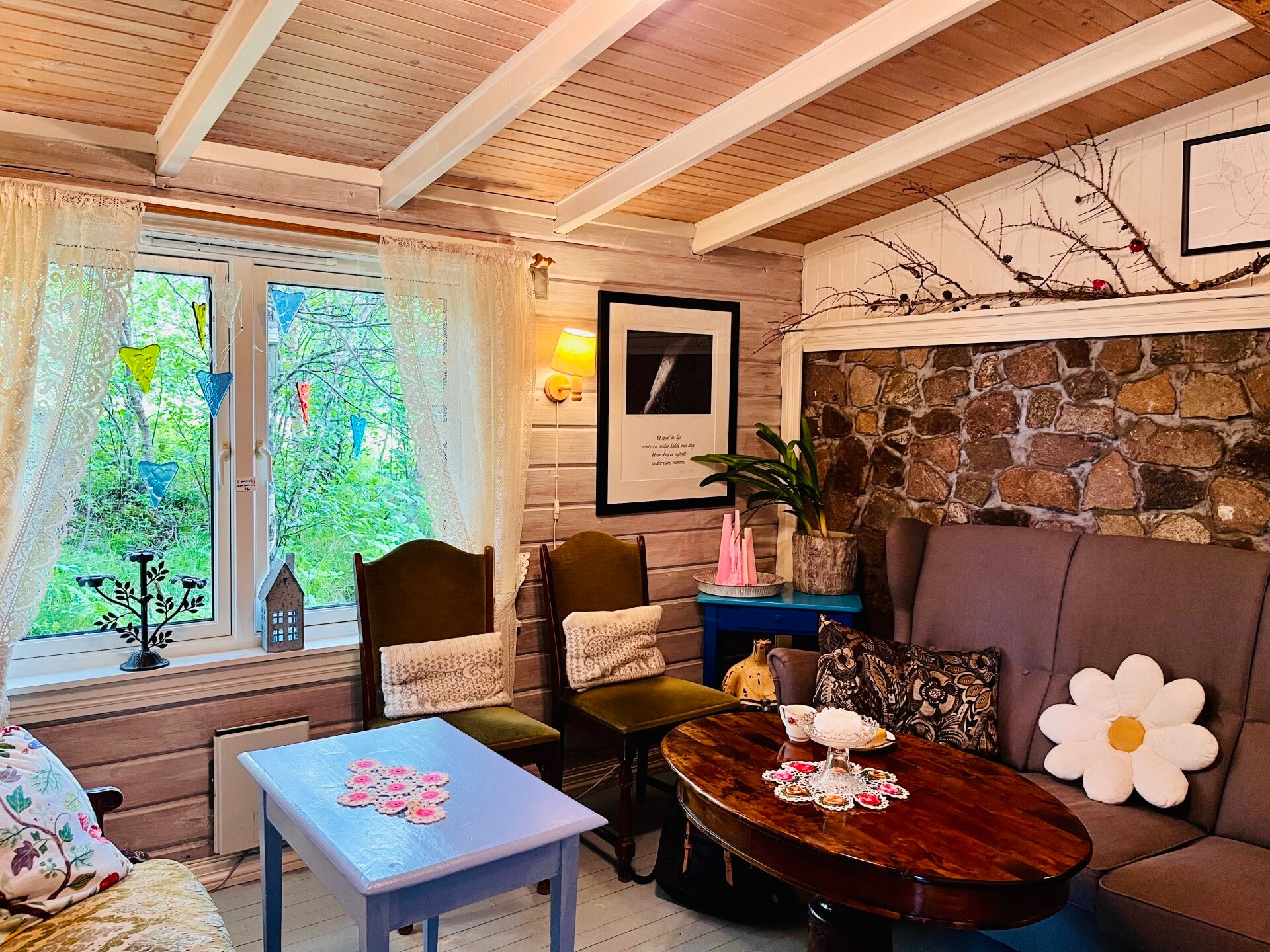
Photo: Mathia Pacenti / © WanderNorway
Galleri Uver feels like a natural extension of this landscape. Within its welcoming walls, the artist's workshop, the warmth of the glass furnace and the surrounding nature all become part of the same story. The candles speak of light during the long winter months. The glass reflects fire transformed into transparency. Paintings preserve the colours of the sea and sky. And the handcrafted hearts quietly remind visitors that beauty is often the result of patience, resilience and change.
Perhaps this is why Galleri Uver has become one of the highlights of WanderNorway's walking experiences on Hadseløya. It is not simply another stop along the route, but a fitting conclusion to a day spent exploring the island. After walking among coastal meadows, mountain ridges and open sea views, visitors discover a place where the landscape is reinterpreted through art. The colors of the Arctic become glass, paintings, candles and stories, offering a different way of experiencing the North.
The surroundings of Galleri Uver capture the essence of Northern Norway's natural beauty. Set beside a peaceful lake and framed by rugged mountains, the landscape is home to sea eagles that can often be seen soaring overhead. Sheep graze freely across the hillsides, seemingly unfazed by hikers making their way along the nearby ridge. During the summer months, the area is also known for its cloudberries, often referred to as the "gold of the Arctic." These berries begin as bright red fruits before ripening into their characteristic golden-orange color, signaling they are ready to be picked. Highly prized for their delicate flavor, cloudberries are commonly used to make jams, and other local delicacies, offering a true taste of the Norwegian north. In the garden, a charming little playhouse has been built, giving children a place to play, explore, and enjoy a cosy shelter while the adults take in the peaceful surroundings.
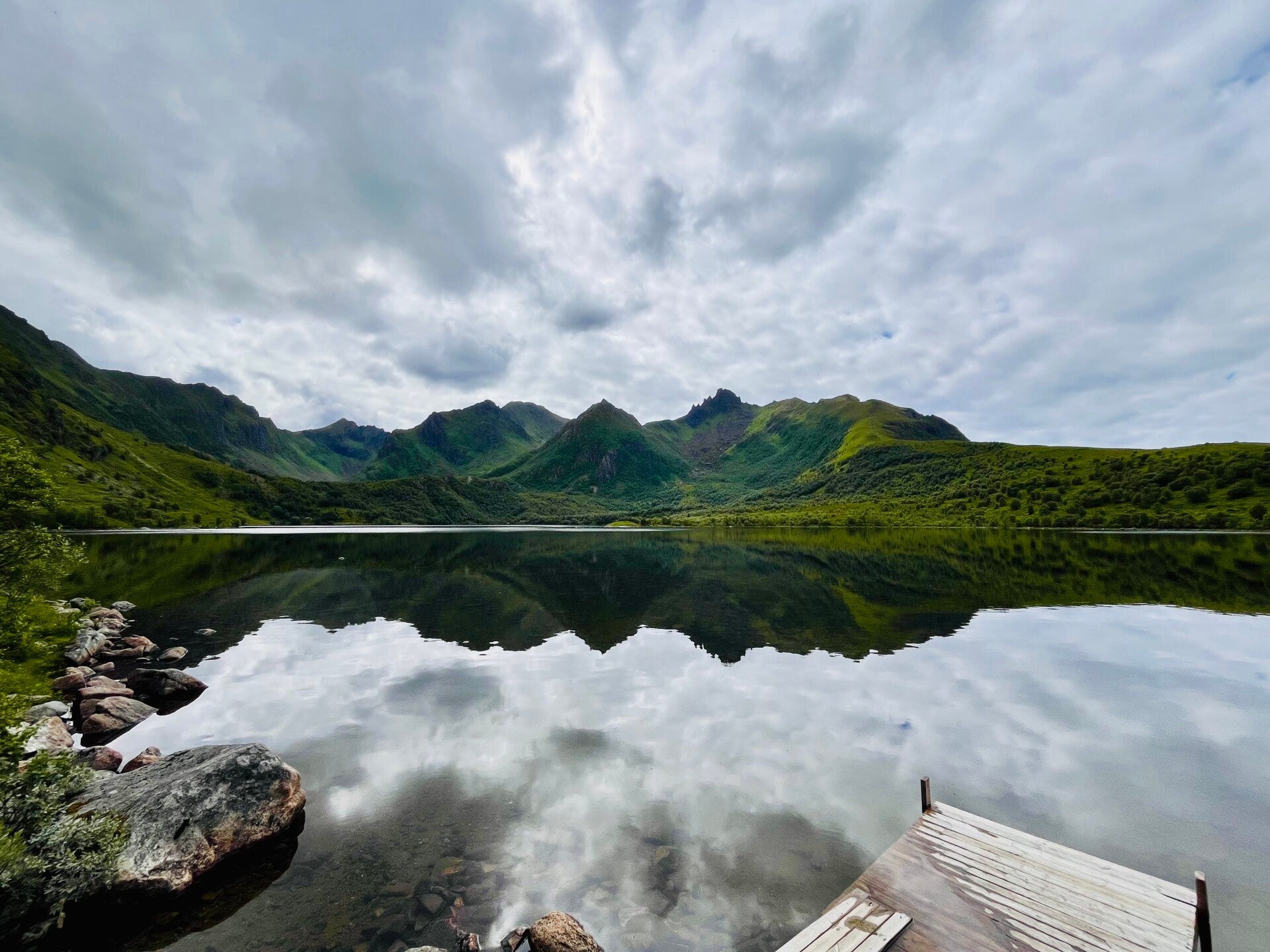
Photo: Mathia Pacenti / © WanderNorway
Alongside the gallery, the cosy atmosphere of the cafeteria makes the experience feel even more personal. After a walk along the coast, with the sea at the edge of your gaze and the wind still lingering on your face, sitting down for a slice of homemade cake becomes another kind of journey, one that is slower, quieter, and deeply comforting.
At Galleri Uver, cake is far more than a delicious treat. It is the final ritual of the walk: the moment when the beauty of Northern Norway, having first filled your eyes and your body, finally finds its way to your palate.
For anyone exploring Vesterålen, Galleri Uver is a place to pause with purpose. Here, art is not something separate from everyday life, but grows naturally from it: from the home, the workshop, the changing weather, the animals, the seasons, and the warmth of genuine hospitality. Visitors encounter a distinctly Nordic form of beauty, one that is never merely decorative. It is beauty shaped by resilience.
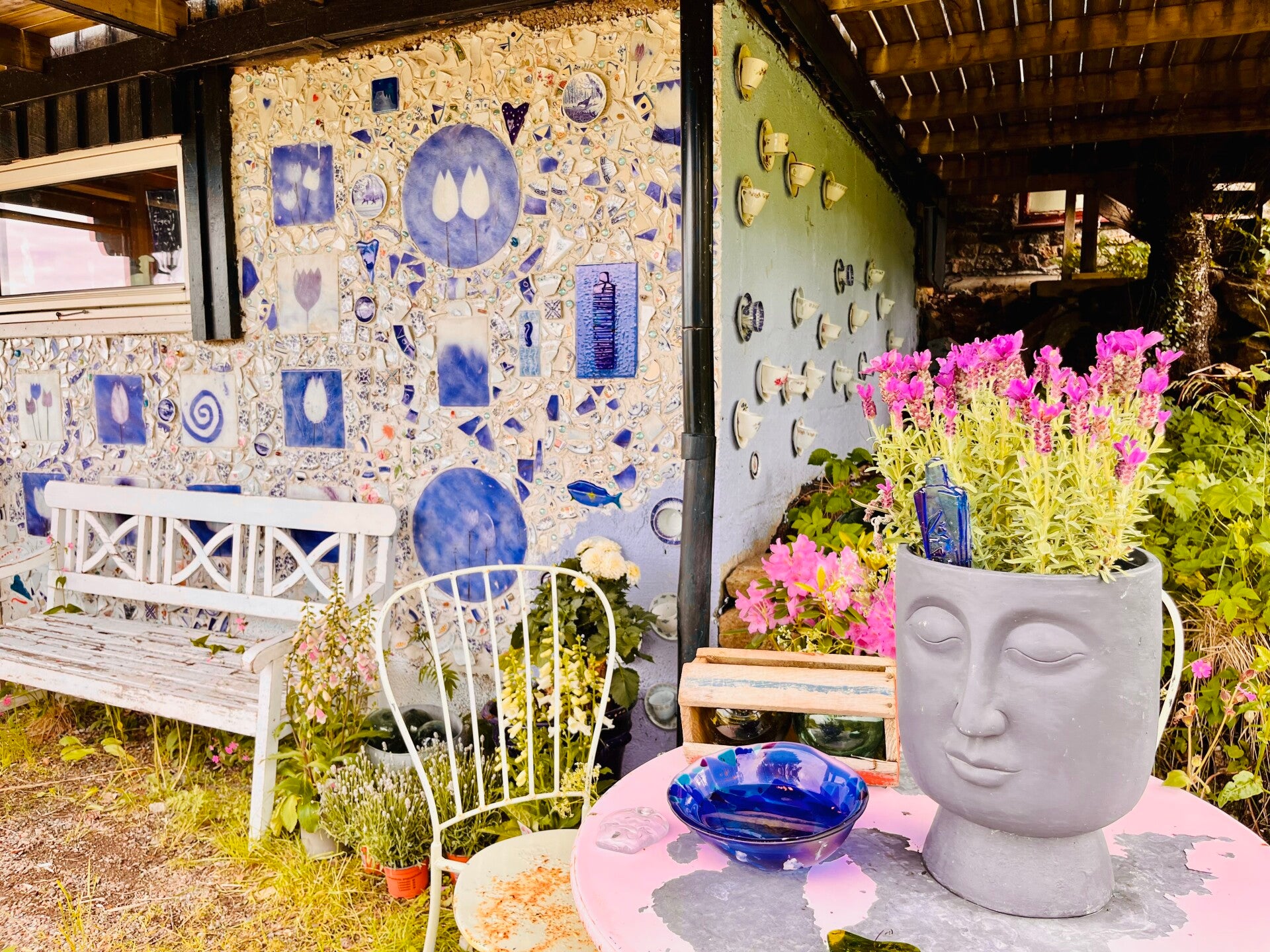
Photo: Mathia Pacenti / © WanderNorway
Perhaps that is the true secret of Galleri Uver’s glass hearts. Small, luminous, and seemingly fragile, each one carries the memory of fire. They remind us that delicacy and strength are not opposites, and that what has endured the flames emerges transformed. They remind us that transparency is not a sign of weakness but an achievement. And that the heart, once it becomes an athanor, the alchemist’s furnace, is not only meant to love, but to transform life itself into light.
And so, on the rugged western coast of Hadseløya, between sea, mountains, and ever-changing skies, Galleri Uver becomes something greater than a gallery. It becomes a quiet Nordic lesson in matter and spirit. A place where glass preserves the memory of fire, where the heart learns to become transparent enough for light to pass through it, and where every journey ends with the simple pleasure of sharing a slice of cake in the North.
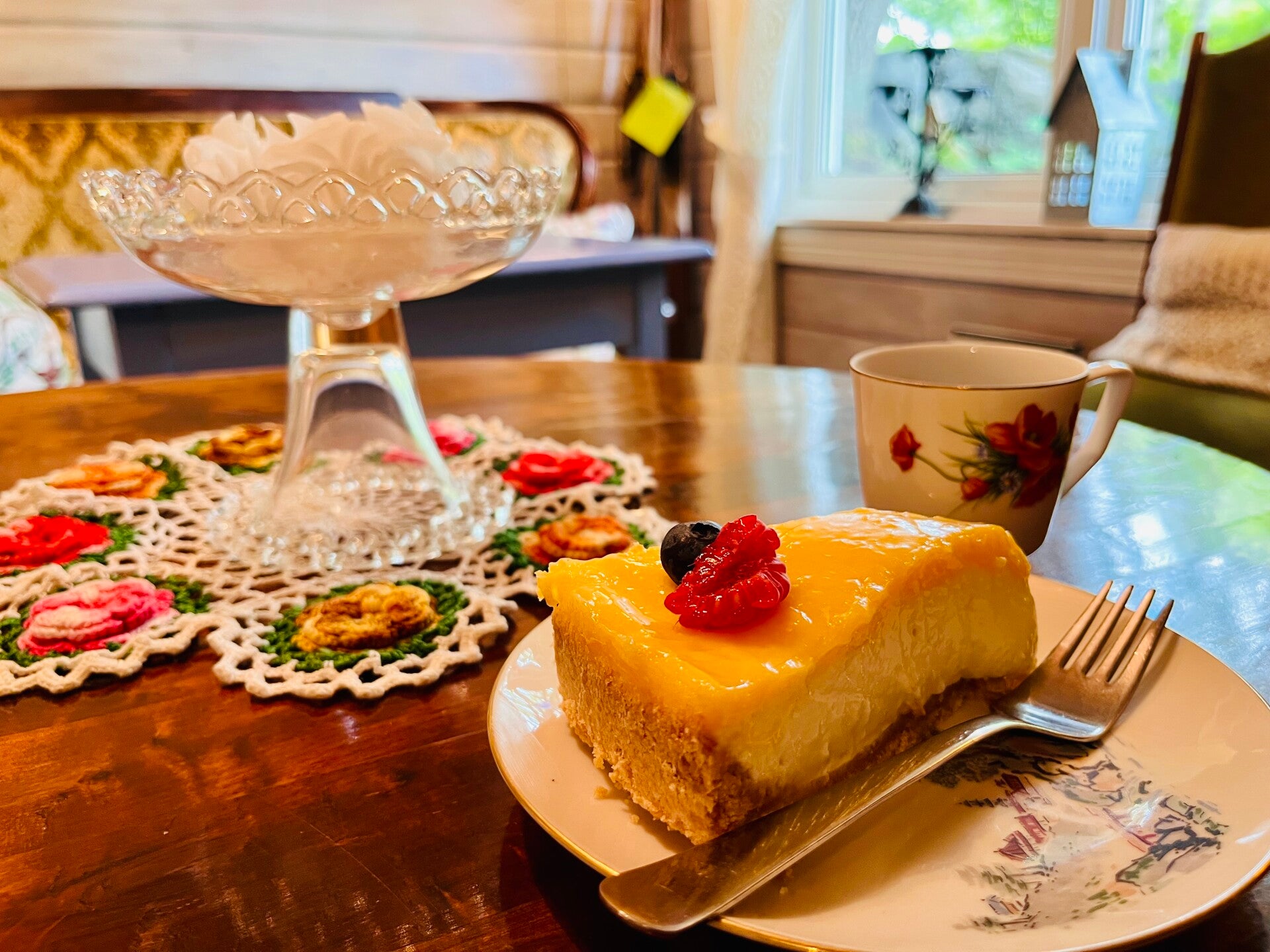
Photo: Mathia Pacenti / © WanderNorway
Galleri Uver is located in Teigan, on the western coast of Hadseløya, between Melbu and Stokmarknes in the Vesterålen archipelago.
Before your visit, it is recommended to check Galleri Uver’s current opening hours on its official website.
The gallery is one of the stops included in WanderNorway’s small-group walking tours, designed to help visitors discover Hadseløya at a slower, more meaningful pace. To book a guided walk ending at Galleri Uver, please click here.