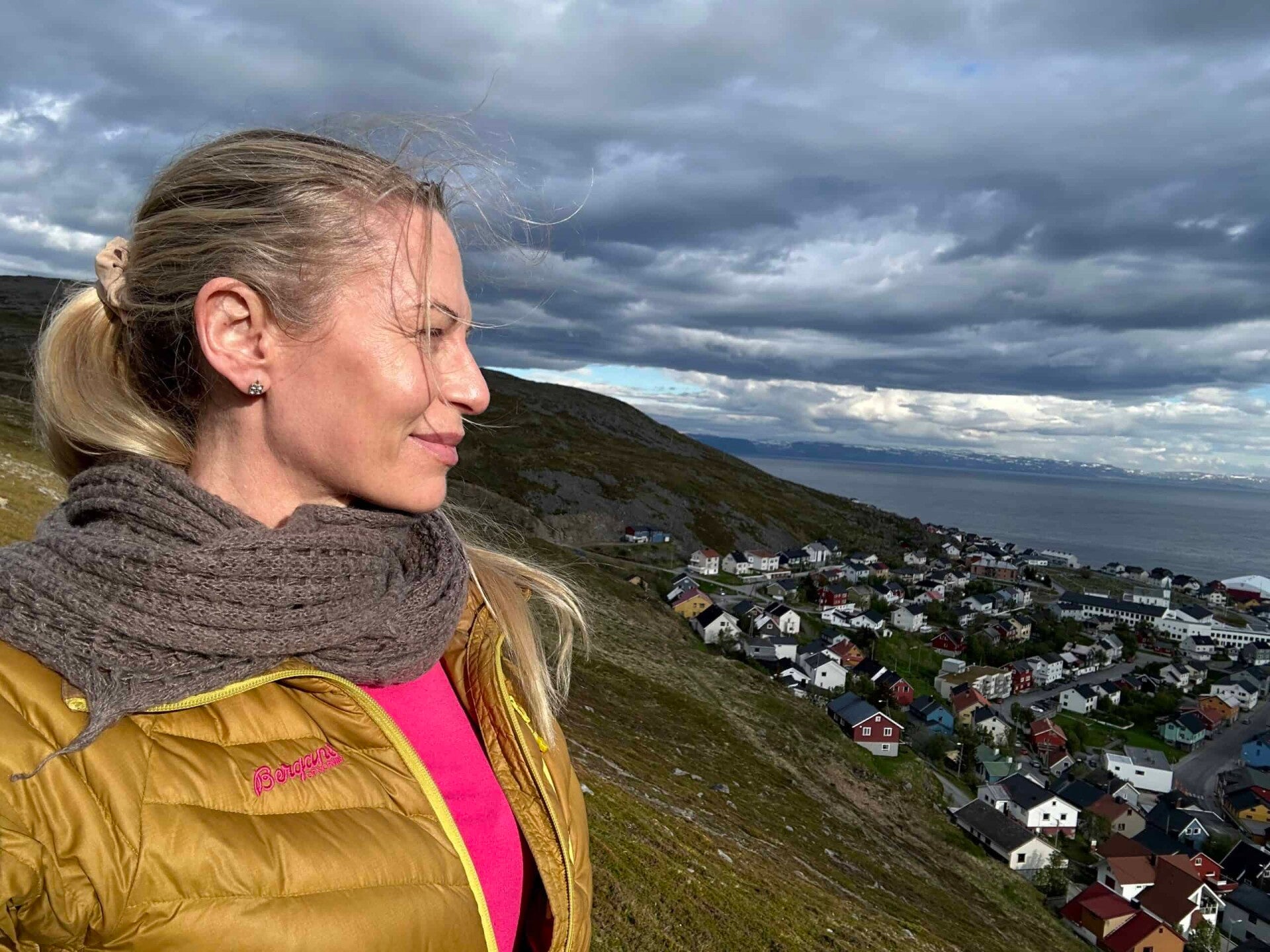
Photo: Hege Jacobsen / www.epicnomadlife.com
Anyone who chooses to follow a military career and to enter territories shaped by war accepts a journey they may never return from.
It is a stark sentence, almost unsettling. And yet it holds a truth that reshapes how we see people, their choices, their silences, and above all, the way they communicate. When return is uncertain, every word carries weight. Every pause speaks. Every connection becomes essential.
From experiences like these emerges a rare awareness: truly understanding another human being is neither automatic nor guaranteed. It may, in fact, be one of the most difficult things we are asked to do.
Hege Jacobsen knows this well. Years spent in conflict zones have shown her just how fragile, and at the same time how powerful, human communication can be.
And still, this lesson does not belong only to extreme circumstances. It belongs to all of us, here and now. It lives in the way we interpret the people in front of us, especially when they are different from us. It lives in every journey, even the simplest one, even in a place like Norway, where the greatest risk is not losing our way, but believing too quickly that we have understood the place, its people, and the way they inhabit the world.
Because every journey, at its core, is an encounter with the other. And without the awareness to meet it fully, that encounter can quietly become a misunderstanding.
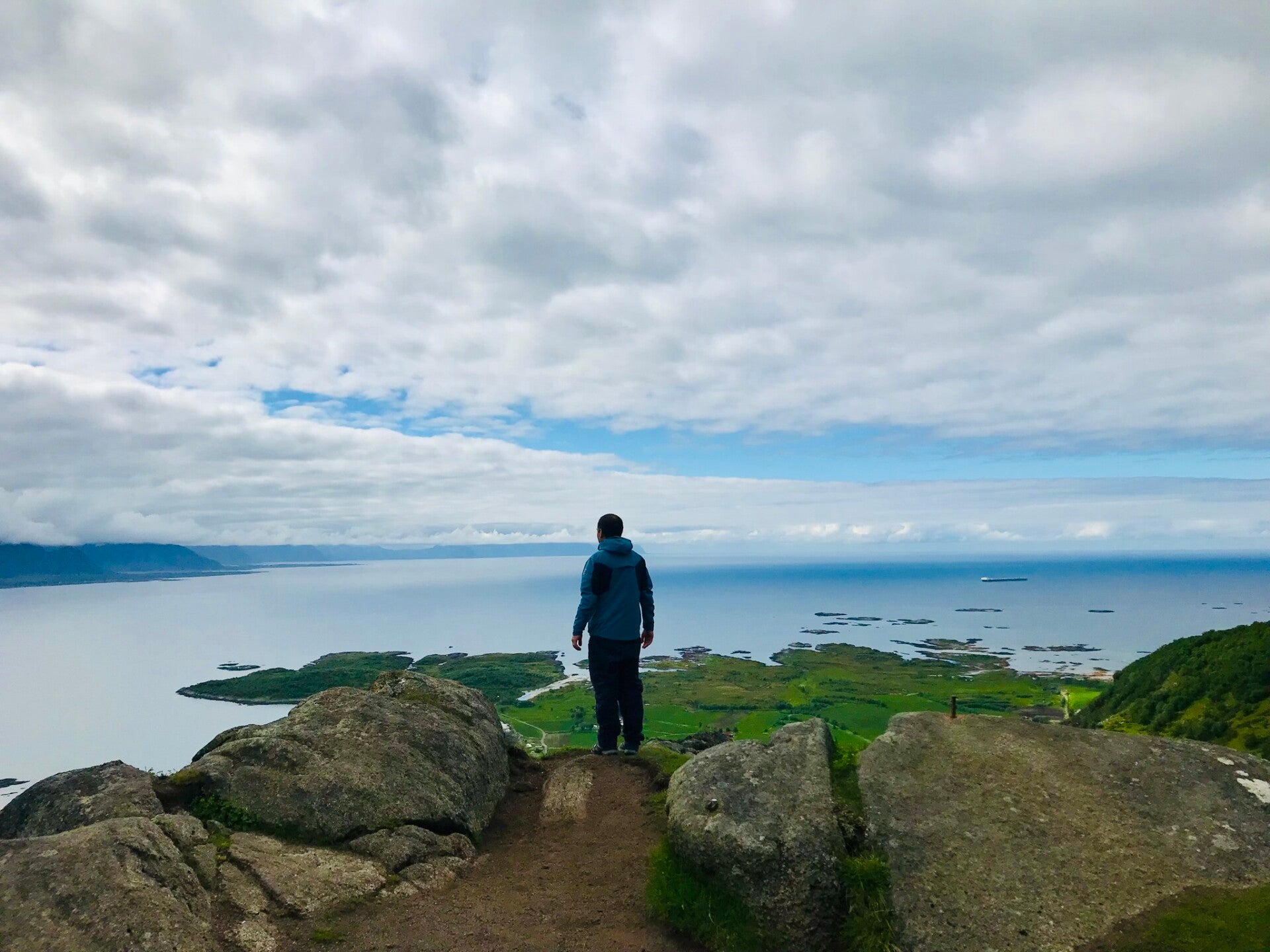
Photo: Mathia Pacenti / ©WanderNorway
I have had the opportunity to undertake a different kind of journey. I chose to change my life and move to the north of Norway. It was not a path marked by the same risks as the military experiences Hege describes, and yet, in its own way, it became a journey within a journey.
Because to relocate is not simply to arrive somewhere new. At first, you remain a traveler, fully, almost entirely so. For days, months, sometimes years. You observe. You try to understand. You move within a reality that has not yet made space for you. Everything feels unfamiliar: the rhythms, the silences, the habits, even the pauses between words.
Then, slowly, something shifts. You stop looking at a culture from the outside and begin, almost without noticing, to live within it. You are no longer only a guest, but part of something that is quietly unfolding around you. You begin to grasp invisible codes. You learn to read what once felt unreadable.
And this is where a more difficult question arises: how much of what we see truly belongs to the place, and how much comes from us?
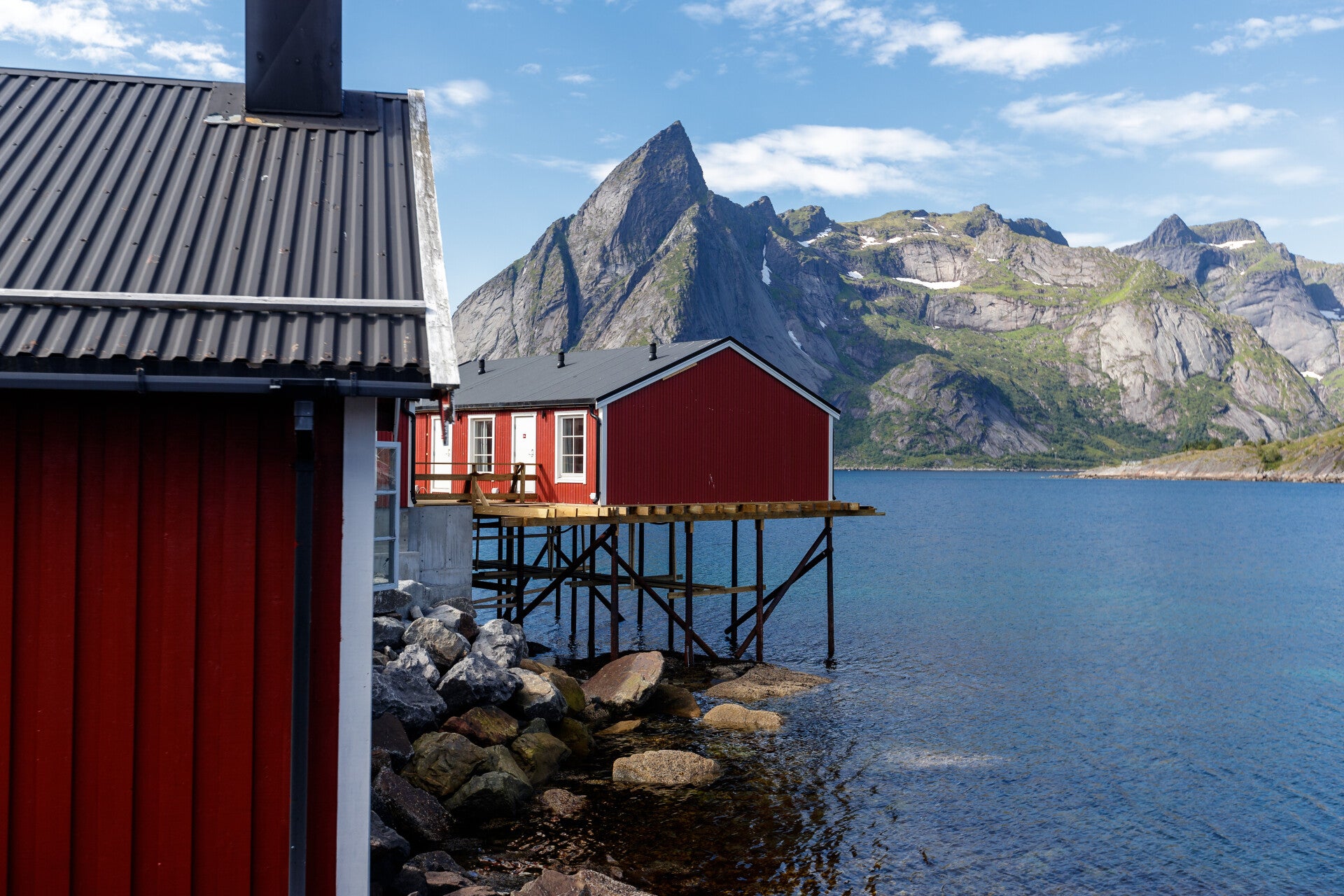
Photo: Hallvard Kolltveit / Destination Lofoten
Because we never arrive as neutral observers. We carry with us an invisible framework that interprets everything: gestures, silences, distance. And often, without realizing it, we are not truly seeing a new culture at all, but rather projecting our own onto what lies before us.
I encounter this tension every day here, in Vesterålen, facing the Lofoten Islands. A place that feels remote, almost at the edge of things, and yet is filled with encounters, stories, and quiet connections. It is here that I met Hege Jacobsen, almost by chance, through my work as a travel designer.
She is the Reception Manager at Eliassen Rorbuer, an almost otherworldly place that welcomes travelers from across the world into one of the most striking and photographed corners of Lofoten. What began as a professional collaboration soon became something else: an opening into the depth of her story.
I first came across her voice through a TEDx Talk in the United States, where she speaks with clarity and honesty about what it means to step beyond the boundaries of a Norwegian upbringing, moving from a peaceful childhood into a military career that led her into war-affected regions, where certainty itself is constantly tested.
And then there is Hege the traveler, the one who has moved alone through distant landscapes, especially in South America, allowing herself to be shaped by encounters far removed from what is familiar. A different kind of journey, yet no less profound. One built on listening, on adapting, on remaining open.
Today, all of this returns with her, taking shape in the way she welcomes others. In this remote place, between sea and mountains, she receives travelers into a space where stories meet, reflect one another, and, at times, quietly transform.
Alongside this, she runs two blog pages: Travel To Norway, dedicated to her home country, and Epic Nomad Life, which focuses on her solo travels around the world. She also offers itineraries, deeply rooted in the land she inhabits, able to share it through an honest and grounded perspective. Through her online work, she extends that same vision outward, offering travel consultations for those who wish to experience Norway beyond the obvious, and hosting masterclasses for women who choose to travel alone, supporting them in doing so with greater awareness, confidence, and trust in themselves.
In this way, her path continues to move between exploration and sharing, between lived experience and the desire to open possibilities for others.
I would like to introduce her to you. And to do so in the simplest way possible: through a short conversation. The intention is not only to tell her story, but to understand, through her experience, what it might reveal to us. In our everyday lives. In the way we travel. In the way we inhabit a place.


Photos: Hege Jacobsen / www.traveltonorway.org
Looking back at your path, what first drew you toward a military career and into such complex international environments?
Actually, weirdly, I wanted to join the military from when I was a child. I grew up in the countryside, and every now and then convoys of military vehicles would pass our farm, and I would run to the window to look at them, intuitively fascinated. I, of course, had no idea exactly what it was, but I still decided I wanted to do exactly that.
When I was nearing the end of high school, my cousin completed training for officer school, and I realized you could also get an education in the military. He told me stories about how hard and painful and horrible the basic training was, which made me even more determined that this was for me, again, weirdly.
And so, after high school, I applied and got through basic training. Yes, it was hard, painful, and horrible, and amazing. This was the start of learning how much I am, and everyone are, really capable of. If the army teaches you one thing, it certainly is that.
From there, the path kind of appeared as I went, and “suddenly,” I had served for 20 years, domestically and abroad, in a variety of roles, and I found it both meaningful and challenging.
In your TEDx Talk, you describe the shift from traveling as “Major Jacobsen” to traveling simply as Hege. How did that transformation change the way you meet and understand others?
Traveling “for work” with the army, which it technically is, although not your typical business trip, we were always many people in a unit together. We were somewhere with a mission, and we were prepared mentally, physically, and culturally.
And, as we do when we are “at work”, we create a pragmatic distance from our surroundings and put on the professional lens through which we perceive everything. That professional distance, I believe, is common to everyone, but I think it is especially necessary to be able to do a good job under circumstances filled with risk, and also exposed to poverty, suffering, hunger, and all the really sad parts of life.
As I was, you might say, quite experienced in being surrounded by strong impressions, I was surprised to realize that this filter was nowhere to be found when I traveled solo privately. It is not that I did not acknowledge both suffering, joy, and humanity before, but the pragmatic distance to everything that was second nature to me vanished like dew in the sun from the first time I arrived in Cuba, and beyond.
For me, traveling solo and slow, staying longer in most places, also means the focus is different, both external and internal in a way. It is easier to notice my surroundings, connect with people, ponder strangeness with curiosity, and be more aware of my own inner life in meeting all that is different. The perfect arena to discover your biases and also your own peculiarity.
So, the transformation was probably due to a combination of all of the above: traveling solo without a specific role, slowly and for a long time, living like a local, and really meeting people, not just as extras in my holiday experience.
I read a quote once, I believe by George Orwell, saying: “It is only when you meet someone of a different culture that you begin to realize what your own beliefs really are”.
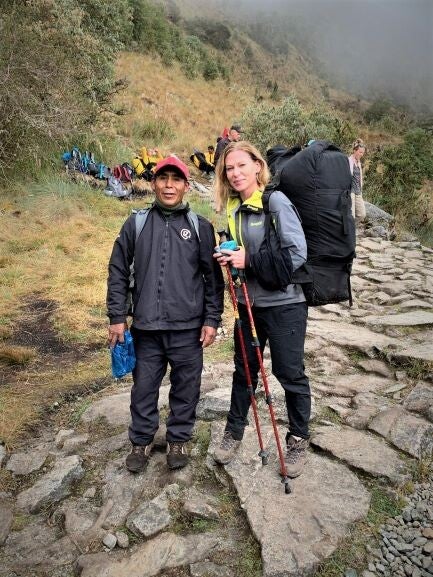
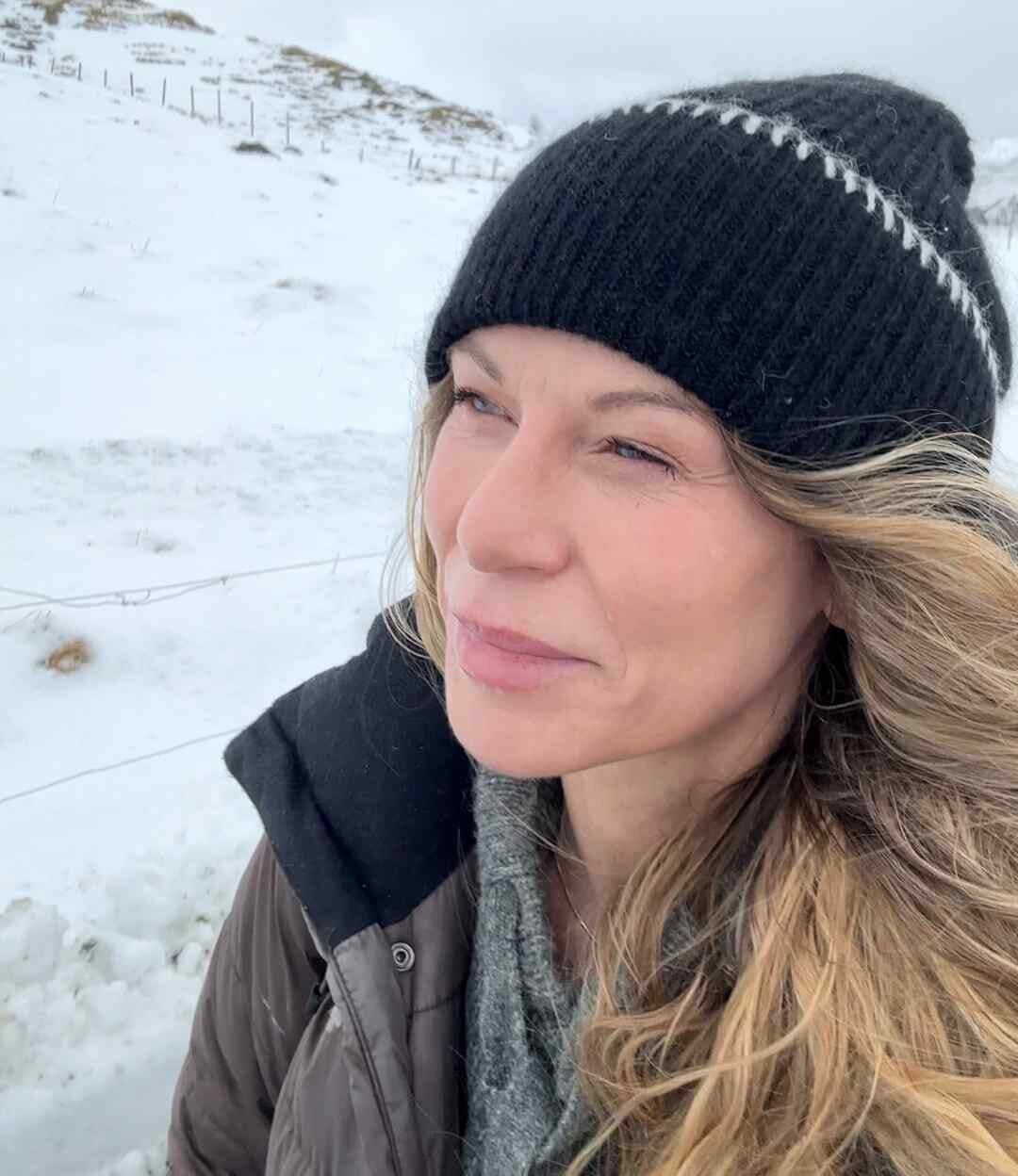
Photos: Hege Jacobsen / www.traveltonorway.org
When you began traveling independently, what did you discover about yourself that had previously remained unseen?
I had to think about this, but I believe the biggest insight I have had about myself is that I have an upward spiraling mind. What I mean by that is that my default outlook on any situation now is positive, or at least constructive. The plane is delayed, I chill. Transport does not show up, I find another one. The hotel room is horrible, I laugh. Plans don't work out, I make new ones. No one to hang with, I enjoy my own company.
It is hard to say what of this trait is nature and what is nurture, but beyond a doubt, things like resilience, problem solving, and a dark sense of humor are traits I have picked up during my years of military service, in addition to learning by doing while traveling. And they come in real handy traveling solo, or traveling in general, too.
My biggest general insight, and also message to everyone who will listen, is that the world is not a dangerous place. And as I can almost hear the objections to this statement, let me clarify what I mean. Very few places in the world are inherently dangerous to visit. However, for some destinations, if you do not do your research, do not listen to advice, or decide to do stupid things, you might put yourself in dangerous situations.
If you take the time to check statistics, find out where you can walk alone and not, which taxi company to use, how public transportation is like, what the most common challenges in your destination are, ask locals for advice, and stay sober, you will most likely remain very safe. People are people everywhere, and if you are anxious about traveling to new destinations, it can be helpful to remember that anywhere is someone's neighborhood where they grew up and live.
From your perspective, what are the most common biases that shape the experience of women who travel alone, both in how they are perceived by others and how they perceive themselves? And in your masterclasses, what question or concern tends to surface most often?
I don't really have a lot of insight into the most common biases regarding how solo-traveling women are perceived by others, at least not in a statistical sense. In cases where I have received any reaction to my traveling alone, it has been maybe a mild surprise or, to some, perceived as brave. And some think it is weird to travel solo, not just as a woman but in general.
Traveling in Europe and the US, I rarely experienced any reaction to this at all, while in South America, it is more likely to spark curiosity and be perceived as strange. This might be because it appears the gender roles there are more traditional, at least more than in Europe, where men are still seen as “protectors”, and women “in need of protection” to a greater extent, which would probably make traveling solo as a woman look strange. But that is just my thoughts about the subject. That said, there are still many countries and cultures I have not yet traveled to, and it is likely that women traveling more in Asia and Africa might have different experiences.
The most common question I get is about safety, whether it is safe for a woman to travel alone. I generally reply to this what I already mentioned above, that it really comes down to research, getting information, and actually following the advice you get.
You can even follow a formula to quantify the actual risk, and avoid seeing statistics, hearsay, or individual stories as the full picture. If you gather information about what the most common risk factors are in an area, and then plan for practical measures to mitigate that risk, you are left with a “residual risk”, which will be the actual risk level you need to be comfortable with, or not.
Risk - countermeasures = de facto risk!
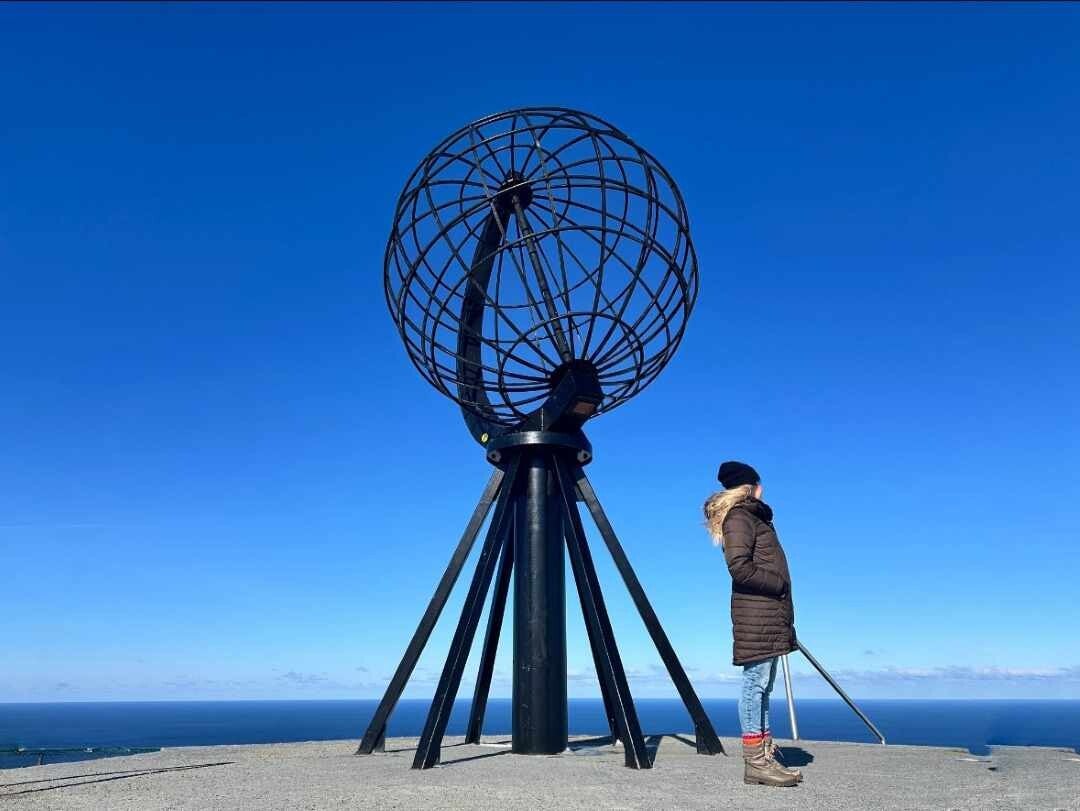
Photo: Hege Jacobsen / www.traveltonorway.org
Many travelers arrive in Norway with a pre-formed image of the country, often shaped by stereotypes or expectations. In your experience, what are the most common misconceptions, and how do they influence the way people experience and interpret Norway?
I think one of the most common misconceptions is that Norwegians are “cold” and “rude”, which is not really accurate, but more of a perception based on cultural differences. Things that may be considered cold and rude are that we don't really chat with strangers on the bus or on the street, and keep our distance both physically and otherwise. However, what you will find out if you dig into the why is that this is actually a display of respect in Norwegian culture. We offer space and are meticulous not to invade others' personal space or to display entitlement to someone else's time or attention.
I can definitely see how this looks weird to cultures with very different social codes, and it's probably much clearer to me now than 20 years ago, after traveling as much as I had. If you really get to know a Norwegian, however, and let it “take the time it takes”, you will probably have a friend for life!
Regarding how this influences the way people experience and interpret Norway, I'm gonna suggest that you are probably better equipped to tell me that. :)
Is there a distinctly Norwegian way of building trust? What attitudes truly help someone feel welcomed?
Reading this question, I just remembered there was a commercial on Norwegian TV years back about insurance, I think, depicting a smiling, simple, blue-eyed guy showing his passport, saying “norsk” in the face of some serious problem abroad. That, I believe, is the epitome of the Norwegian soul in a way. We can come across as a bit naive and overly trusting. We assume that because we’re kind and sincere, others are too, and that things will naturally work out.
I am not sure I understand the question correctly, whether this is regarding Norwegians abroad or foreigners in Norway. But I am going to say that, in either situation, I have developed a belief that there is one character trait most people can pick up on almost subconsciously across cultures that fosters trust: authenticity.
So, whether you are a Norwegian abroad, a foreigner in Norway, or anyone somewhere, I believe the key to building trust is to be authentic in your interactions with others. In practice, that means being genuine in the moment. Laugh when you truly find something funny, not just to be polite. Say when you disagree, but do it respectfully. Ask questions when you don’t understand, without jumping to conclusions. And allow yourself to show curiosity, compassion, and even vulnerability when that’s what you genuinely feel.
Letting go of your ego and your need to be right while traveling can be incredibly rewarding. You’ll learn far more than you expected, including things you didn’t even realize you didn’t know. More importantly, it helps others feel not just welcomed, but truly seen, appreciated, and accepted. And that, I believe, is what builds trust.
Photo: Hege Jacobsen / www.epicnomadlife.com
After reflecting on the answers I received from Hege in our interview, I found myself thinking more deeply about how we perceive and interpret the unknown, especially when we travel.
Perhaps the point is not to eliminate bias. It travels with us, inevitably. It is our first attempt at making sense of what is unfamiliar. The problem arises when we mistake it for truth.
Those who travel come to recognize this, if not immediately, then over time. In the beginning, we look quickly. We categorize, compare, translate what we encounter into something we already know. It offers a sense of stability. But it also keeps us at a distance.
Then, gradually, something begins to give. It happens when a place ceases to feel new and begins, almost imperceptibly, to feel like home. Bias does not disappear, but it loosens. Certainty softens. What once felt like coldness reveals itself as a form of respect. What seemed like distance becomes a kind of balance. And slowly, we understand that not everything needs to be translated in order to be felt. It is a quiet process. At times uncomfortable. But necessary.
In many ways, it is the same movement I recognized in my conversation with Hege. In very different contexts, we both found ourselves crossing that subtle threshold between interpreting and truly listening. She did so in environments where miscommunication could carry serious consequences. I did so through a more ordinary path, though no less transformative. And yet, the meeting point remains the same: a willingness to question one’s own way of seeing.
Perhaps it was this shared, ongoing inquiry, into communication, into what it means to be understood, into how we come to know another person, that allowed our paths to meet. Not only by chance, nor solely through work, but because, in different ways, we were moving along a similar line of questioning. Drawn by the same impulse to look beyond the surface, to resist the ease of first impressions, and to create connections that are more aware, more attentive, and more real.