

Photo: The Whale AS
On the northern edge of Norway’s Vesterålen islands, a new cultural landmark is taking shape. Scheduled to open on 4 June 2027, The Whale will explore the lives of whales through art and science, in a building that seems to rise from the shoreline itself.
At Andenes, on the northern tip of Andøya, the land gives way to weathered rock and the open Norwegian Sea. Beyond the shore, whales descend into a world that most visitors will only glimpse from the surface. A distant blow, a dark back, a tail lifted before a dive: these brief encounters have brought travelers to this corner of Arctic Norway for decades.
Now a new project promises to deepen that connection. The Whale, a centre dedicated to whales and their ocean environment, is bringing together architecture and scientific discovery in a setting that helps tell the story.
In Norway, the landscape often does more than frame a building. It helps determine its shape.
Travelers encounter this approach along the country’s 18 Norwegian Scenic Routes, where carefully placed viewpoints and contemporary structures encourage a closer look at the surroundings. A platform draws the eye across a fjord, a modest shelter makes it possible to linger on an exposed coast. The best of these interventions leave the landscape’s character intact while changing how we experience it.
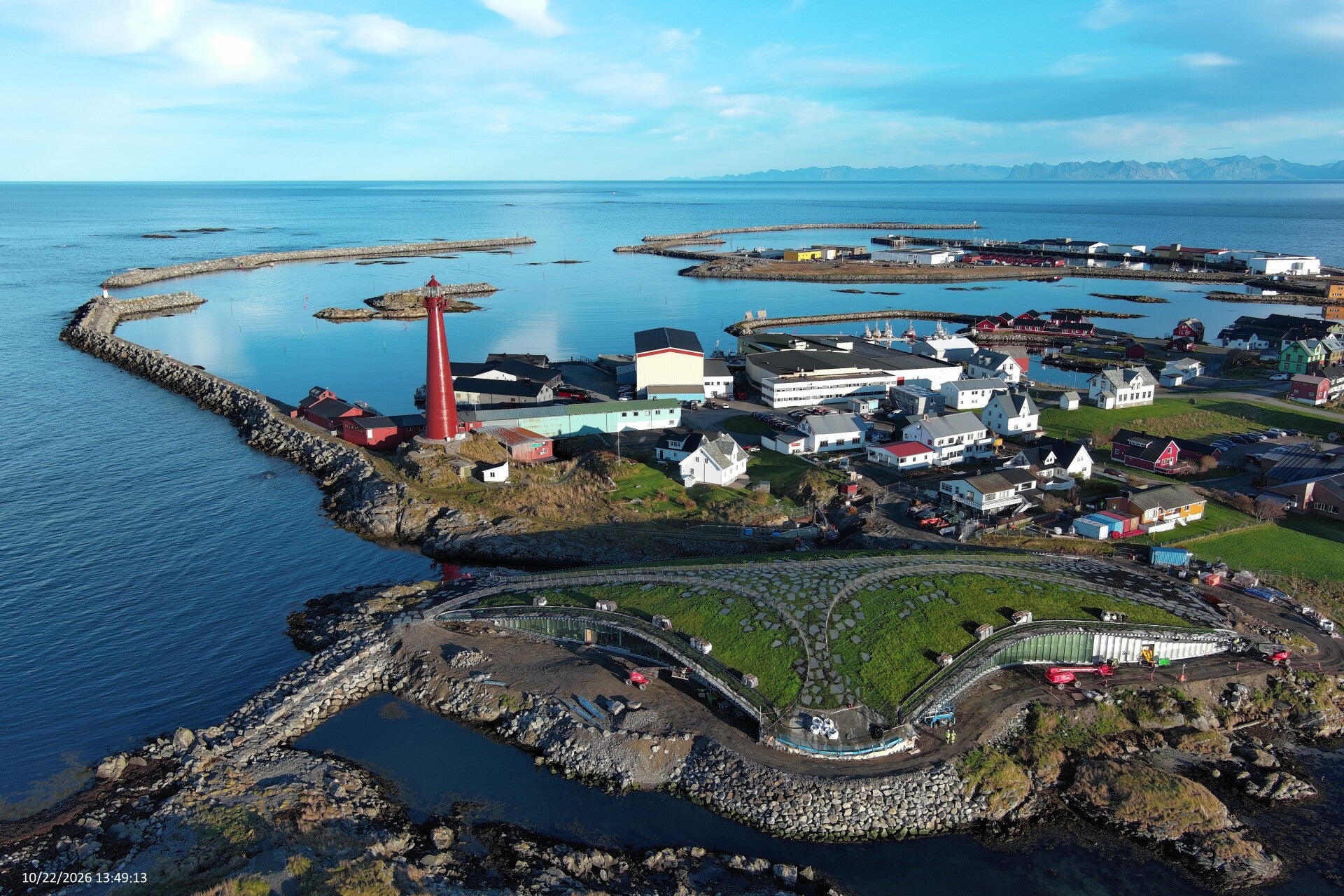
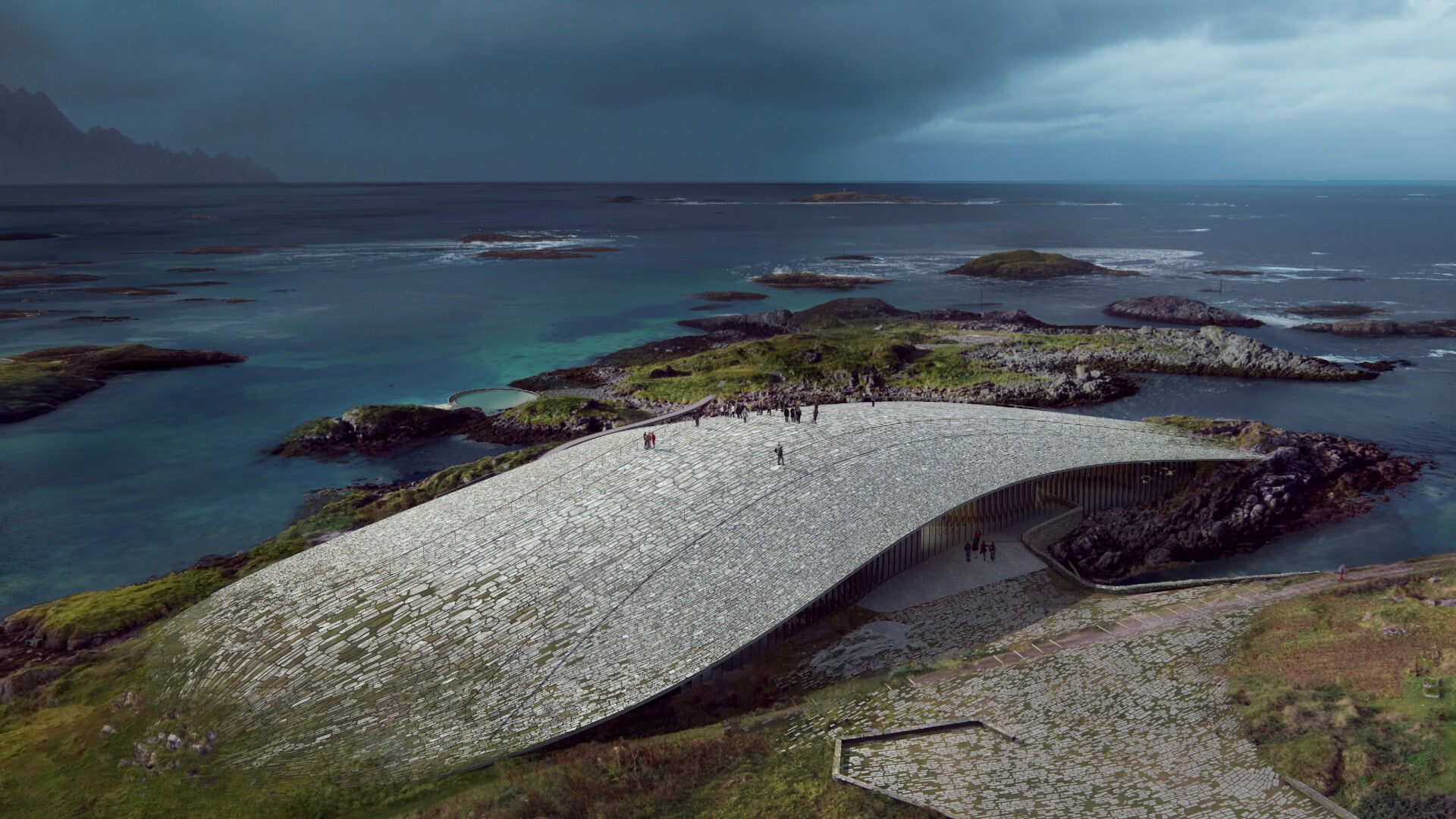
Photo: The Whale AS Photo: The Whale Dorte Mandrup A/S. Renderings by MIR
The Whale follows a similar instinct. Its home is the Vesterålen archipelago, north of Lofoten, some 300 kilometers beyond the Arctic Circle. Here, on the edge of Andenes, Danish architect Dorte Mandrup’s Copenhagen studio has designed a building that appears to lift gently out of the ground.
The broad, curved roof suggests the back of a surfacing whale. It might equally recall a swell moving towards the shore, or rock shaped by centuries of weather. The shell rises at three points, creating openings towards the surrounding landscape, while Norwegian slate and coastal vegetation help it merge with the terrain.
Visitors will be able to walk across the roof. Conceived as a public viewpoint, it will give residents and travelers a place to pause above the Norwegian Sea, with views towards the islands and mountains.
The experience will change with the seasons. In summer, the midnight sun will cast its long light across the water. On clear winter nights, the northern lights may appear overhead. The building’s low profile leaves room for both the horizon and the sky. Beneath the roof, large windows will maintain that connection with the ocean, even as visitors step out of the Arctic wind and into the hidden world below the waves.
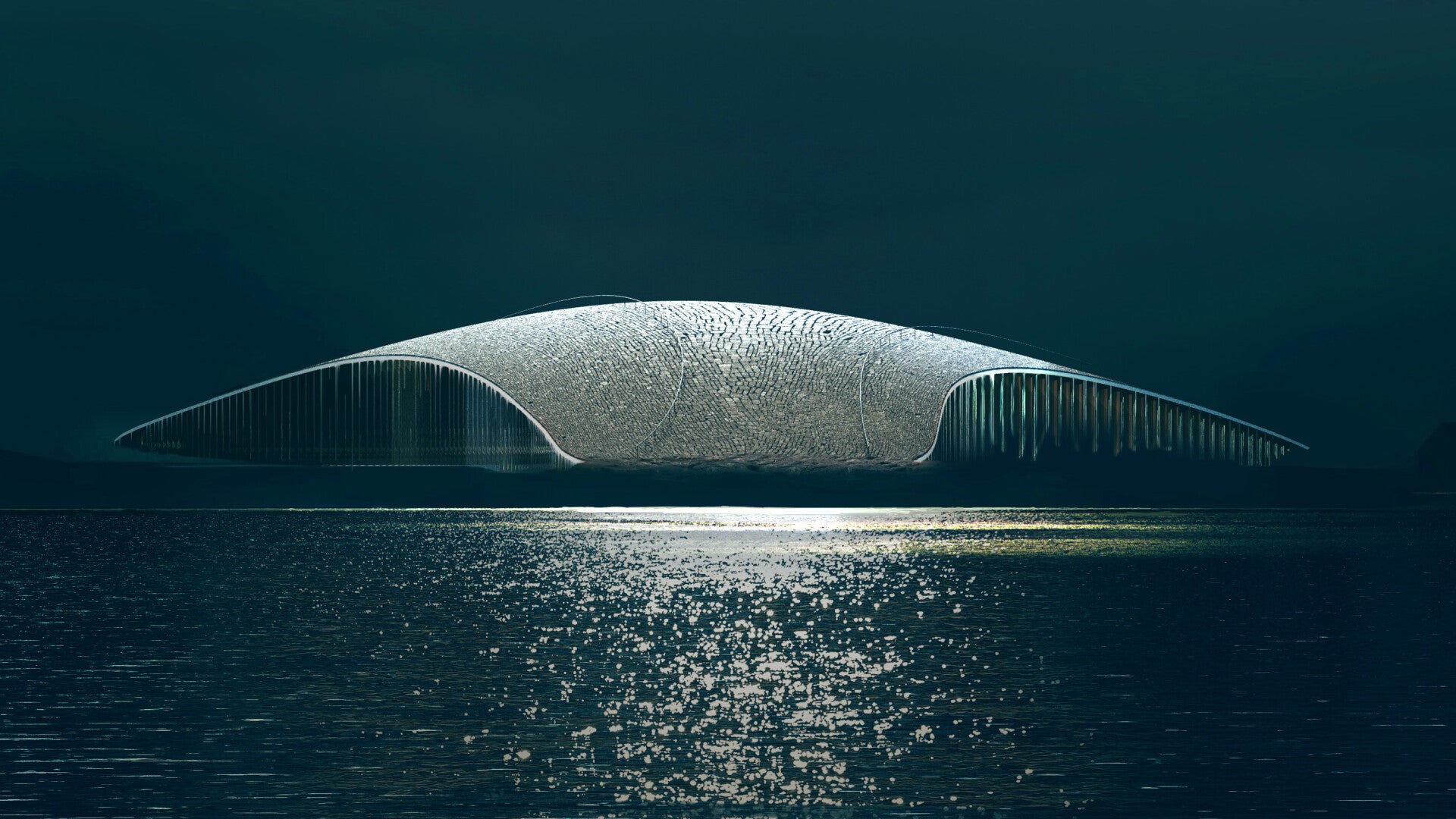
Photo: The Whale Dorte Mandrup A/S. Renderings by MIR
The Whale is scheduled to welcome the public on 4 June 2027, following an official opening ceremony the previous day.
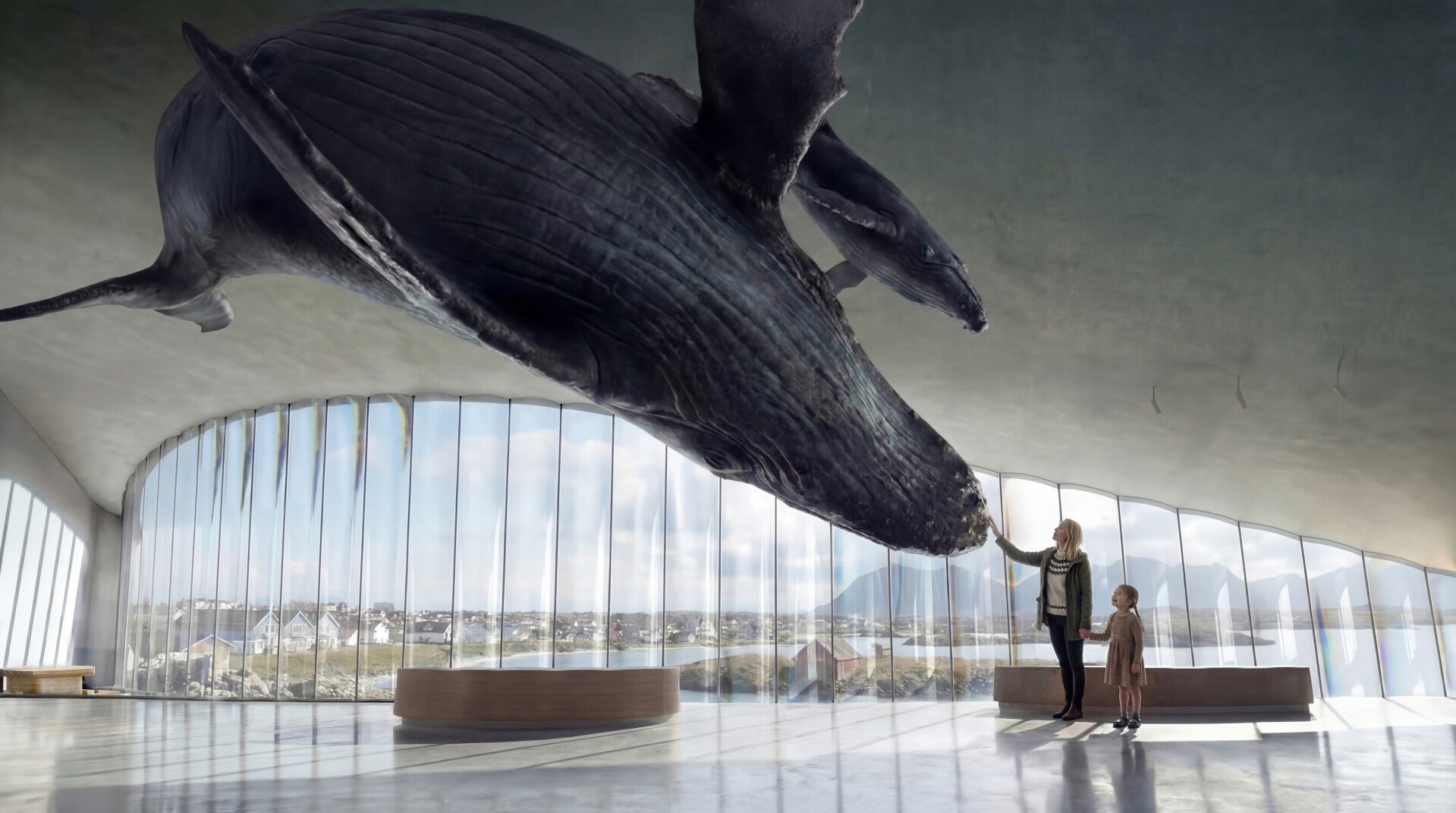
Its exhibitions will explore whale evolution, anatomy and behaviour, including the ways these animals communicate and live together. Planned displays include life-sized orca sculptures, anatomical specimens and immersive soundscapes. They will give visitors a sense of the animals’ scale and the importance of sound in their underwater lives.
The story will also follow our long, complicated relationship with whales. Seafarers’ accounts, literature and the history of whaling will sit alongside scientific research and the growing understanding of how marine ecosystems need to be protected. This gives the project a particular resonance in Norway, where whales are part of both maritime culture and the history of hunting. A centre devoted to understanding them creates an opportunity to consider that relationship more closely, including its uncomfortable chapters.
A whale-watching trip may offer only a few minutes in an animal’s presence. The Whale aims to give those moments a wider context: what the animal is doing, how it lives, and why the sea around it matters.
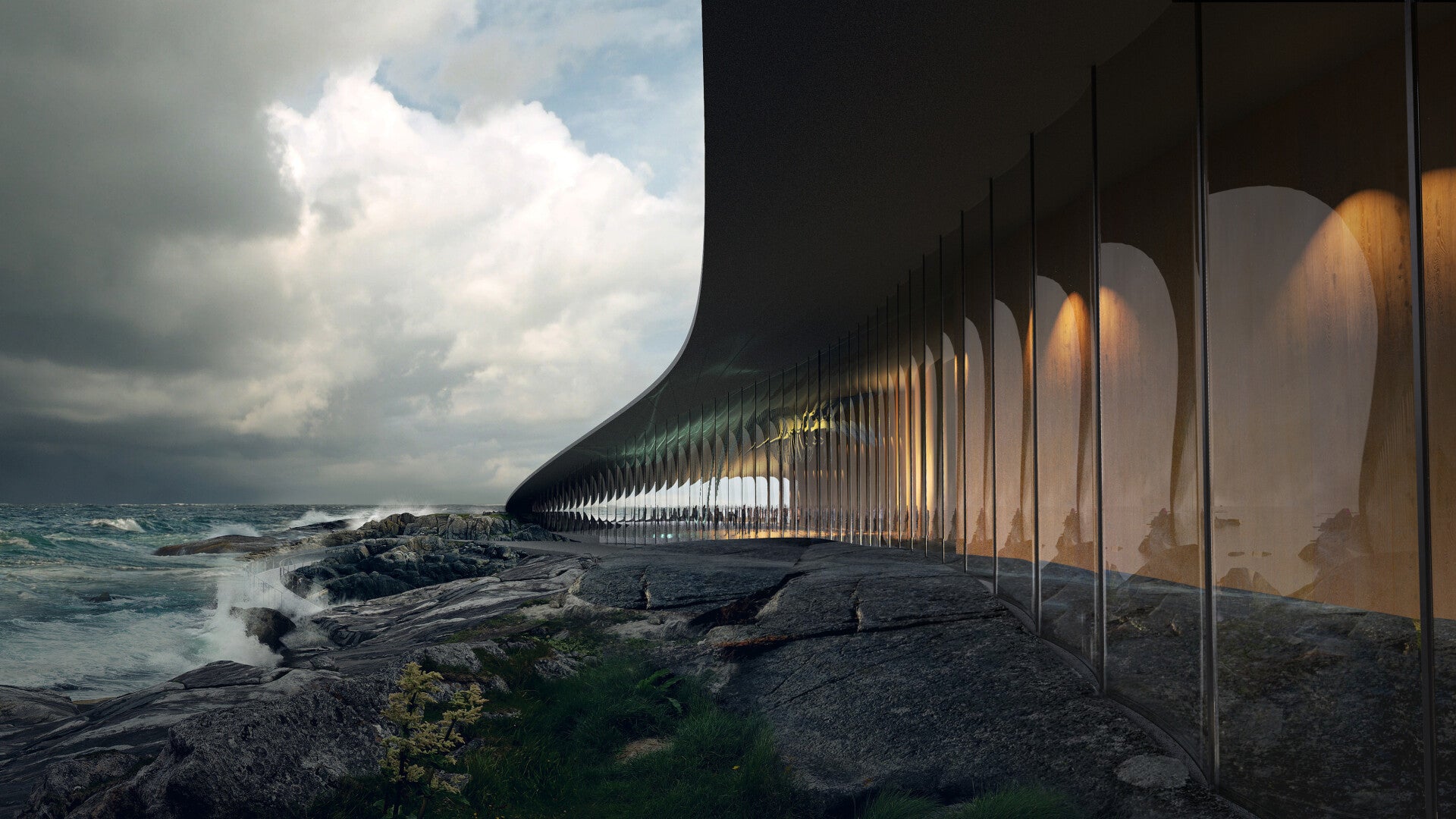
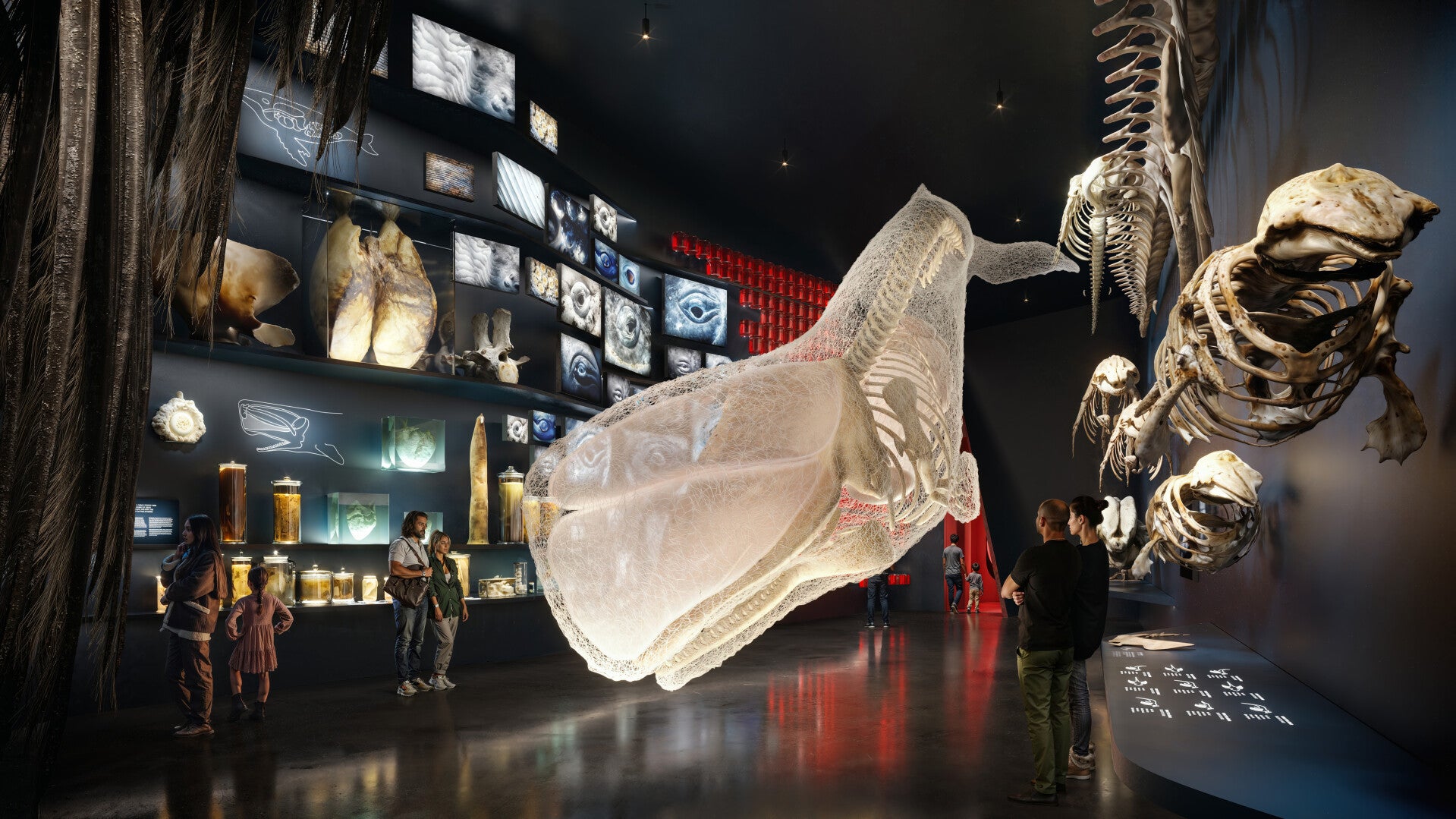
Photo: The Whale Dorte Mandrup A/S. Renderings by MIR Photo: The Whale AS
Andenes is a fitting home for such a project. Just off Andøya’s western coast lies Bleiksdjupet, the Bleik underwater canyon. Deep water reaches to within roughly ten kilometers of the shore, bringing an otherwise distant marine environment unusually close to land. The canyon and the surrounding currents help support productive waters. Plankton sustains a food web that includes fish and squid, attracting whales to feed in the depths.
Among the most compelling are sperm whales, the largest of the toothed whales. Males can exceed 15 metres in length and dive more than 1,000 metres in search of prey. It is mainly males that frequent these northern waters, and their presence throughout the year makes Andøya an important destination for whale watching.
Other visitors include orcas, humpback whales, pilot whales and several dolphin species. Sightings vary with the season, the distribution of prey and the movements of the animals themselves.
Yet a list of species scarcely captures the feeling of being out there. Much of the experience lies in waiting, scanning the water and learning to notice small changes on an immense surface. Then a blow appears. A broad back breaks the water. Sometimes a whale lifts its tail before disappearing into the depths, leaving a smooth circle on the sea. The encounter may last only seconds. It can remain with you long after the journey home.
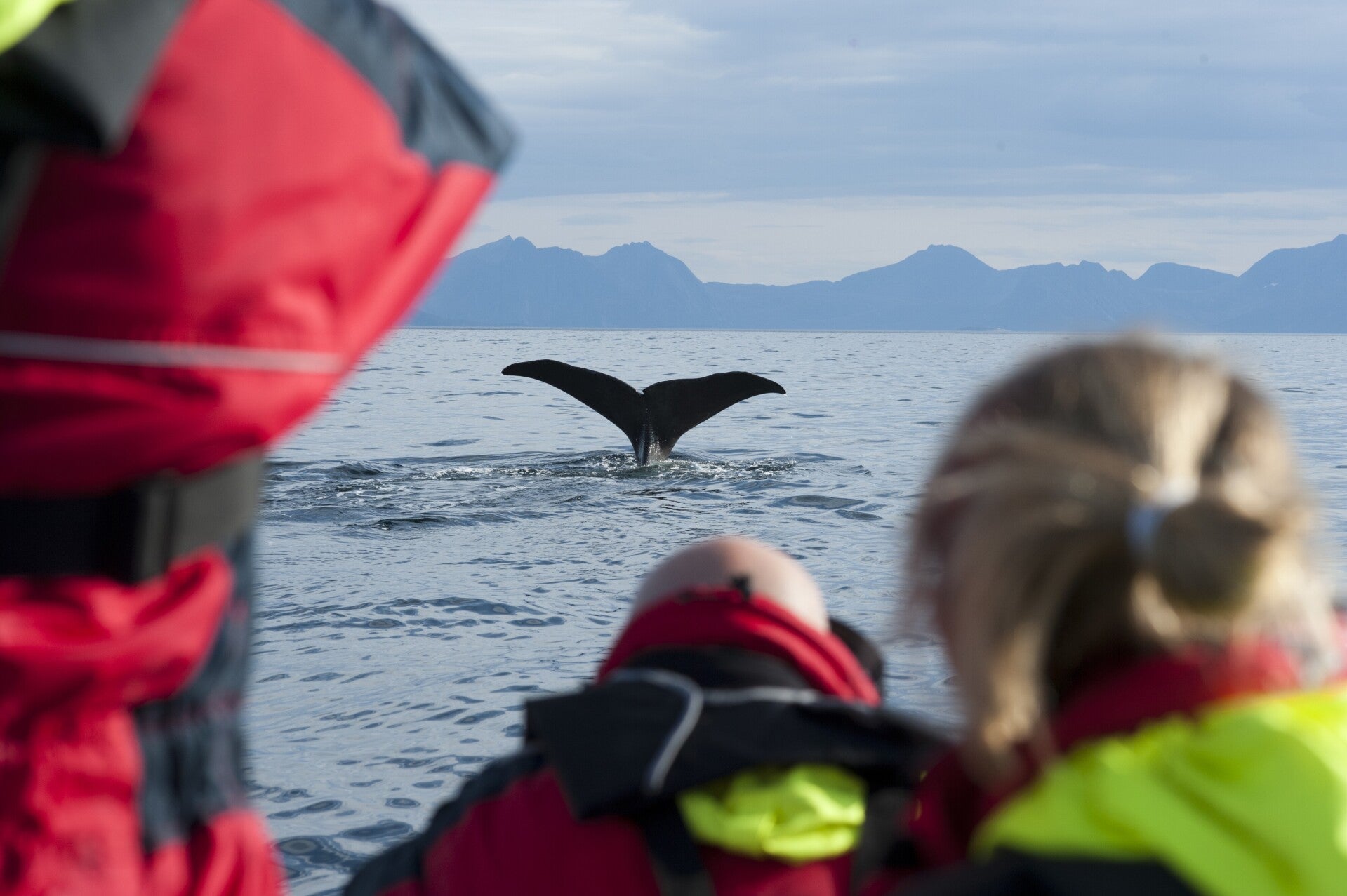
Photo: Marten Bril / www.visitvesteralen.com
The Whale will add a new dimension to an activity that has shaped tourism in Andenes since the late 1980s. Local operators have long combined trips at sea with interpretation and research, helping visitors understand the animals they hope to see.
There are several ways to experience these waters. Larger vessels offer deck space and shelter, with guides explaining the whales’ biology and the local marine environment. Rigid inflatable boats, usually known as RIBs, provide a lower, more exposed perspective, with the sea close at hand.
In Andenes, Whalesafari Andenes and Whale2Sea offer options ranging from trips aboard the traditional M/S Reine to RIB excursions, alongside exhibitions and educational activities. During the summer, selected departures take place under the midnight sun, when low light can turn the sea gold and the evening seems to stretch indefinitely.
Further south in the archipelago, the fishing village of Stø offers another starting point. Arctic Whale Tours runs summer excursions that combine the search for whales with opportunities to observe seabirds and harbor seals. Depending on the season, puffins and white-tailed eagles may be among the wildlife seen along the way.
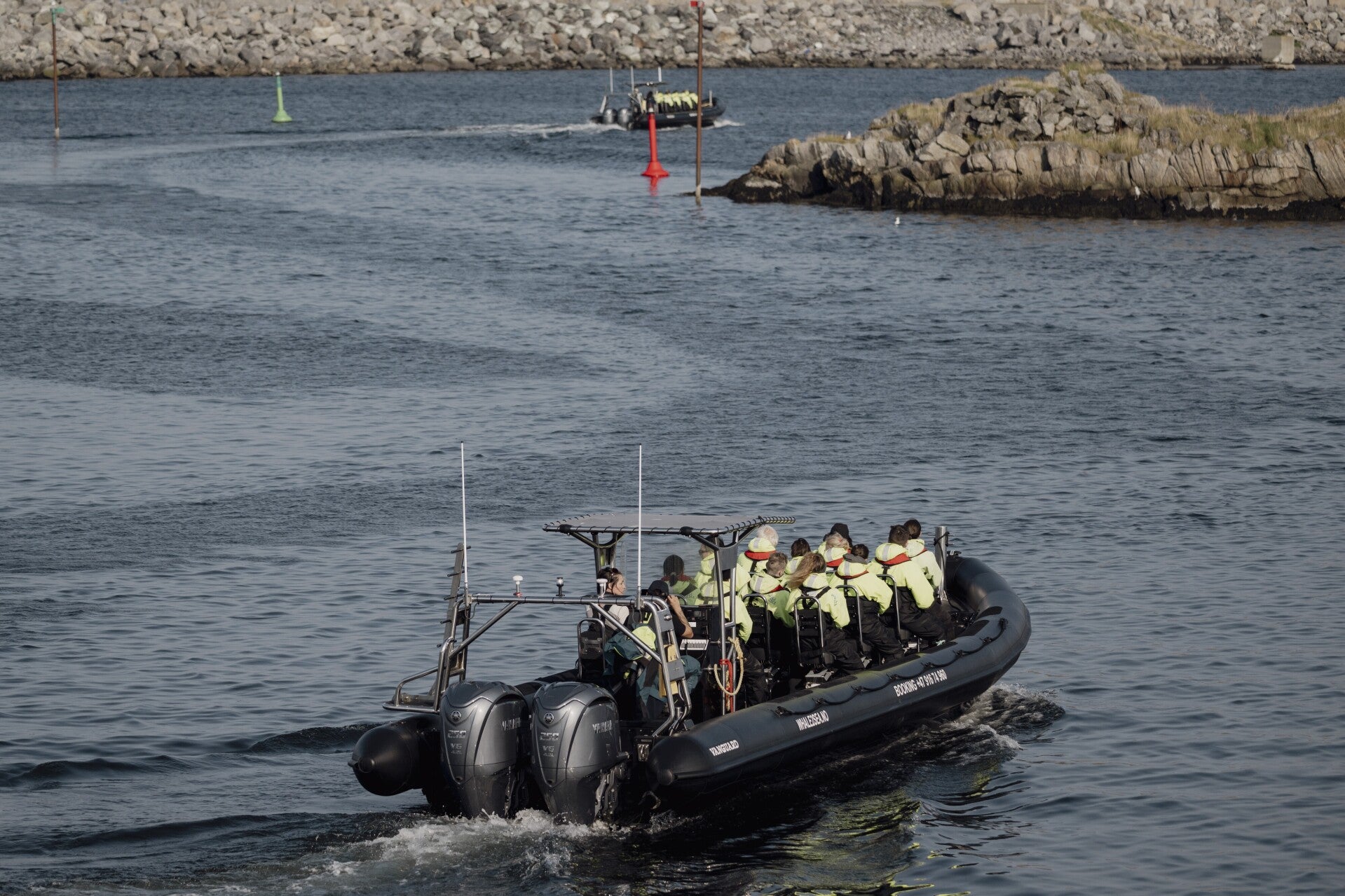
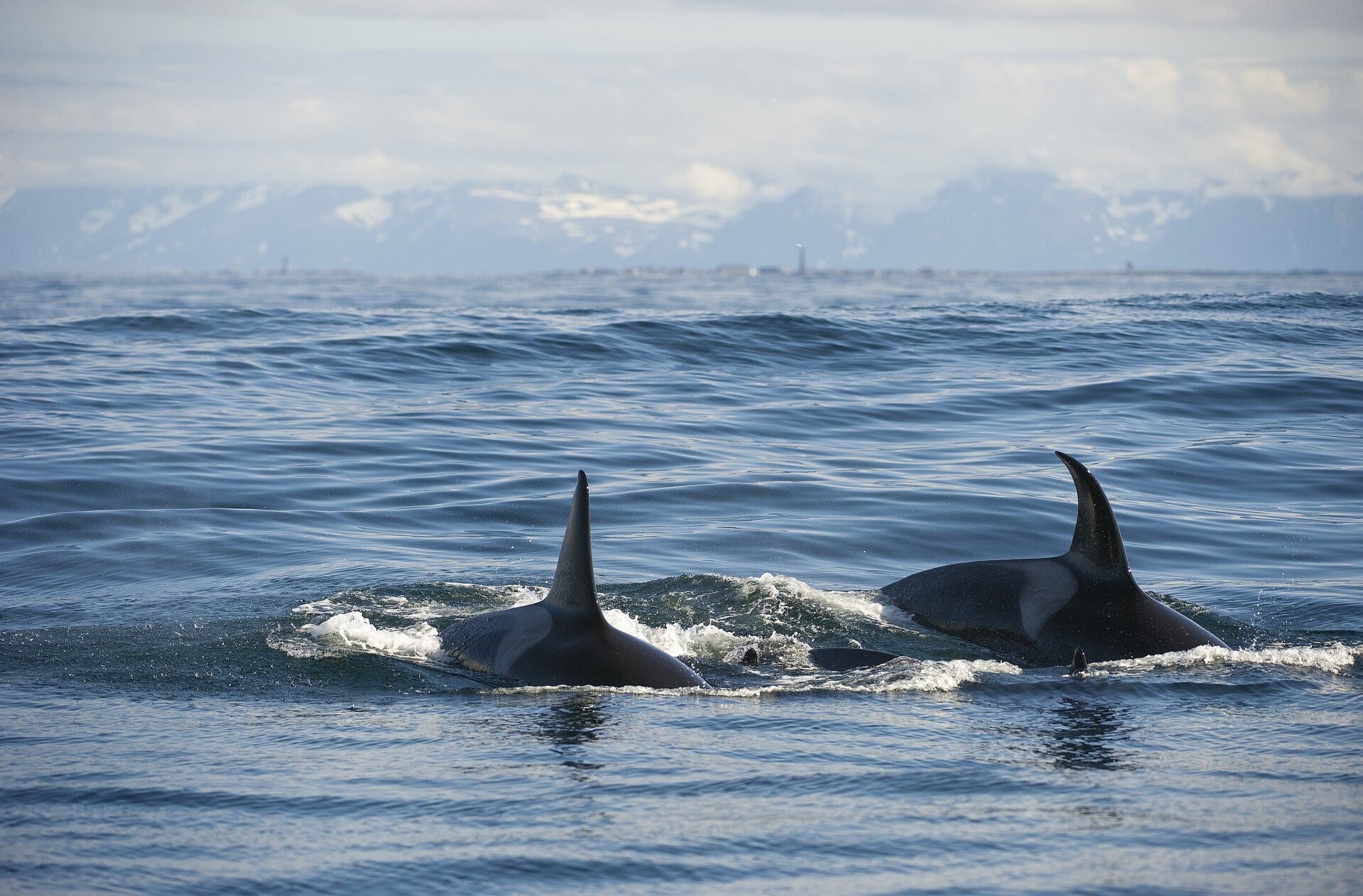
Photo: Marie Nystad Helgesen / www.nordnorge.com Photo: Marten Bril / www.visitvesteralen.com
These experiences can form part of a wider exploration of the coast, with birdwatching trips, photography and walks that reveal how much life depends on this meeting of land and sea.
Winter brings a different rhythm. Daylight is limited, and weather and sea conditions demand flexibility. Orcas and humpbacks may follow herring shoals along different stretches of Northern Norway’s coast, so the location of winter feeding gatherings can change. A sighting in one area in one season is no promise of the same encounter the next year.
Whatever the time of year, whales remain wild animals. Their movements cannot be scheduled, and sightings cannot be guaranteed. Choosing operators who respect their behaviour and give them space is an essential part of the experience.
The Whale could become the starting point for a much broader journey through Andøya and Vesterålen.
Beyond the harbour are fishing villages, pale beaches and paths that follow the coast beneath steep mountains. The Norwegian Scenic Route along Andøya’s western shore offers a particularly rewarding introduction, passing through communities whose daily lives remain closely connected to the ocean.
There is good reason to allow time here. A walk, a conversation or an unhurried stop beside the water can reveal as much about the islands as a planned excursion. The new centre will add a cultural perspective to those experiences, linking what visitors see outside with what is happening beneath the sea. That may be its most valuable contribution: encouraging the curiosity of a wildlife encounter to continue after the boat returns to harbor.
Here in the far north, even a building might teach us to listen to the sea.