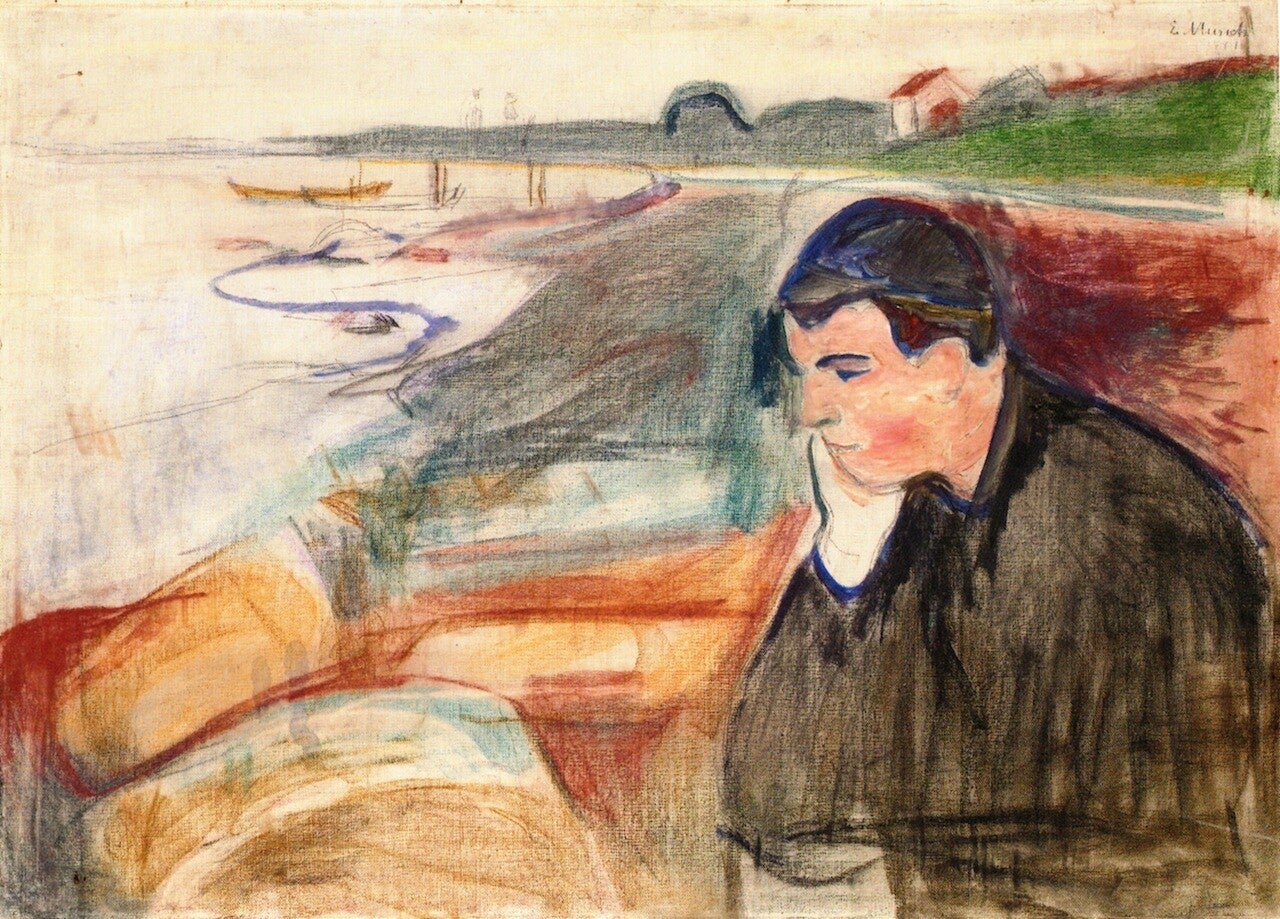
Photo: Public Domain / Melancholy, 1891, Munch Museum, Oslo
I was born and raised near Siena, in the heart of the Val d'Orcia, a landscape where art and nature have coexisted for centuries with an almost disarming naturalness. In this part of Tuscany, beauty reveals itself as a steady presence. It appears in the soft hills that stretch across the horizon, in the isolated Romanesque parish churches scattered among the fields, and in the small medieval villages perched on hilltops.
Growing up in a place like this means learning early on that art is part of the land itself. You encounter it along country roads, inside nearly hidden churches, and in historic town centers you walk through every day without thinking much about it. Sometimes all it takes is stepping into a small parish church to suddenly find yourself face to face with a masterpiece.
One of the first places where I began to observe the artistic tradition of my homeland more closely was the Pinacoteca Nazionale di Siena, which houses some of the most extraordinary gold-ground panels of medieval Sienese painting. Standing before those works, you quickly realize that the image is not meant simply to reproduce visible reality. Its aim is something deeper: to hint at a dimension that lies beyond it.
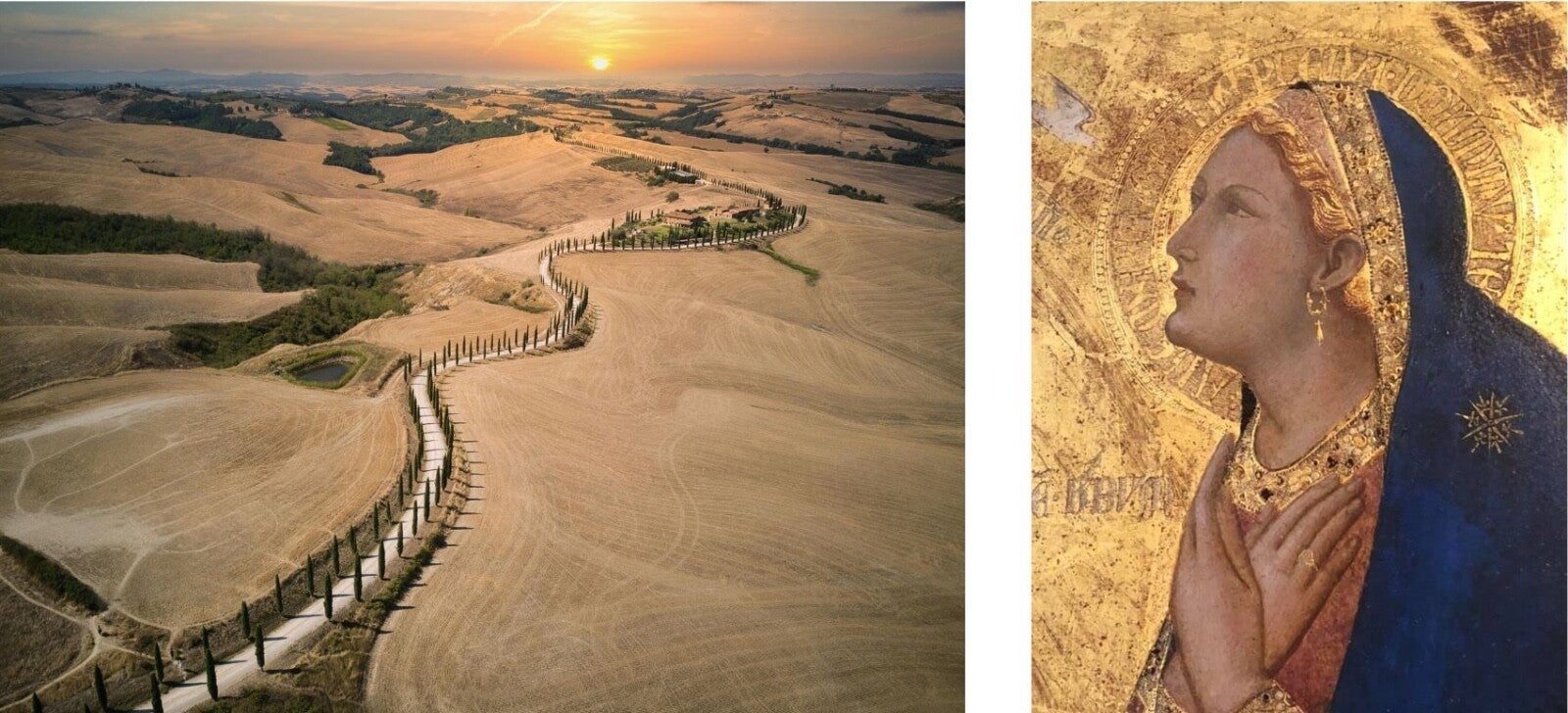
Spending one’s early years in Siena inevitably means engaging with the long tradition of sacred imagery. Medieval Italian painting developed a highly precise visual language: the figures are stylized, individual traits softened, almost suspended in a timeless dimension. The goal is not to describe the world as it is, but to evoke, through codified forms, a reality that transcends it.
The image does not simply represent the human being. It alludes to the divine.
Years later, after moving to Norway, I encountered an artist who seems to move in almost the opposite direction: Edvard Munch.
If medieval sacred painting tends to move beyond human experience in order to approach the transcendent, Munch’s art follows the reverse path. In his paintings, attention centers on the intensity of human emotions. Love, anguish, desire, and loneliness become the true material of painting.
This emotional tension is so powerful that it transforms even the landscape.

Photo: Public Domain / The Dance of Life, 1899, National Gallery, Oslo
If Sienese painting had taught me that art can open a glimpse toward the transcendent, Munch helped me discover something different but equally radical: the landscape can become the mirror of our emotions.
In "The Scream", for example, it is not only the figure on the bridge that expresses despair. The entire scene seems to participate in that emotional state. The sky twists into undulating lines, the fjord bends, and the horizon vibrates as if crossed by an invisible tension. The landscape does not remain neutral. It becomes the visual projection of an inner experience.
To truly understand the work of Edvard Munch, one must begin with a simple but fundamental idea: in his paintings, the landscape is a living presence.
Dark fjords, restless skies, deep forests, solitary shores: Norwegian nature enters Munch’s paintings as an emotional force. It is not described according to a naturalistic principle, but transformed through the artist’s personal experience.

Photo: Public Domain / The Scream, 1893, National Gallery, Oslo
Munch himself explained this with a line written in his notebooks:
“I do not paint what I see, but what I have seen.”
The distinction is significant. It is not about immediate perception, but memory. Between the landscape and the painting there is always a filter: recollection, emotion, lived experience.
In this way, the Norwegian landscape ceases to be just a geographical place and becomes a psychological dimension.
One of the most well-known episodes of Munch’s life illustrates this relationship between nature and emotion almost perfectly.
In 1892 the artist was walking along the path that runs beside Ekeberg hill, just above Oslo. Before him opened the panorama of the Oslofjord, bathed in the light of sunset.
Suddenly the sky turned an intense red. In his diary, Munch wrote that he stopped, overwhelmed by a sudden feeling of anxiety.
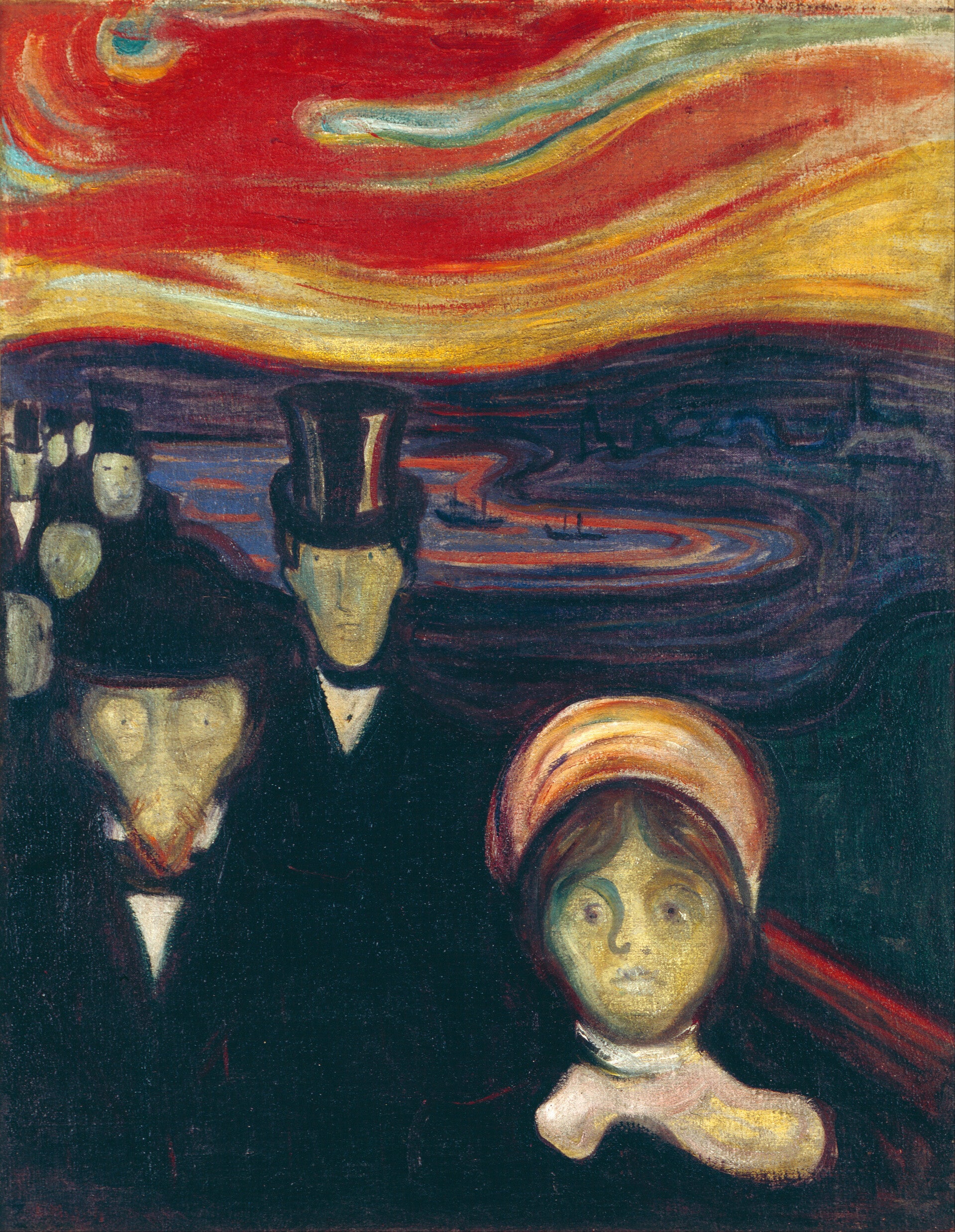
Photo: Public Domain / Anxiety, 1894, Munch Museum, Oslo
He wrote:
“The sky turned blood red.
I stopped, exhausted, and leaned against the railing.
Above the blue-black fjord and the city were tongues of fire.
I felt a great scream pass through nature.”
From that experience came one of the most famous paintings in the history of art.
What is striking in this account is that Munch does not simply speak about a person screaming. The impression described in his notes suggests instead a kind of vibration passing through the entire landscape. Sky, fjord, and city seem to share the same emotional tension.
The painting therefore does not represent a realistic event, but the visual translation of an inner experience.
Even today, looking at the view from Ekebergparken, one understands how deeply that vision was rooted in a real place. But on the canvas the landscape becomes something else: a geography of the soul.

Photo: Public Domain / Young Girls on a Bridge, 1901, National Gallery, Oslo
If Oslo is the city of visions, the small coastal village of Åsgårdstrand represents one of the most intimate places in Munch’s life.
At the end of the nineteenth century the artist bought a house here overlooking the fjord, today preserved as the Edvard Munch House. During the summers he spent long hours walking along the shore or observing the sea from the garden.
In this place some of his most poetic works were created, including Girls on the Bridge.
The bridge, the shoreline, and the houses that appear in the painting belong to the real landscape of the village. Yet on the canvas they take on a suspended, almost dreamlike atmosphere. The curved lines of the coast guide the eye with meditative slowness, while the figures seem to move within a slowed sense of time.
Once again, the real landscape is transformed into an inner space.
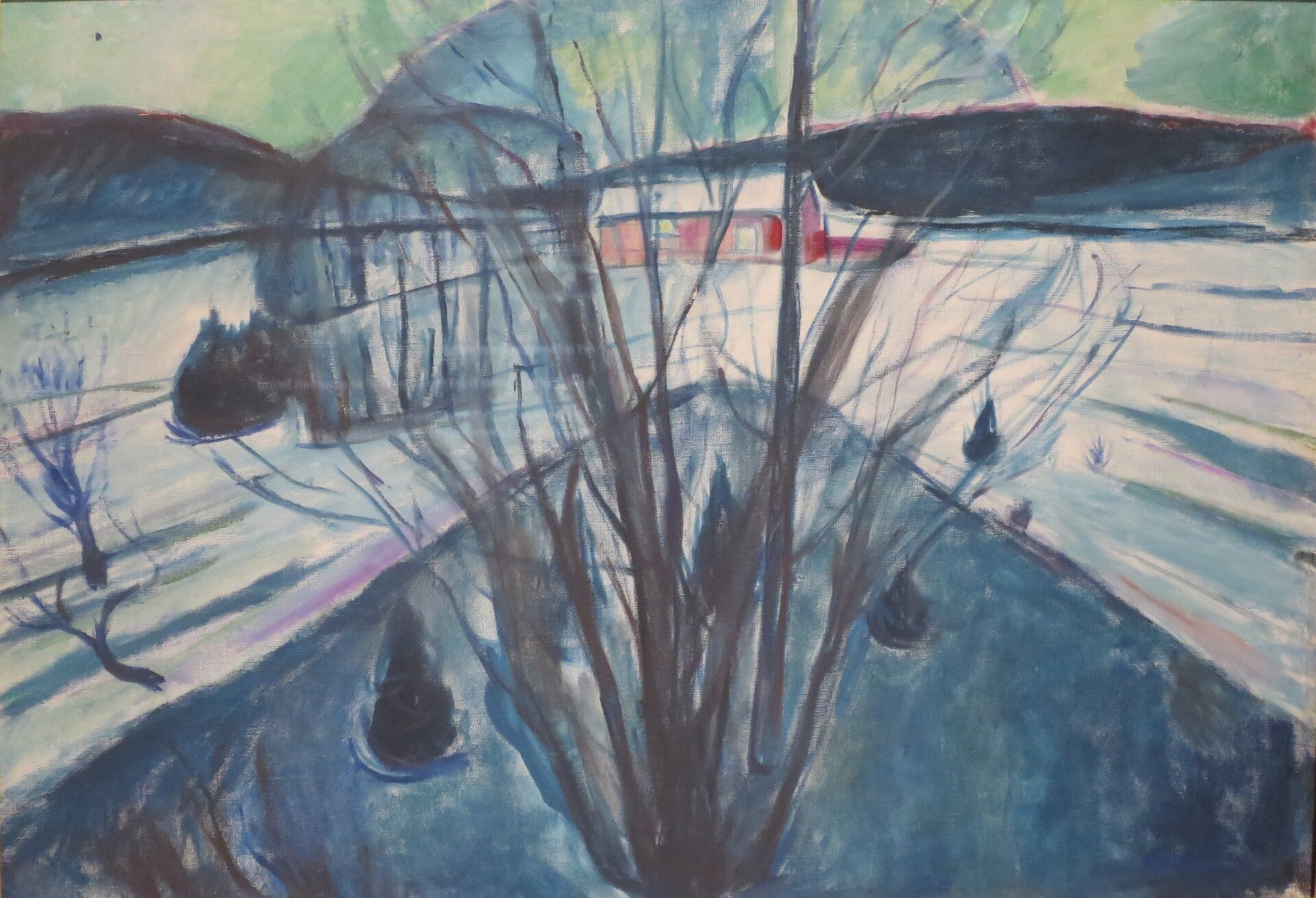
Photo: Public Domain / Winter Night, Ekely, 1930, Kode Museum, Bergen
In the last years of his life Munch withdrew to the property of Ekely, then a rural area on the outskirts of Oslo.
Here he lived surrounded by nature, observing with almost meditative attention the changing of the seasons. The snow covering the fields, the slanting light of autumn, and the long summer days of the north slowly entered his later paintings.
It is said that he sometimes left his canvases outdoors in the garden, exposed to rain and frost. He believed that the natural elements should take part in the creative process. The surfaces of the paintings thus acquired unpredictable marks, as if the landscape itself had participated in the act of painting.
Following Munch’s places means discovering a Norway different from the one shown on postcards.
Here the light changes quickly, the sky seems to move like a living substance, and the sea can appear still as a mirror or suddenly restless. Munch understood something essential: the landscape is never neutral. It can become the mirror of our emotions.
For this reason, traveling through Munch’s Norway does not simply mean visiting museums or places connected to his biography. It means learning to look at the landscape with different eyes.
And at that point something curious happens: the fjords seem deeper, the skies more restless, the light more vibrant. As if Norway, through Munch’s gaze, had found a new voice.
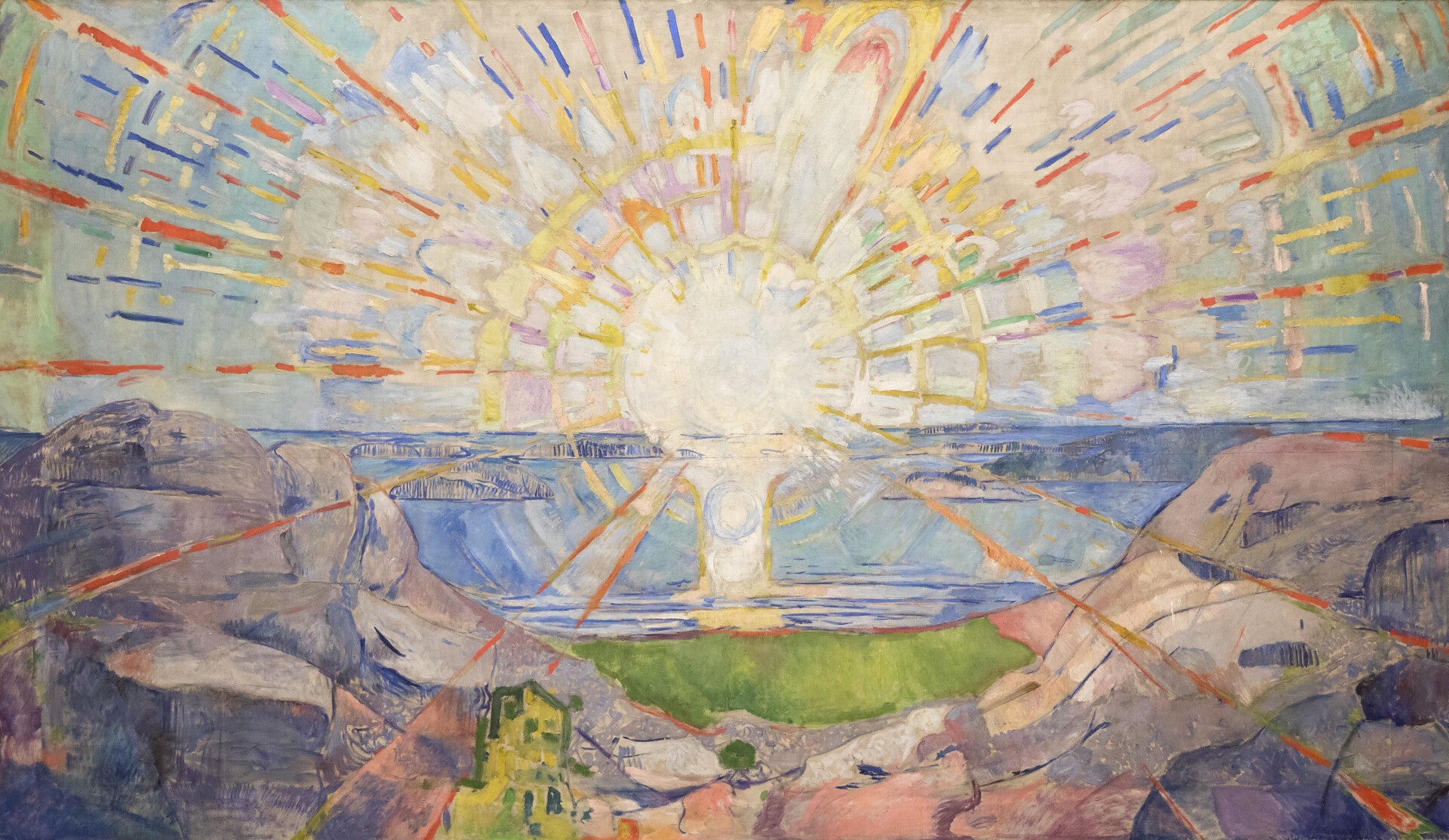
Photo: Public Domain / The Sun, 1911, University Hall of Ceremonies, Oslo
I had the opportunity to visit some of the places that accompanied Munch in his inner search and in his human and artistic development. Experiencing them in winter made the encounter with his thoughts and his inner world even more intense.
Åsgårdstrand is one of those rare places where Munch’s art can still be felt while simply walking through the town. The streets, the shoreline, and the quiet views over the sea feel strangely familiar, almost as if one were stepping inside the landscapes of his paintings. Several small signs along the streets mark the exact spots where scenes portrayed in his works once took shape. Walking through them can feel both profound and slightly surreal, as though the boundary between the painted world and the real landscape has momentarily dissolved.
The house where Munch lived for many years, and to which he was deeply attached, is now open to visitors. It remains furnished much as he left it, preserving the intimate atmosphere of the artist’s daily life. The local community is proud of this heritage and takes great care in preserving the history of the place. Just a few steps away there is also a small multimedia museum that is well worth visiting, offering further insight into the artist’s life and work.
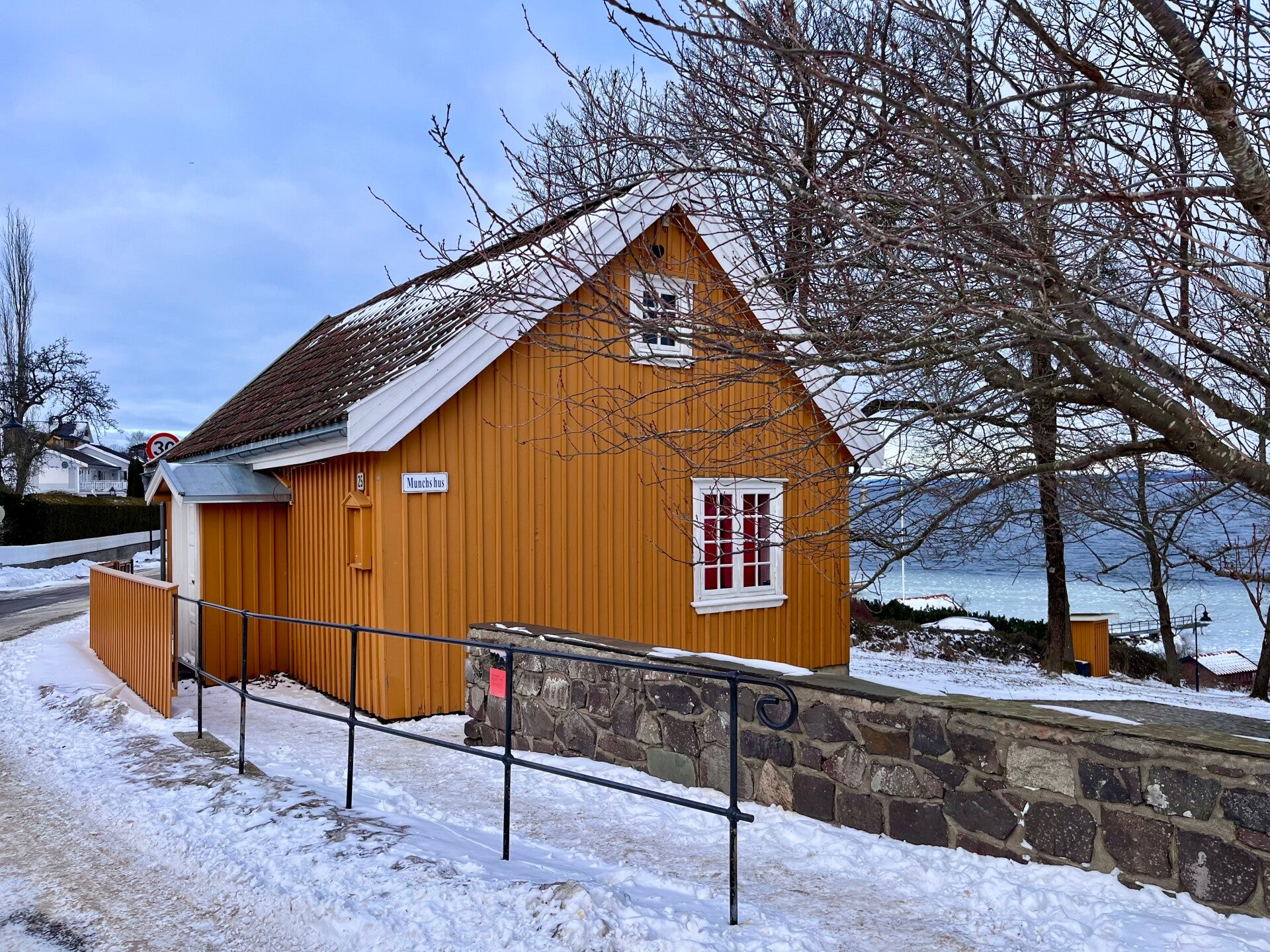
Photo: Mathia Pacenti / ©WanderNorway
In summer, Åsgårdstrand is a popular escape from the city. People come to enjoy its white beaches and the calm waters of the fjord. But in winter the village changes completely. The cold winds sweep across the coast, the landscape turns pale under the snow, and the sea grows darker and more restless. In that quieter, harsher atmosphere it becomes easier to sense the emotional world that shaped Munch’s art, his intense exploration of human feeling.
On the opposite side of the fjord lies another remarkable place where art and landscape meet: Ramme Gård, in the area of Hvitsten. Here the collector and hotel founder Petter Olsen has created an extraordinary cultural park that has few equivalents in Norway. The estate includes sculpture gardens, historic buildings, and an underground hotel gallery that houses an impressive art collection.
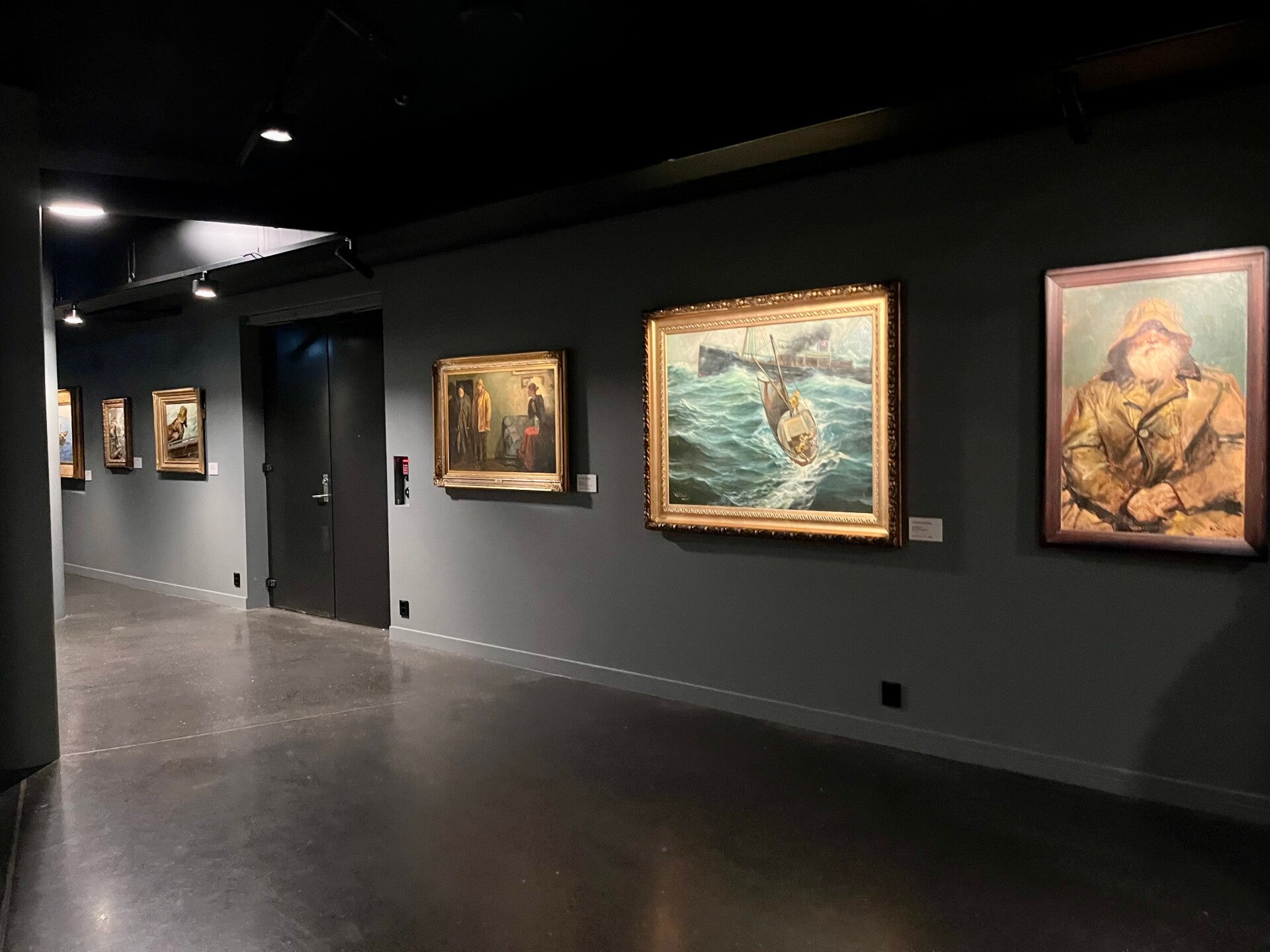
Photo: Mathia Pacenti / ©WanderNorway
Works by artists such as Edvard Munch, Christian Krohg, Frits Thaulow, Hans Gude, Theodor Kittelsen, Oda Krohg, Carl Dørnberger, Paul Fischer, and Oscar Wergeland, can be found here, creating a dialogue between landscape, architecture, and artistic memory. Within the park stands Villa Munch, a summer residence where the artist often stayed and where he created several of his works. Visiting these places reveals another dimension of Munch’s Norway. The paintings no longer feel distant or confined to museum walls. Instead, they emerge as echoes of real landscapes, real paths, and real horizons that still exist today. Walking through them, one begins to understand how deeply the artist’s inner world was woven into the nature that surrounded him.