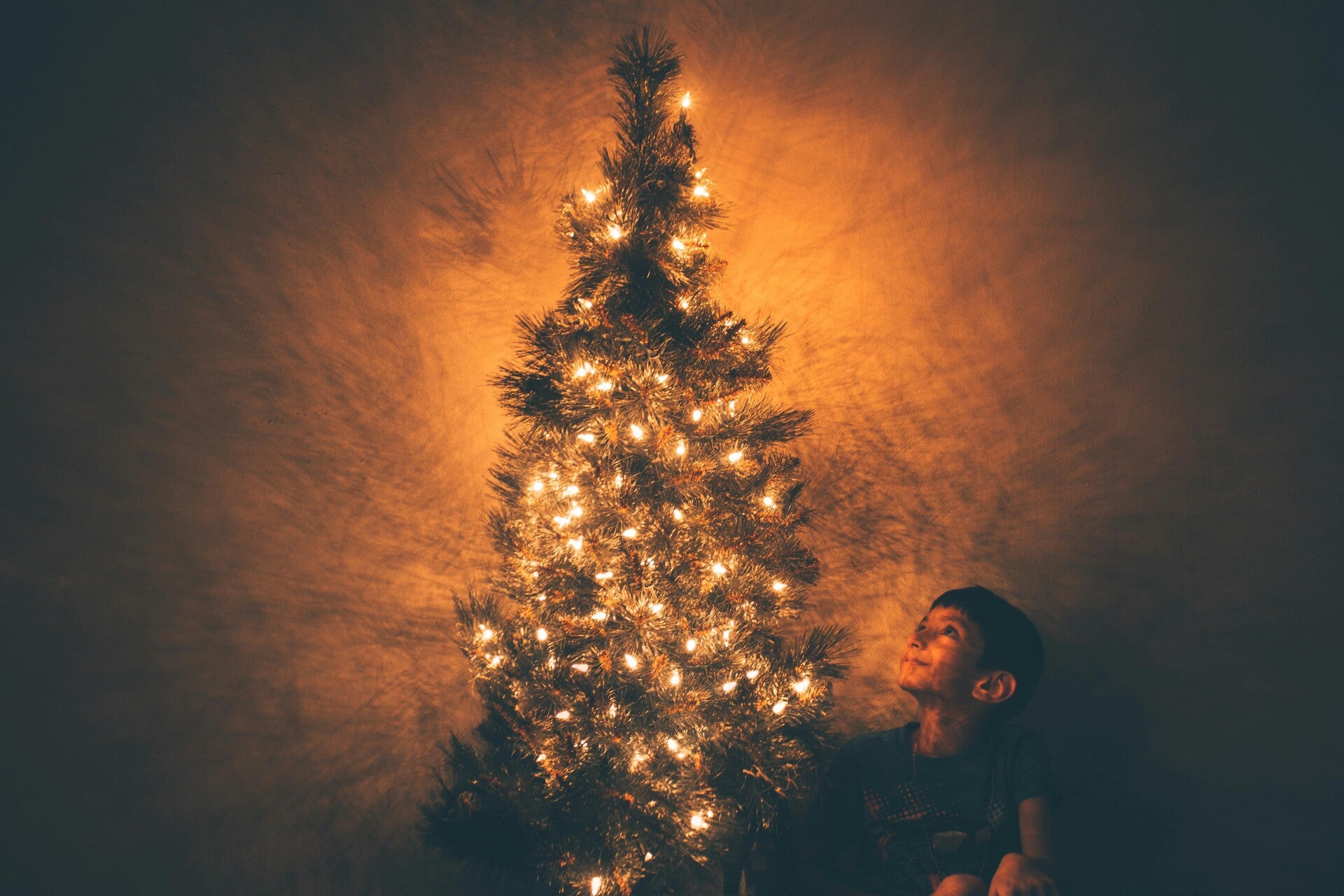
So this is Christmas. Not a song lyric anymore, not an idea borrowed from somewhere else, but a lived experience shaped by darkness, silence, and light that feels earned.
In the North, time is not measured the way it is elsewhere. Here, the year is shaped by two main seasons: light and darkness. That is how I count my years in Northern Norway. And yet, there is another moment that quietly insists on being remembered, one that cuts across both seasons. Christmas.
When I was a child in Italy, Christmas was a simple and recurring joy. It came back every year with the same familiar rhythm. Presents under the tree, long family lunches, overlapping voices, the kitchen filled with warm, unmistakable smells. Those scents and memories are still vivid, untouched by time. Even then, my thoughts wandered north. The image of Santa Claus arriving on a sleigh full of gifts made me imagine his home, that distant North born from fairy tales and half-believed myths.
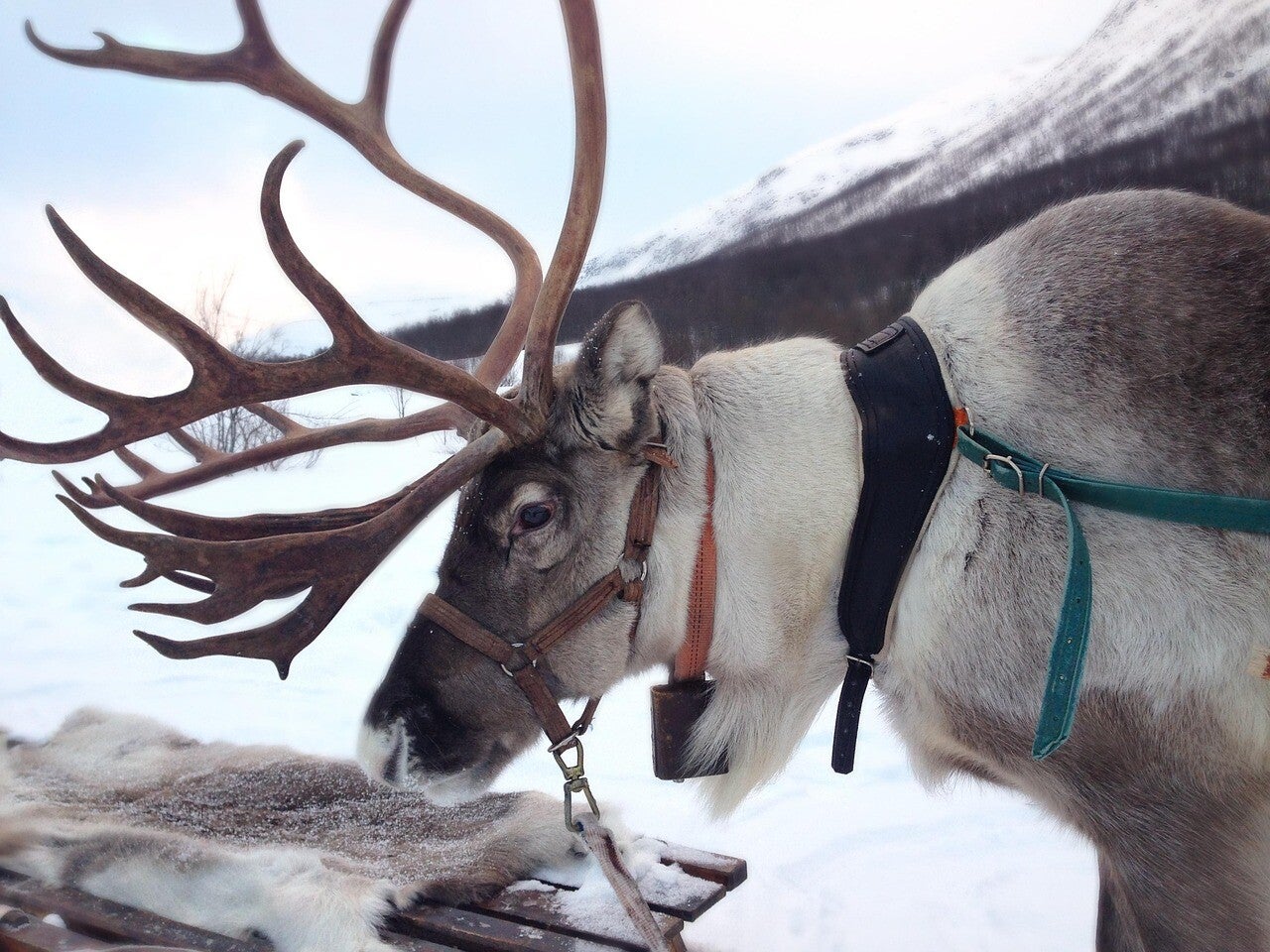
Today, I live close to that place, both real and symbolic. The sleigh pulled by reindeer is no longer just a childhood vision, but part of a tradition rooted right here. Not as spectacle, not as folklore put on display, but as something quietly lived. Christmas lights glow softly against the polar night, and the customs of this community, repeated year after year, have brought back the child in me. The one who believed, without needing proof, in the miracle of Christmas.
Perhaps that is why memories grow stronger during this season. Even though I am far from my family home, I feel strangely present in those early moments of my life. Grateful for what I was given, and for the long, winding path that eventually led me here. As the whole world marks the approaching solstice and the year’s darkest hour, up here, the darkness is real and palpable, leaving us only to ignite the light within our hearts.

Photo: Petr Pavlek / Visit Lyngenfjord
In Northern Norway, Christmas is still deeply tied to family and togetherness. It is about gathering, about rituals that resist the speed of a modern world always in a hurry to replace simplicity with efficiency. The deeper mystery that once surrounded these days may have faded with time, but in the illuminated silence of Arctic nights, something returns. A sense of reflection that reaches far beyond space and time.
The heart of Norwegian Christmas beats on December 24th, known as Julaften. This is the true center of the celebration. Families come together around a carefully prepared table, and once dinner is over, gifts are opened beneath the Christmas tree. The atmosphere is calm, intimate, and full of meaning.

Photo: www.drobakoscarsborg.no
Traditional dishes vary across the country, but even in the far North, certain classics are always present:
- Juleribbe, slow-cooked pork ribs with perfectly crisp crackling
- Pinnekjøtt, salted and dried lamb ribs, gently steamed over birch branches
- Lutefisk, dried cod rehydrated through a long and peculiar process, loved deeply or avoided completely
- Risgrøt, warm rice porridge served with butter, sugar, and cinnamon
- Riskrem, a cold dessert made from risgrøt mixed with whipped cream and topped with red berry sauce. Hidden inside the riskrem is a single almond. Whoever finds it is said to receive good luck in the year ahead
The following day is quieter. Time slows down. Candles stay lit longer. Conversations become softer. In our home, as in many Norwegian households, the Christmas tree is decorated on December 23rd. Until then, it waits, bare and patient. Christmas is not meant to arrive too early. It asks for restraint.

Photo: www.drobakoscarsborg.no
Christmas in Northern Norway does not begin on a single day. It unfolds gradually. From late November, Julebord fill calendars. These are Christmas dinners shared with friends, colleagues, and social groups. They are lively, sometimes loud, and often warm. A way of entering the season together.
Local volunteer groups and cultural associations organize small gatherings in cafés, intimate concerts, and quiet community events. These moments are not about celebration in the usual sense, but about presence. About choosing to be together during the darkest part of the year.
Christmas markets appear even in small villages. They are modest, almost understated. Soft lights, handmade objects, warm drinks held between gloved hands. Time feels slower there.
Some Arctic traditions are nearly invisible. Candles placed in windows to push back the darkness, a bowl of porridge left out for the Nisse, the house spirit, a gesture of respect toward something old and unseen.
And then there is the landscape itself. Snow-covered ground, frozen seas, the quiet presence of the mountains. Sometimes, if the sky allows, the northern lights move above it all, silent and indifferent, yet impossible to ignore.
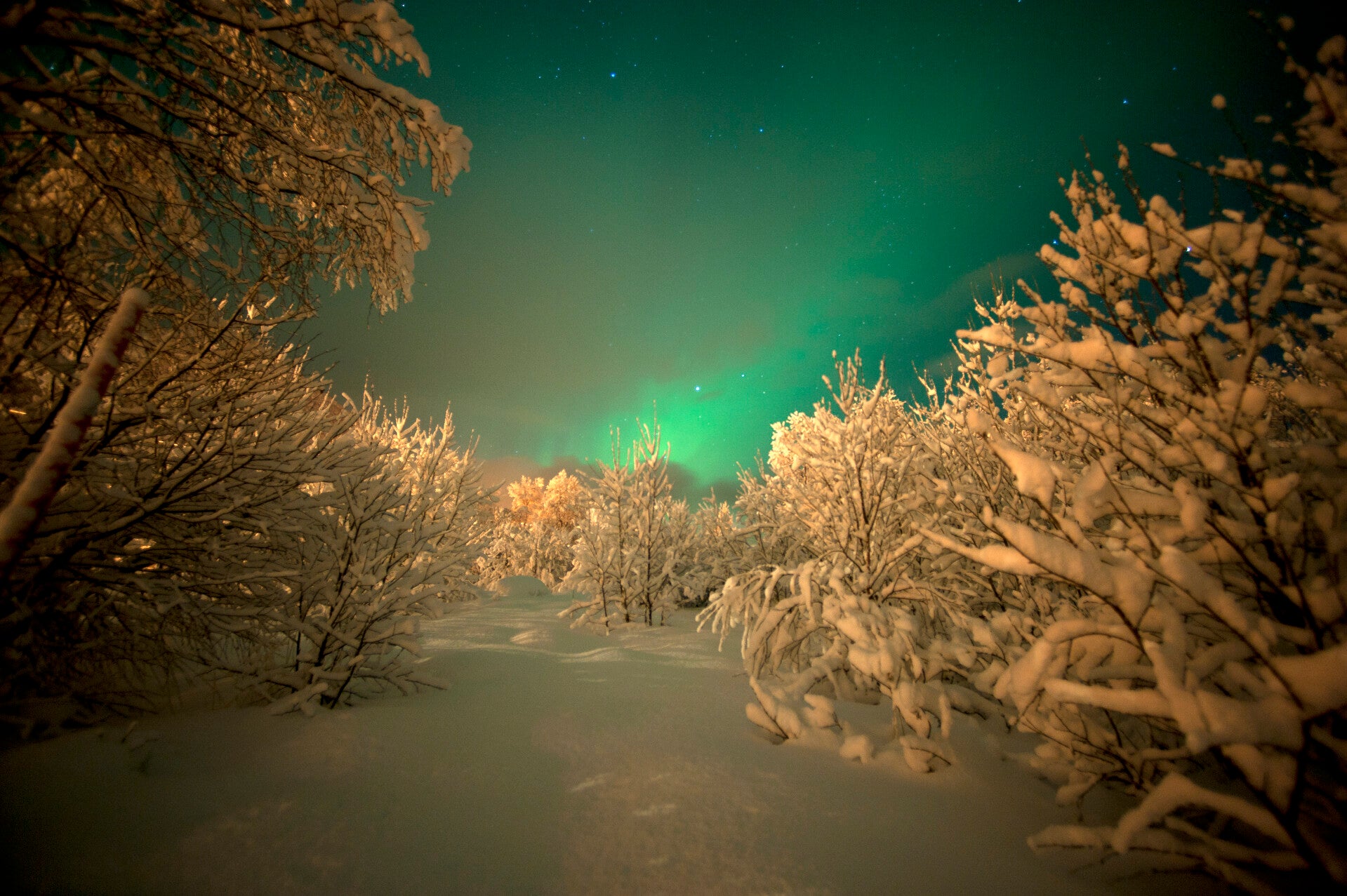
Photo: Marten Bril / www.visitvesteralen.com
Perhaps Christmas is no longer what it once was. Perhaps much of its mystery has been diluted by repetition and noise. And yet, here in the North, between deep darkness and the warm glow of lived-in homes, something remains.
In the silence of Arctic nights, memories surface naturally. I find again the child who imagined the North as a distant, enchanted place. Living here now, I understand that the place I was searching for was not only geographical. It was internal.
So this is Christmas. Not perfection. Not nostalgia alone. But a quiet bridge between who I was and who I have become. A moment of gratitude, stillness, and presence. And maybe, in the end, it has always been this.